Monday, May 22, 2024

IEC Draft Sets Rules for Agri-Drone PV Inspection
by
Published
Views:
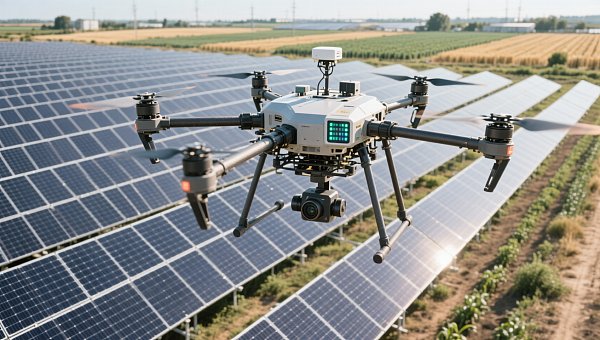
On June 29, 2026, IEC/TC 82 released IEC 63428:2026 CDV, a Committee Draft for Vote that begins to define compatibility requirements for Agri-Drones carrying photovoltaic EL and hot-spot inspection payloads. The development is relevant not only to drone manufacturers, but also to inspection payload suppliers, testing and certification service providers, procurement teams, exporters, and project-side buyers that rely on technical specifications for equipment selection and delivery. What makes this worth close attention is that the draft moves a previously cross-sector application into a more formal standards track, while two leading Chinese Agri-Drone manufacturers joined the co-drafting process as the only non-European, non-Japanese, and non-Korean participants mentioned in the provided information.
What the draft formally introduces
According to the provided information, the IEC Solar Photovoltaic Systems subcommittee, IEC/TC 82, issued the CDV document IEC 63428:2026 CDV on June 29, 2026. The draft is described as the first document to define standards for Agri-Drones equipped with photovoltaic EL and hot-spot detection payloads in three areas: electromagnetic compatibility (EMC), flight stability, and data interfaces.
The same information states that two leading Chinese Agri-Drone manufacturers participated in the joint drafting process. It also specifies that they were the only non-European, non-Japanese, and non-Korean members involved in that co-drafting role. Based on the provided summary, this indicates that Chinese technical approaches are entering the foundational layer of global market-entry rules for intelligent agricultural equipment.
Where the rule signal may start to matter
For drone and payload manufacturers
Analysis shows that manufacturers of complete drones and inspection payloads may be among the first to feel the effect of this draft because the document addresses EMC, flight stability, and data interfaces at the system level. In practice, that can affect how product specifications are prepared, how compatibility claims are documented, and how future product validation is organized. What deserves closer attention is whether technical files, interface descriptions, and test-related documentation will need to be aligned more tightly across airframe, payload, and software elements as the standard advances.
For testing, certification, and compliance teams
From an industry perspective, testing laboratories, certification-related service providers, and internal compliance teams should pay attention because the draft points to a more structured basis for future conformity review in this application area. The practical impact may appear first in pre-certification assessment, test planning, and evidence collection. At this stage, it is more appropriate to understand this as a rule-development signal rather than a confirmed final compliance regime, but teams that wait for the final stage may face tighter preparation windows.
For buyers, tendering parties, and procurement functions
Observably, buyers that procure Agri-Drones for photovoltaic inspection tasks may begin to reflect this standards direction in technical bid language, vendor qualification criteria, and delivery documentation requests. The likely effect is not immediate universal enforcement, but a gradual rise in requests for clearer interface descriptions, compatibility evidence, and structured technical declarations. Procurement teams should therefore watch for changes in tender documents, supplier questionnaires, and acceptance conditions tied to inspection performance and interoperability.
For exporters and supply-chain coordinators
Analysis shows that exporters and supply-chain service providers may need to track this draft because standards activity often influences how overseas buyers frame entry requirements, even before a final standard is fully embedded into market practice. The main exposure points are likely to be product documentation, delivery readiness, after-sales support records, and coordination between drone, payload, and data system suppliers. For businesses serving multiple markets, the key issue is whether emerging requirements begin to diverge between customer groups or become a reference point in cross-border procurement reviews.
What companies should watch now
Keep technical documentation ready for standard-based review
Analysis shows that companies involved in complete aircraft, payloads, or integrated inspection solutions should review whether their existing technical documentation can clearly describe EMC performance, flight stability characteristics, and data interface arrangements. The provided information does not define final execution details, so this should not be treated as a settled checklist. Still, businesses may benefit from identifying documentation gaps early.
Track how the draft appears in certification and testing language
What deserves closer attention is whether testing bodies, certification partners, or commercial buyers begin referencing IEC 63428:2026 CDV or its subject matter in review criteria. Even at the draft stage, references in technical exchanges, supplier audits, or pre-delivery reviews can influence transaction timing and document expectations. Companies should therefore monitor wording changes rather than assume that only a final published standard matters.
Check procurement and tender materials for interface-related requirements
From an industry perspective, data interfaces are especially relevant because they sit between hardware compatibility, inspection workflow, and downstream data use. Firms participating in tenders or framework procurement should watch whether buyers start asking for more explicit interface specifications, interoperability descriptions, or evidence that payload integration does not undermine stability and inspection reliability.
Prepare for longer alignment cycles across suppliers
Observably, a draft that spans EMC, flight stability, and data interfaces may require closer coordination among airframe suppliers, payload developers, software teams, and service partners. The practical issue is less about immediate regulatory enforcement and more about whether delivery schedules, acceptance testing, and supplier qualification processes begin to require additional alignment. Companies with fragmented supply chains should watch this closely.
Why this is more a standards signal than a finished rule
Analysis shows that the current development is best read as an important standards-stage signal rather than proof that a final, uniform enforcement regime is already in place. The significance lies in the fact that a specific application scenario, Agri-Drones carrying photovoltaic inspection payloads, is being pulled into a formal international standardization process with identified technical dimensions. The participation of two Chinese manufacturers in joint drafting also matters as a governance signal, because it suggests that technical input from Chinese industry is present at the rule-shaping stage, not only at the later compliance stage.
At the same time, the provided information does not include final adoption status, implementation timelines, certification procedures, or procurement mandates. For that reason, industry participants should continue to observe how the draft evolves, how market actors cite it, and whether it begins to appear in practical qualification or tender requirements.
How this development is best understood today
At this point, it is more appropriate to understand the release of IEC 63428:2026 CDV as an early but concrete rule-development milestone for the intersection of agricultural drones and photovoltaic inspection. It does not by itself confirm immediate market-wide execution outcomes, yet it does indicate that technical expectations around EMC, flight stability, and data interfaces are moving toward a more standardized framework. For manufacturers, buyers, exporters, and compliance teams, the value of this update lies in recognizing where future entry requirements may form and preparing before those requirements harden into routine procurement and conformity practice.
Basis of this article and what still needs verification
This article is generated from the user-provided news title, event date, and event summary. For developments of this kind, commonly relevant source types include official announcements, regulator releases, trade or customs authority information, industry association notices, standard-setting organization documents, and reporting by authoritative media. No specific official source link was provided in the input, so the exact official link remains to be verified on an ongoing basis.
Further observation is still needed on the evolution of the draft, later official wording, certification and testing interpretations, procurement document changes, market feedback, and how companies implement any related technical or compliance adjustments in practice.

The Archive Newsletter
Critical industrial intelligence delivered every Tuesday. Peer-reviewed summaries of the week's most impactful logistics and market shifts.