Monday, May 22, 2024

Tilapia Prices Stabilize as South China Sentiment Improves
by
Published
Views:
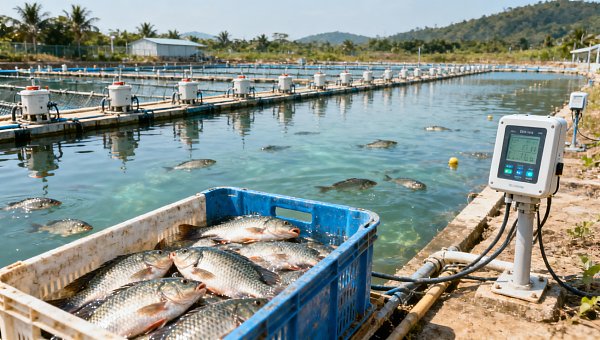
During June 1–7, 2026, raw material prices for 500–800 gram tilapia in Guangdong, Guangxi, and Hainan remained unchanged, while farmer expectations for the market turned notably more optimistic. For the industry, the key point is not only price stability itself, but what the shift in sentiment may signal for aquaculture operations, equipment purchasing plans, and the broader recovery of China’s agricultural supply chain resilience.
What was confirmed in Week 23
The confirmed information for 2026 Week 23 shows that raw material prices for 500–800 gram tilapia in the three South China producing regions of Guangdong, Guangxi, and Hainan held steady over the June 1–7 period. At the same time, farmer sentiment toward the near-term market outlook improved clearly. The available information also indicates that this development is being read as a sign of recovering resilience in China’s agricultural supply chain.
Why this matters across the aquaculture chain
Farm-level operations may regain planning confidence
From an industry perspective, stable raw material pricing combined with improved expectations can matter for producers because sentiment often affects the timing of operational decisions. The possible impact is less about an immediate volume change and more about whether farms become more willing to move ahead with maintenance, replacement, or incremental upgrades.
Equipment exporters may see earlier purchasing discussions
Analysis shows that companies relying on exports of China-made aquaculture equipment, including intelligent feeding systems, water quality monitoring sensors, and Agri-Drones, could see an indirect benefit. If downstream farms become more confident, procurement cycles for equipment renewal and smart upgrades may begin to accelerate. What deserves closer attention is whether this change first appears in customer inquiries, quotation activity, or shorter decision cycles.
Supply chain service providers should watch fulfillment rhythm
For supply chain service providers, the relevance lies in timing and execution. A recovery in downstream confidence can affect order scheduling, delivery coordination, and inventory preparation. Observably, the practical issue is not just demand direction, but whether the market begins shifting from wait-and-see behavior toward actual purchasing action.
What businesses should monitor now
Separate sentiment improvement from confirmed orders
Analysis shows that improved farmer expectations should not be treated as the same as completed procurement. Businesses should pay attention to whether customer optimism translates into formal purchase plans, especially in equipment categories tied to farm automation and digital management.
Track demand in the most relevant product lines
For suppliers of intelligent feeding systems, water quality sensors, and Agri-Drones, the most relevant issue is whether farm-side confidence begins to reshape upgrade priorities. Companies should watch which product lines are discussed first and whether demand centers on replacement, efficiency improvement, or smart retrofitting.
Prepare for procurement cycle changes
What deserves closer attention is the possibility of a shorter purchasing timeline if downstream confidence continues to recover. Businesses involved in supply, export documentation, delivery scheduling, and client communication may need to check whether existing lead-time assumptions still match customer behavior.
Continue verifying signals before scaling commitments
Observably, this update is a useful market signal, but it does not by itself confirm a broad-based rebound in all business segments. Companies should stay disciplined in validating customer intent, fulfillment readiness, and contract visibility before making larger operational commitments.
A signal of stabilization, not a final outcome
In editorial observation, this development is more appropriate to understand as an early directional signal than as a fully established market turn. The combination of stable tilapia raw material prices and improved farmer sentiment suggests that confidence at the downstream breeding end may be recovering. That matters because sentiment often influences when equipment modernization decisions move from discussion to execution. Even so, the current information supports cautious optimism rather than a definitive conclusion.
How the market should read this update
At this stage, the industry significance lies in the interaction between price stability and expectation recovery. For aquaculture-related manufacturers, exporters, and service providers, this is best understood as a development worth close follow-up: it may point to firmer farm-side confidence and a more active equipment renewal cycle, but it still requires confirmation through subsequent purchasing behavior and supply chain activity.
Basis of this article and points for follow-up
This article is based on the user-provided news title, event timing, and event summary. For this type of industry update, relevant source categories would typically include official announcements, company disclosures, industry association information, authoritative media reports, and standard-setting or sectoral documents. No specific official source link was provided in the input, so the underlying details should continue to be verified. Follow-up attention should focus on whether improved farmer sentiment is sustained and whether it leads to tangible progress in equipment replacement and smart aquaculture procurement.
The Archive Newsletter
Critical industrial intelligence delivered every Tuesday. Peer-reviewed summaries of the week's most impactful logistics and market shifts.