Monday, May 22, 2024

Agricultural Technology Solutions That Cut Water Use in 2026
by
Published
Views:
In 2026, agricultural technology solutions are moving from optional upgrades to strategic necessities for enterprises facing water scarcity, rising input costs, and stricter sustainability targets. From precision irrigation and sensor-driven monitoring to AI-based water management, these innovations help decision-makers reduce waste, improve yields, and strengthen operational resilience across modern agricultural systems.
For enterprise buyers, the issue is no longer whether digital water management has value. The real question is which agricultural technology solutions can deliver measurable savings across multi-site operations, fit existing equipment, and support procurement decisions with transparent technical benchmarks.
Water efficiency has become a cross-functional priority touching agronomy, infrastructure, compliance, and capital planning. In this environment, decision-makers need more than product claims. They need clear selection criteria, implementation pathways, and a realistic view of operational risk, maintenance load, and expected performance ranges.
Why Water-Saving Agricultural Technology Solutions Matter in 2026
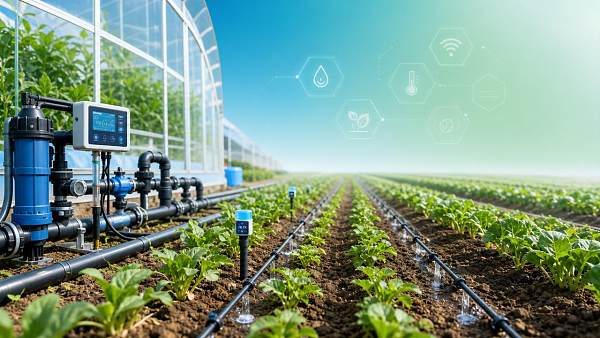
Across commercial farming, greenhouse production, food supply programs, and vertically integrated agri-industrial groups, water use is being scrutinized at a much finer level. Many operations now monitor irrigation by zone, crop stage, and time window rather than by weekly estimates or manual routines.
That shift is driven by three pressures. First, water availability is less predictable. Second, energy and fertilizer costs make over-irrigation more expensive than it was 3 to 5 years ago. Third, ESG reporting increasingly requires auditable resource data instead of generalized sustainability statements.
From water control to enterprise resilience
Modern agricultural technology solutions reduce water use not only by applying less water, but by improving timing, uniformity, and decision speed. A 10% to 25% reduction in irrigation waste can materially improve site profitability when multiplied across hundreds or thousands of hectares.
For enterprise operators, this creates downstream benefits in pumping energy, labor allocation, disease control, and nutrient retention. Water management is therefore no longer a single-system issue. It is tied to the broader industrial stack that includes filtration, control hardware, connectivity, and maintenance planning.
Common operational pain points
- Inconsistent irrigation schedules across 3 or more production sites
- Limited visibility into soil moisture variation at root depth
- High water loss from runoff, leaks, or pressure imbalance
- Poor integration between pumps, valves, filters, and control software
- Manual reporting that delays corrective action by 24 to 72 hours
These pain points explain why agricultural technology solutions are increasingly evaluated like industrial systems. Buyers want evidence on compatibility, service intervals, sensor durability, calibration requirements, and the total cost of ownership over 3 to 7 years.
What enterprises are actually buying
The market has moved beyond standalone irrigation controllers. Enterprise procurement now focuses on interoperable water-saving architectures that combine sensing, automation, analytics, and infrastructure upgrades. The most effective agricultural technology solutions usually operate as a layered system rather than a single device.
The table below outlines the major solution categories and the type of value each can deliver in a commercial operating environment.
The key takeaway is that water-saving performance depends on system coordination. A sensor network without reliable actuation will underperform. Likewise, advanced software cannot compensate for unstable pressure, clogged emitters, or poor-quality field data.
Core Technologies That Cut Water Use Without Sacrificing Output
Not all agricultural technology solutions deliver the same type of value. Some reduce over-application, some prevent hidden losses, and others improve decision speed. Enterprise buyers should evaluate each technology by the mechanism through which it cuts water use and the conditions required for success.
Precision irrigation and variable-rate application
Precision irrigation is still one of the most practical investments for reducing water waste. In drip, pivot, and greenhouse systems, variable-rate control can align water delivery to crop demand in intervals as short as 15 to 60 minutes, instead of relying on fixed daily schedules.
For larger enterprises, the value lies in zoning. A field or protected growing environment can be split into 4, 8, or even 16 control zones based on slope, soil type, crop density, or exposure. This avoids treating a variable environment as if it were uniform.
Selection points
- Operating pressure range and pressure compensation capability
- Flow accuracy tolerance under partial-load conditions
- Compatibility with existing pump, pipe, and filtration infrastructure
- Serviceability of valves, emitters, and controller components
Sensor-driven monitoring and automated feedback loops
Soil moisture sensors, weather stations, flow meters, and line pressure monitors create the data backbone for efficient irrigation. A strong deployment usually combines 3 to 5 data inputs rather than relying on a single reading. That reduces false decisions caused by local anomalies or temporary weather shifts.
In practical terms, enterprises often place sensors at two root-zone depths, for example 20 cm and 40 cm, to distinguish surface fluctuation from meaningful root uptake. Data collection frequency commonly ranges from every 15 minutes to every 2 hours depending on crop sensitivity and connectivity limits.
AI-based water management platforms
AI-enabled agricultural technology solutions are gaining traction because they can combine historical irrigation records, short-term weather forecasts, crop stage data, and field sensor signals into a single operational recommendation. For enterprise teams, this reduces dependence on manual interpretation and inconsistent site-level judgment.
The most useful platforms are not black boxes. They provide adjustable thresholds, manual override options, and event logs that explain why an irrigation recommendation was made. That matters for compliance review, internal accountability, and continuous improvement over one or more growing cycles.
Water treatment, filtration, and reuse infrastructure
Enterprises with greenhouse, hydroponic, nursery, or processing-linked agriculture can cut freshwater demand by recovering and reusing part of the water stream. This is where agricultural technology solutions intersect with environmental infrastructure, including filtration modules, disinfection units, and recirculation controls.
In many cases, reuse performance depends less on the reuse concept itself and more on maintenance discipline. Filter cleaning intervals, biofouling management, and water quality verification must be planned from day one. Without that, water reuse can create emitter blockage or plant health issues within a single season.
How Enterprise Buyers Should Evaluate Agricultural Technology Solutions
Procurement teams often compare water-saving technologies on headline savings alone. That is risky. A better method is to evaluate agricultural technology solutions across technical fit, integration effort, operating burden, and measurable payback. This creates a more durable procurement decision, especially for multi-site or multi-crop operations.
A practical evaluation framework
A 4-part framework works well for most enterprises: baseline assessment, pilot scope, technical verification, and scaled rollout. This sequence typically runs over 8 to 24 weeks for the first site, depending on season timing, asset age, and data readiness.
- Measure current water use by zone, block, or production unit.
- Identify the top 2 or 3 loss mechanisms such as runoff, leaks, or poor scheduling.
- Match technologies to those specific loss mechanisms rather than buying broad feature sets.
- Run a pilot with clear KPIs including water volume, labor time, and crop response.
The table below summarizes the main procurement dimensions that matter when comparing agricultural technology solutions for enterprise deployment.
For B2B buyers, this framework reduces the risk of selecting a technically impressive system that performs poorly in daily field conditions. The best agricultural technology solutions are not always the most complex. They are the ones that match infrastructure reality and are maintainable at scale.
Questions procurement teams should ask suppliers
Technical fit
- What operating environments has the system been designed for?
- Which data protocols or interfaces are supported?
- How often do sensors require calibration or replacement?
Operational support
- What is the recommended maintenance cycle: weekly, monthly, or seasonal?
- How are failures reported and how quickly can service teams respond?
- Is there a clear spare parts plan for the first 12 months?
Implementation Risks, Standards, and Deployment Best Practices
Even high-potential agricultural technology solutions can fail if deployment is rushed. Enterprises should treat implementation as an operational transformation project, not a simple equipment install. That includes baseline mapping, stakeholder alignment, verification testing, and post-launch review.
Where projects typically underperform
The most common failure mode is poor baseline visibility. If a business does not know current water use by block or process step, it cannot verify improvement. Another frequent issue is fragmented ownership, where agronomy, facilities, and procurement use different success criteria during the same project.
A third issue is inadequate attention to hardware benchmarking. Water-saving performance depends on valves, pumps, filtration units, telemetry devices, and control boards functioning as a coordinated system. Cross-sector benchmarking becomes especially important when agricultural sites use industrial-grade infrastructure components.
Best-practice rollout sequence
- Establish a 30- to 60-day baseline for water use, pressure, and downtime.
- Define 3 to 5 KPIs, such as cubic meters per hectare or irrigation labor hours per week.
- Validate hardware compatibility with existing electrical, hydraulic, and digital systems.
- Deploy in one representative site before scaling to all locations.
- Review results after one full crop cycle or one complete seasonal interval.
Why benchmarking matters
For enterprise strategists, benchmarking against recognized industrial standards supports better decisions. While the exact standard mix depends on the components involved, disciplined comparison around reliability, traceability, and interface integrity helps separate robust agricultural technology solutions from short-lived pilot concepts.
This is where a multidisciplinary intelligence approach adds value. Water-saving agriculture increasingly overlaps with electronics, mobility-grade automation, environmental infrastructure, and precision tooling. Buyers benefit when these domains are analyzed together instead of in isolation.
What Decision-Makers Should Prioritize Next
In 2026, the strongest agricultural technology solutions are those that reduce water use through accurate measurement, responsive control, and scalable system design. Enterprise value comes from combining precision irrigation, sensor networks, AI-supported decisions, and fit-for-purpose infrastructure in a way that can be verified over time.
For business leaders, the path forward is practical: quantify current losses, pilot the right technology stack, benchmark components carefully, and build deployment plans that can scale across sites and seasons. Water efficiency is no longer a narrow operational adjustment. It is a strategic lever for resilience, cost control, and long-term supply stability.
If your team is evaluating agricultural technology solutions across farming, environmental infrastructure, or cross-sector manufacturing systems, GIM can help you compare technical options, assess implementation risk, and identify the right benchmarks for procurement. Contact us today to get a tailored solution review, discuss product details, or explore broader smart agri-tech strategies.

The Archive Newsletter
Critical industrial intelligence delivered every Tuesday. Peer-reviewed summaries of the week's most impactful logistics and market shifts.