Monday, May 22, 2024

China Grants Zero Tariffs to 53 African Nations
by
Published
Views:
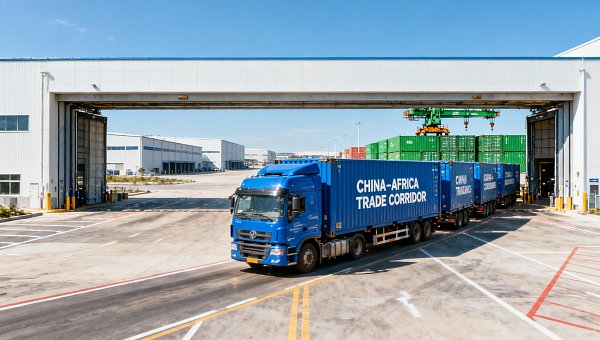
Effective May 1, 2026, China has extended zero-tariff treatment to all 53 African countries with which it maintains diplomatic relations — a policy shift with immediate implications for agri-food exporters, industrial equipment suppliers, and cross-border supply chain service providers. The move targets structural cost barriers in bilateral trade, aiming to deepen integration across agricultural value chains and light-to-mid industrial sectors.
Event Overview
The State Council’s Tariff Commission announced on April 2026 that, starting May 1, 2026, preferential zero tariffs will apply to imports from all 53 African countries with formal diplomatic ties to China. The tariff exemption covers agricultural and food products — including apples, oranges, and avocados — as well as a broad range of industrial finished goods. No additional conditions or quotas are stipulated in the official notice.
Industries Affected
Direct trading enterprises: Exporters engaged in B2B trade with African importers — particularly those selling smart irrigation systems, agricultural drones (Agri-Drones), and powertrain systems — face significantly reduced entry costs. Lower tariff incidence improves price competitiveness in tender-based procurement processes common in public infrastructure and agricultural modernization projects across Africa.
Raw material procurement enterprises: While the policy primarily addresses exports from China, firms sourcing African raw materials (e.g., cocoa, sesame, shea nuts) may experience indirect effects. As African customs revenues decline due to zero-tariff implementation, some governments may adjust non-tariff measures — such as phytosanitary inspection frequency or documentation requirements — to offset fiscal impact. This warrants monitoring but is not yet confirmed.
Manufacturing enterprises: Domestic manufacturers supplying export-oriented OEMs — especially in photovoltaic modules, small-scale agricultural machinery, and battery-integrated powertrain systems — gain stronger commercial leverage when quoting turnkey solutions. With lower landed costs for end products, they can absorb modest logistics or certification expenses without eroding margins.
Supply chain service enterprises: Freight forwarders, customs brokers, and trade finance providers serving China–Africa corridors may see increased transaction volume, particularly in fragmented markets like East and West Africa where tariff complexity previously discouraged SME participation. However, revenue per shipment could decline if simplified clearance reduces demand for high-touch advisory services.
Key Considerations and Recommended Actions
Verify product-specific HS code eligibility
Not all Chinese exports qualify automatically. Enterprises must cross-check their Harmonized System (HS) codes against the official Annex I list published by the Tariff Commission — especially for dual-use or regulated items (e.g., certain drone components subject to export controls).
Update origin documentation protocols
African importers must now submit Form A certificates of origin issued by authorized chambers or government bodies in beneficiary countries. Chinese exporters should ensure upstream suppliers provide compliant declarations to avoid retroactive duty assessments.
Assess regional distribution readiness
Zero tariffs do not guarantee market access. Enterprises targeting landlocked or infrastructure-constrained countries (e.g., Chad, Malawi) should evaluate inland transport capacity, warehousing availability, and after-sales service networks before scaling shipments.
Editorial Perspective / Industry Observation
Observably, this policy is less about short-term trade volume expansion and more about institutionalizing long-term commercial alignment. Unlike previous unilateral tariff reductions, this measure applies uniformly across all 53 nations — signaling a deliberate move toward standardization rather than ad hoc concessions. Analysis shows that the inclusion of both perishable agri-products and capital-intensive industrial goods suggests coordinated intent: to anchor African importers into dual-track sourcing — one for staple inputs, another for productivity-enhancing technologies. From an industry perspective, the timing coincides with accelerated African Union efforts to operationalize the African Continental Free Trade Area (AfCFTA); China’s move may serve as both catalyst and hedge against regional fragmentation.
Conclusion
This zero-tariff framework does not eliminate non-tariff barriers — and its real-world traction will depend on enforcement consistency, port-level implementation, and complementary investment in trade facilitation. Still, it marks a structural inflection point: for the first time, African importers gain predictable, rules-based access to a wide spectrum of Chinese industrial goods — shifting the competitive calculus for global equipment suppliers beyond just price.
Source Attribution
Official source: Announcement No. X/2026 of the Tariff Commission of the State Council of the People’s Republic of China (issued April 2026). Annexes specifying eligible products and origin certification procedures remain under publication review; full implementation guidelines are expected by April 25, 2026. Continued observation is recommended regarding national-level implementing regulations in individual African countries, particularly those with pending WTO notifications on tariff schedule updates.

The Archive Newsletter
Critical industrial intelligence delivered every Tuesday. Peer-reviewed summaries of the week's most impactful logistics and market shifts.