Monday, May 22, 2024

China Opens Coffee Imports, Lifts Agri Equipment Demand
by
Published
Views:
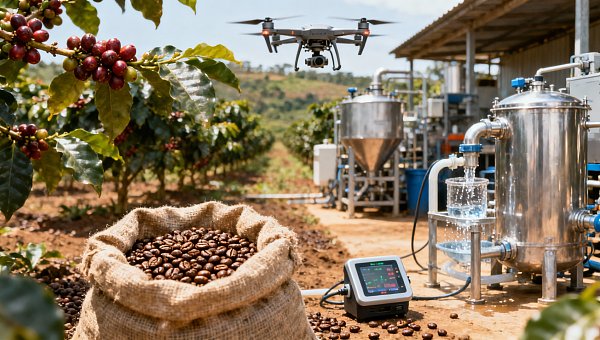
Effective July 20, 2026, China will allow compliant coffee bean imports from African countries that have diplomatic ties with China, provided they meet plant quarantine, pesticide residue, and traceability requirements. For industry participants, the significance goes beyond coffee trade itself: the move is closely tied to upstream production and post-harvest compliance needs, bringing new attention to smart irrigation systems, Agri-Drones, harvest monitoring equipment linked to Harvest Trends, and Wastewater & Filtration modules that may support origin-side processing and export readiness.
What the policy confirms
The confirmed information is clear on three points. First, the effective date is July 20, 2026. Second, the newly permitted imports apply to qualifying coffee beans from African countries that maintain diplomatic relations with China. Third, market access is conditional rather than automatic, with compliance requirements centered on plant quarantine, pesticide residue controls, and traceability.
The event summary also states that this policy is expected to directly increase procurement demand in African producing regions for smart irrigation systems, Agri-Drones, harvest monitoring equipment associated with Harvest Trends, and Wastewater & Filtration post-processing modules. At the same time, it creates a new application scenario and a certification adaptation window for related equipment exports from China.
Where the impact may appear first
Export equipment suppliers face a more compliance-linked sales scenario
From an industry perspective, suppliers of irrigation, drone, harvesting-monitoring, and filtration-related equipment may be affected because the policy links coffee export eligibility to measurable production and control conditions. The business impact may show up less in generic equipment demand and more in customer inquiries tied to compliance support, documentation alignment, and practical fit for coffee-origin operations.
Origin-side buyers may focus on production control and post-harvest handling
Purchasing entities in African coffee-producing areas may be affected because the policy conditions market access on quarantine, residue, and traceability standards. That means interest may concentrate on equipment that helps manage water use, field observation, harvest timing, process visibility, and treatment steps connected to export preparation. What deserves closer attention is whether demand is framed around single machines or around compliance-oriented system solutions.
Trade and supply chain participants need clearer operational coordination
Direct trade companies, raw material sourcing teams, and supply chain service providers may also be affected because the import opening is tied to specific eligibility conditions. In practice, the key business links are likely to include supplier qualification checks, document consistency, traceability chain preparation, and communication between origin operations and import-side requirements. The immediate issue is not only access, but whether each step can be demonstrated in a verifiable manner.
What companies should watch now
Track how compliance language is translated into actual transactions
Analysis shows that companies should distinguish between a policy opening and fully standardized execution at the transaction level. The current information confirms the direction and the compliance pillars, but businesses still need to watch how quarantine, residue, and traceability requirements are reflected in customer specifications, procurement terms, and delivery documents.
Prepare product and certification alignment early
For equipment exporters, the practical issue is not simply entering a new market scenario, but matching products to the compliance logic behind that scenario. This makes certification adaptation, technical documentation, usage records, and customer-facing compliance explanations more relevant than broad market messaging.
Prioritize business links closest to coffee-origin implementation
Observably, the most relevant opportunities are tied to field management, harvest monitoring, and post-processing control rather than to loosely connected equipment categories. Companies should pay closer attention to whether customer demand centers on irrigation efficiency, aerial monitoring support, harvest observation, or wastewater and filtration modules used after processing.
Build room for lead times and client communication
Where orders emerge, execution may depend on procurement cycles, supporting documents, and coordination with origin-side users or trade intermediaries. A practical focus is to prepare clearer communication on use cases, compliance relevance, and delivery readiness, while avoiding assumptions that policy permission alone will immediately convert into broad purchasing activity.
Why this matters beyond a single import adjustment
As an editorial observation, this development is more appropriate to understand as a targeted industry signal rather than a fully realized market outcome. It indicates that market access for agricultural products can create linked demand for equipment upstream and in post-harvest stages, especially when compliance requirements are explicit. At the same time, the actual depth of equipment demand still depends on how buyers translate those requirements into investment decisions and procurement priorities.
Analysis also suggests that the policy should be read as a sign that agricultural equipment exports may increasingly need to align with traceability and compliance-oriented production scenarios, not only with basic mechanization needs. That makes this a relevant development for companies serving agriculture, processing, and export-facing supply chains.
How to read the signal at this stage
At this stage, the policy is best understood as a concrete opening in coffee trade that may extend into equipment demand where compliance, monitoring, and processing controls matter. It does not by itself confirm the pace, scale, or timing of purchases, but it clearly highlights which product areas and business capabilities deserve closer attention. For industry participants, the rational takeaway is to treat this as an actionable signal with follow-up value, while continuing to verify how requirements are applied in real transactions.
Basis of this article and what still needs checking
This article is based on the user-provided news title, effective date, and event summary. The available input confirms the policy timing, the eligible origin scope, the compliance conditions, and the stated demand relevance for smart irrigation, Agri-Drones, harvest monitoring equipment, and Wastewater & Filtration modules.
No specific official source link was provided in the input, so the exact official release path still requires continued verification. For this type of industry update, commonly relevant source categories may include official notices, company disclosures, industry association updates, authoritative media reporting, and standards-related documents. What remains worth monitoring is whether subsequent official wording, implementation details, or transaction practices further clarify compliance interpretation and equipment-side requirements.

The Archive Newsletter
Critical industrial intelligence delivered every Tuesday. Peer-reviewed summaries of the week's most impactful logistics and market shifts.