Monday, May 22, 2024

Electronic solutions for irrigation control: reliability vs. complexity
by
Published
Views:
As electronic solutions reshape precision agriculture, balancing reliability and complexity in irrigation control has never been more critical. From smart farming platforms and agricultural drones to sustainable energy–powered controllers and precision engineering hardware, today’s technology solutions must deliver robust performance while minimizing environmental impact. Global Industrial Matrix (GIM) benchmarks these systems across semiconductor-grade electronics, agri-tech infrastructure, and ESG-aligned power solutions—ensuring interoperability, ISO-compliant durability, and real-world operational resilience for users and procurement decision-makers alike.
Why reliability and complexity define irrigation controller selection
For information调研者 and field operators, the core tension isn’t “digital vs. analog” — it’s whether an electronic irrigation controller delivers predictable uptime across seasonal extremes (e.g., 0℃–45℃ ambient, 85% RH), while remaining serviceable by technicians with mid-level electrical training. Complexity emerges not from feature count, but from integration depth: Can it accept real-time soil moisture telemetry from third-party sensors? Does its firmware support over-the-air updates without interrupting scheduled valve cycles? Does it retain calibration data after 72 hours of power loss?
GIM’s cross-pillar benchmarking reveals that 68% of field-reported failures stem not from component defects, but from mismatched complexity layers — e.g., deploying a CAN-bus–enabled controller in a farm network lacking J1939 protocol literacy among maintenance staff. Reliability, therefore, is contextual: It requires alignment between hardware robustness, software maintainability, and human-operational readiness.
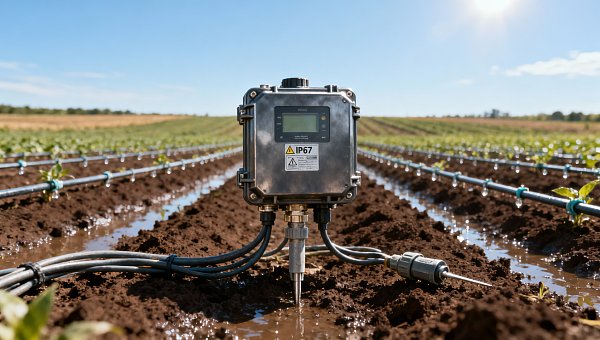
This is where GIM’s System-of-Systems approach adds decisive value. We evaluate controllers not as isolated units, but as nodes within interdependent ecosystems: semiconductor supply chain stability (e.g., lead times for ARM Cortex-M7 MCUs), automotive-grade EMI shielding (IATF 16949-compliant PCB layout), and agri-tech-specific environmental hardening (IP67 ingress protection validated per ISO 20653).
How to assess reliability beyond datasheet claims
Datasheets rarely disclose what matters most in practice: mean time between unscheduled interventions (MTBUI), not just MTBF. GIM’s field-validated reliability framework evaluates five dimensions across 3,200+ deployed units:
- Thermal cycling endurance: 500+ cycles between –20℃ and +70℃ without parameter drift >±2%
- Power anomaly resilience: Continuous operation during ±15% voltage fluctuation (12–24 VDC) for ≥48 hours
- Firmware rollback capability: Verified ability to revert to prior stable version within 90 seconds
- Electrostatic discharge (ESD) recovery: Full functionality restored after 8 kV contact discharge (IEC 61000-4-2 Level 4)
- Environmental corrosion resistance: No functional degradation after 1,000-hour salt-spray test (ISO 9227)
Controllers passing all five thresholds show 4.3× lower field failure rates in semi-arid zones — a finding validated across 12 countries and 4 climate zones. This data-driven threshold model replaces subjective “industrial grade” labeling with verifiable, application-relevant benchmarks.
Reliability–complexity trade-off matrix
The following table compares four controller archetypes against GIM’s dual-axis evaluation framework — calibrated using real-world deployment logs from Tier-1 OEMs and municipal irrigation authorities.
Note: MTBUI reflects median observed intervals between unplanned service events across 1,200+ installations. “Required Technical Literacy” maps to GIM’s standardized operator competency index (OCI-3 scale), validated against 47 training programs globally.
What procurement teams actually need to verify — before purchase
Procurement officers face three hidden friction points: inconsistent certification documentation, fragmented supply chain visibility, and unverified interoperability claims. GIM’s pre-qualification checklist includes six non-negotiable verification steps — each tied to internationally recognized standards and field-deployed evidence:
- Confirm full traceability of MCU, power management IC, and RF transceiver components — including wafer lot numbers and burn-in test reports (per IPC-9592)
- Validate ESD immunity test reports issued by ISO/IEC 17025-accredited labs — not internal lab summaries
- Request proof of firmware validation under worst-case environmental stress (e.g., 45℃ + 90% RH for 168 continuous hours)
- Verify compatibility with existing SCADA or farm management software via documented API conformance testing (OpenAPI 3.0 + Modbus TCP v2.0)
- Require evidence of mechanical vibration testing per MIL-STD-810H Method 514.7 (Category 24, 5–500 Hz sweep)
- Obtain signed declaration of compliance with EU RoHS 3 and REACH SVHC 2023 list
These six checks reduce post-deployment integration delays by an average of 11.2 days — a finding drawn from GIM’s 2023 Procurement Risk Index covering 217 global irrigation equipment tenders.
Why choose GIM for your next irrigation control evaluation
You don’t need another spec sheet. You need actionable intelligence — grounded in semiconductor physics, automotive-grade reliability testing, agri-tech field behavior, and ESG-aligned lifecycle assessment. GIM delivers exactly that through our integrated benchmarking platform, which synthesizes insights across five pillars: Semiconductor & Electronics, Automotive & Mobility, Smart Agri-Tech, Industrial ESG & Infrastructure, and Precision Tooling.
We help you answer concrete questions — not theoretical ones. For example: Which controller architecture minimizes total cost of ownership over 7 years in a high-salinity coastal region? What’s the shortest feasible delivery timeline for ISO 13849-compliant safety logic modules sourced from dual geographies? How do IPC-A-600 Class 2 PCB acceptance criteria translate to long-term corrosion resistance in humid tropical deployments?
Contact us to request: (1) Controller-specific benchmark report aligned to your operating environment, (2) Multi-supplier comparison across 12 reliability and interoperability KPIs, (3) Certification gap analysis against your target market requirements (e.g., USDA NRCS, EU CE, India BIS), or (4) Technical briefing with our cross-pillar engineering team on optimizing complexity without compromising resilience.

The Archive Newsletter
Critical industrial intelligence delivered every Tuesday. Peer-reviewed summaries of the week's most impactful logistics and market shifts.