Monday, May 22, 2024

Electronics Manufacturing for Smart Farming: Key Design Checks
by
Published
Views:
Electronics Manufacturing for Smart Farming Starts With Design Discipline
Electronics manufacturing for smart farming demands more than clean assembly lines and passing electrical tests.
Field devices work in mud, vibration, heat, chemicals, and unstable power conditions.
That changes how design checks should be framed from the very beginning.
For connected irrigation nodes, tractor controllers, sensor hubs, and gateway modules, failure rarely comes from one isolated defect.
It usually comes from weak design assumptions meeting real agricultural operating stress.
That is why electronics manufacturing for smart farming must be reviewed through a system-level lens.
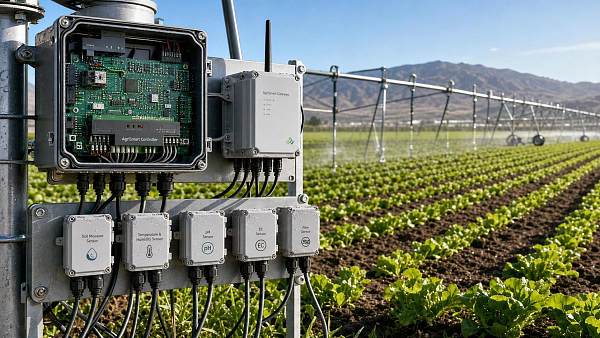
In practice, technical checks should connect PCB design, enclosure strategy, firmware behavior, sourcing discipline, and compliance readiness.
A supplier may build reliable boards for indoor devices yet still underperform in smart agri-tech conditions.
The difference lies in design verification, not only production yield.
From recent industry shifts, the stronger signal is clear.
Procurement and engineering teams now expect traceable proof that electronics manufacturing for smart farming can withstand harsh deployment cycles.
Why Smart Farming Electronics Fail in the Field
Most failures appear after installation, when environmental loads stack together.
A sensor may pass bench validation but drift after repeated thermal cycling.
A controller may survive lab vibration but fail when mounted near diesel equipment.
A wireless module may work in testing but drop performance under enclosure moisture.
This also means electronics manufacturing for smart farming must be checked against combined stress profiles.
The common field risks include:
- Dust and water ingress affecting connectors and seals
- UV exposure degrading housings and cable jackets
- Chemical exposure from fertilizers, fuel, and cleaning agents
- Battery fluctuation and brownout behavior in remote nodes
- Electromagnetic noise from motors, pumps, and mobile machinery
- Corrosion caused by condensation, salt, or humid storage
When these conditions are overlooked, supplier comparisons become misleading.
A lower-cost design can appear competitive until maintenance frequency starts rising.
Key Design Checks for Electronics Manufacturing for Smart Farming
The most useful review model is a structured checklist tied to failure modes.
Below are the design checks that matter most in electronics manufacturing for smart farming.
1. Power Integrity and Energy Resilience
Remote agricultural electronics often run on batteries, solar input, or unstable local power.
Design checks should verify undervoltage behavior, surge tolerance, charging logic, and low-power sleep states.
Look closely at regulator derating, reverse polarity protection, and connector heating margins.
2. Environmental Sealing Strategy
Ingress protection is not only an enclosure rating on a datasheet.
It depends on gasket compression, vent design, cable entry, and assembly consistency.
For electronics manufacturing for smart farming, condensation management is often as critical as splash resistance.
3. PCB Reliability Under Mechanical Stress
Large components, weak solder joints, and poor mounting geometry can shorten field life.
Check support points, board thickness, staking needs, and resonance risks.
IPC guidance helps, but real farm vibration profiles should shape final acceptance.
4. Sensor Accuracy Over Time
Smart farming decisions depend on trusted data.
That makes calibration drift, shielding, thermal offset, and contamination control core design topics.
A sensor that stays powered is still a failure if its measurements become unreliable.
5. Connectivity Robustness
LoRa, cellular, Wi-Fi, BLE, and GNSS modules each bring specific design constraints.
Antenna placement, ground clearance, shielding, and enclosure material all affect real coverage.
In electronics manufacturing for smart farming, communication failure often looks like a software issue first.
Standards and Compliance Checks That Should Not Be Skipped
A credible review should tie design decisions to recognized standards and verification methods.
This is where many sourcing programs become too narrow.
They focus on BOM cost, then add compliance late.
For electronics manufacturing for smart farming, standards should inform architecture early.
A supplier that references standards loosely is not enough.
The stronger question is whether those references are built into design reviews, test plans, and release gates.
How to Benchmark Suppliers More Effectively
Supplier evaluation should move beyond pass or fail qualification.
The goal is to measure design maturity in electronics manufacturing for smart farming.
A practical benchmarking framework usually includes five questions:
- Are environmental assumptions documented by use case and region?
- Do test plans combine electrical, thermal, and mechanical stress?
- Are critical components second-sourced without hidden redesign risk?
- Does the firmware recover cleanly from power and network faults?
- Can the supplier show field-return analysis and corrective action closure?
This approach gives a clearer picture than simple price comparison.
It also helps identify which vendors understand smart farming electronics as long-life operational assets.
A Practical Review Path Before Production Release
Before final approval, design reviews should be staged in a disciplined sequence.
That keeps electronics manufacturing for smart farming aligned with real deployment outcomes.
- Start with use-case mapping for climate, mounting, service interval, and power source
- Review schematic and layout for EMC, power margin, and component derating
- Validate enclosure and connector design against ingress and corrosion risks
- Run combined stress testing, not isolated single-condition checks
- Audit manufacturing controls for traceability, inspection, and process repeatability
- Confirm field-update strategy, diagnostics, and failure reporting pathways
In actual operations, this sequence shortens the gap between prototype confidence and field reliability.
It also reduces expensive late-stage redesigns.
Closing View
Electronics manufacturing for smart farming is no longer a niche hardware topic.
It sits at the intersection of electronics reliability, environmental endurance, and operational data trust.
The most reliable programs treat design checks as business-risk controls, not paperwork.
When design verification reflects field reality, supplier benchmarking becomes sharper and deployment results improve.
For any team reviewing smart agri-tech hardware, the next useful step is simple.
Build your evaluation around these design checks, then require evidence at every release gate.
The Archive Newsletter
Critical industrial intelligence delivered every Tuesday. Peer-reviewed summaries of the week's most impactful logistics and market shifts.