Monday, May 22, 2024

Farming Analysis Tools for Better Irrigation Decisions
by
Published
Views:
In modern irrigation planning, farming analysis helps operators turn field data into practical decisions that reduce water waste and improve crop performance.
From soil conditions to equipment efficiency, the right analytical tools provide clear insights for daily action.
This article explores how farming analysis tools support better irrigation decisions with greater accuracy, consistency, and operational control.
Within integrated industries, irrigation now connects agronomy, sensors, machinery, energy use, and environmental compliance.
That is why farming analysis is no longer a narrow farm function.
It has become a cross-functional decision layer for resilient agricultural operations.
Why irrigation decisions change across field conditions
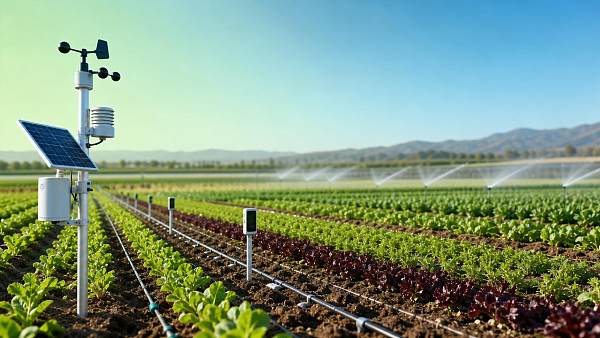
Not every field needs the same irrigation logic, even within one operation.
Soil texture, slope, drainage, crop stage, and local weather can shift water demand sharply.
A farming analysis tool helps compare these variables instead of relying on fixed schedules.
This is especially important where irrigation systems support mixed crops, rotating parcels, or varying infrastructure quality.
In broader industrial agriculture, irrigation also affects power consumption, pump loading, maintenance intervals, and environmental targets.
Accurate farming analysis therefore improves both water use and system-wide efficiency.
Core variables that reshape irrigation choices
- Soil water holding capacity and infiltration speed
- Crop growth stage and daily evapotranspiration
- Irrigation method, pressure stability, and distribution uniformity
- Real-time weather forecasts and heat stress risk
- Water source limits, pumping cost, and scheduling windows
Scenario 1: Open-field irrigation with uneven soil conditions
Open fields often show strong variation between zones.
One section may retain water, while another dries quickly after wind or sun exposure.
In this case, farming analysis should begin with zone mapping.
Satellite imagery, soil moisture probes, and historical yield layers can reveal where uniform irrigation creates losses.
The main judgment point is not total water volume alone.
It is whether the timing and depth of irrigation match each soil zone.
Good farming analysis flags runoff risk in compacted areas and under-irrigation risk in lighter soils.
That allows more precise set points for pivots, reels, or drip sections.
Key judgment points for open fields
- Are dry zones caused by soil type or distribution problems?
- Is rainfall being counted correctly in irrigation planning?
- Do slope and infiltration patterns increase runoff?
- Can zones be irrigated independently without pressure loss?
Scenario 2: Greenhouse or protected cultivation with high control needs
Protected environments create a different irrigation challenge.
Conditions are more controllable, but mistakes repeat faster across the whole system.
Here, farming analysis must work at shorter intervals.
Frequent readings from substrate moisture, nutrient concentration, and temperature are essential.
The main decision is when to trigger irrigation pulses and when to stop.
Over-irrigation can leach nutrients, weaken roots, and raise disease pressure.
A strong farming analysis workflow compares plant demand with emitter output and climate control settings.
This integrated view supports better consistency, especially in high-value crops.
Scenario 3: Water-limited regions where every irrigation cycle matters
In dry regions, irrigation decisions must balance crop survival, quality targets, and water allocation limits.
The wrong decision can reduce yield and waste a scarce resource at the same time.
For this scenario, farming analysis should prioritize deficit irrigation models, forecast accuracy, and response thresholds.
The key question becomes which growth stages are most sensitive to stress.
Data should rank fields by return on water, not by habit.
Useful tools combine weather data, crop coefficients, and meter readings to estimate productive water use.
This type of farming analysis supports disciplined scheduling when supply is constrained.
How scenario needs differ in practical farming analysis
The best farming analysis setup depends on the irrigation scenario, data maturity, and control objectives.
How to choose farming analysis tools for each irrigation setting
Tool selection should follow operational questions, not software trends alone.
A practical farming analysis stack often combines field sensing, equipment monitoring, and decision dashboards.
Recommended selection criteria
- Can the tool compare water demand across zones or blocks?
- Does it integrate with pumps, valves, weather feeds, and sensor networks?
- Can it detect abnormal flow, pressure loss, or emitter inconsistency?
- Does it support historical benchmarking and seasonal review?
- Are outputs simple enough for fast daily irrigation decisions?
In cross-sector operations, data consistency matters as much as sensor count.
Platforms aligned with technical benchmarking can compare equipment performance against repeatable standards.
That approach fits the GIM view of agriculture as part of a connected industrial system.
Common mistakes that weaken irrigation decisions
Many irrigation problems come from incomplete interpretation, not missing data.
A farming analysis program can still fail if critical assumptions go untested.
- Using one moisture threshold for all soils and crop stages
- Ignoring pump efficiency and pressure variation in irrigation results
- Treating rainfall events as fully effective without field verification
- Reviewing water volume without checking uniformity or timing
- Collecting data that cannot be translated into daily action
Another frequent mistake is separating agronomic data from infrastructure data.
Better farming analysis links crop response with equipment behavior, maintenance, and energy cost.
A practical next step for stronger irrigation control
Start with one irrigation scenario and define three measurable decisions.
Examples include when to irrigate, how much to apply, and which zone needs correction first.
Then match each decision to a clear data source.
This keeps farming analysis focused on action instead of dashboards alone.
For broader industrial operations, it also supports benchmarking across water, energy, and equipment performance.
When irrigation planning is grounded in reliable farming analysis, decisions become faster, more consistent, and easier to improve over time.
That is the foundation for smarter irrigation in modern agriculture and integrated technical management.
The Archive Newsletter
Critical industrial intelligence delivered every Tuesday. Peer-reviewed summaries of the week's most impactful logistics and market shifts.