Monday, May 22, 2024

How Water-Saving Irrigation Cuts Field Costs Without Hurting Yield
by
Published
Views:
For finance decision-makers, water-saving irrigation is no longer just a sustainability upgrade—it is a practical way to lower field operating costs while protecting output stability. As water, energy, and labor expenses continue to rise, understanding which irrigation strategies deliver measurable savings without reducing yield has become essential for smarter capital allocation and risk control.
Why a checklist approach works better for irrigation investment decisions
For budget holders, the challenge is not deciding whether water matters. The challenge is determining which water-saving irrigation option can cut field costs in a measurable, defendable way without creating yield risk, maintenance surprises, or hidden operating complexity. A checklist approach helps separate marketing claims from field economics. It also supports stronger internal approval because finance teams can compare projects using the same decision logic: baseline cost, expected savings, payback period, operational reliability, and exposure to crop-output variability.
This is especially important in cross-sector operating environments where agriculture intersects with energy management, automation, environmental compliance, and procurement benchmarking. Organizations such as Global Industrial Matrix emphasize this systems view for good reason: irrigation performance is never only about water use. It affects pumping loads, labor scheduling, fertilizer efficiency, soil conditions, and resilience under climate pressure. In other words, water-saving irrigation should be reviewed as an operating system upgrade, not as a single-line expense.
First checks: what finance teams should confirm before reviewing any proposal
Before approving a retrofit or new installation, start with a short set of non-negotiable checks. These early questions prevent cost-saving assumptions from being built on weak baseline data.
- Confirm the current irrigation baseline: annual water consumption, energy used for pumping, labor hours for operation and maintenance, and current yield consistency by field zone.
- Check whether the main pain point is water scarcity, high power cost, labor intensity, uneven crop performance, or regulatory pressure. The right water-saving irrigation choice depends on the primary cost driver.
- Review crop type, soil texture, field slope, and climate variability. A system that performs well in orchards may not produce the same return in row crops or open-field vegetables.
- Verify whether the proposal measures savings per hectare, per season, or per cubic meter of applied water. Vendors often present results in different units, which can distort comparisons.
- Ask for evidence that yield protection has been proven through at least one full growing cycle under conditions similar to your field environment.
- Identify dependencies: filtration, pressure control, sensors, software subscriptions, spare parts, and operator training. These items often determine true lifetime cost.
Core evaluation checklist: how water-saving irrigation actually cuts field costs
Not every efficiency claim translates into bottom-line savings. Finance reviewers should focus on the mechanisms that make water-saving irrigation economically meaningful. The checklist below helps connect technical performance to cost reduction.
1. Water purchase or extraction cost reduction
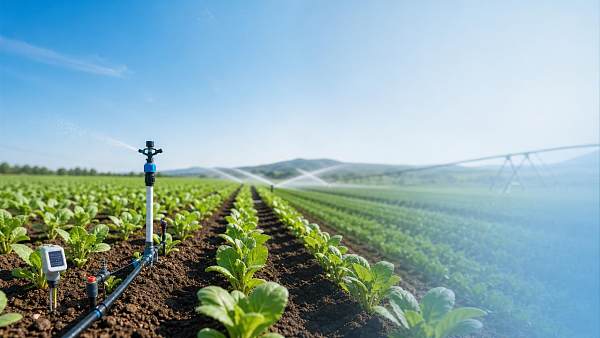
The most direct gain comes from using less water to achieve the same agronomic result. This matters where water is purchased, pumped from deep wells, rationed, or subject to permit restrictions. Drip systems, precision sprinklers, pressure-compensated emitters, and sensor-guided scheduling can reduce waste caused by runoff, evaporation, and over-application. The critical finance question is simple: how much of total field operating cost is tied to each cubic meter of water delivered?
2. Energy savings through lower pumping demand
Water-saving irrigation often reduces electricity or fuel use because less water needs to be moved. However, the savings depend on pressure requirements, lift height, pumping efficiency, and irrigation timing. Some high-precision systems may lower water volume while increasing control-system complexity. This is why energy cost should be modeled at the system level rather than assumed from water reduction alone.
3. Labor savings from automation and fewer corrective actions
Manual valve control, uneven irrigation rounds, leak response, and repeated field checks create hidden labor cost. Water-saving irrigation paired with scheduling automation, flow monitoring, and zone control can reduce supervision time and emergency intervention. For finance teams, labor savings should be estimated conservatively and tied to actual staffing patterns, not theoretical headcount elimination.
4. Yield stability rather than maximum yield claims
The phrase “without hurting yield” is often misunderstood. In practical capital review, the goal is not always higher yield. It is stable output, fewer stress periods, and lower downside risk during heat, drought, or irregular rainfall. A reliable water-saving irrigation system can protect revenue by keeping crop performance more uniform across field zones and across seasons.
5. Better nutrient efficiency and lower input loss
Over-irrigation can wash nutrients below the root zone, raising fertilizer cost and reducing plant uptake efficiency. Precision application improves the odds that water and nutrients arrive where the crop can use them. Even when fertilizer is not the main decision factor, reduced leaching can improve the total return profile of water-saving irrigation.
A practical comparison table for budget approval
Use the following decision table to compare proposals in a format that procurement, operations, and finance can all understand.
How the decision changes by field situation and operating model
The same water-saving irrigation technology does not deliver the same value in every operation. Finance approval should reflect field reality, not only supplier specification sheets.
High-value crops
In orchards, vineyards, seed production, and premium vegetable systems, even modest water savings can be overshadowed by the value of yield stability and quality consistency. Here, the strongest business case often comes from lowering the chance of stress-related defects, size variation, or quality downgrades.
Broad-acre operations
In large-scale row-crop farming, capital intensity and field coverage matter more. Water-saving irrigation must prove that unit economics remain positive across many hectares. Simplicity, serviceability, and scalability often matter more than the most advanced feature set.
Water-stressed regions
Where access to water is uncertain, financial value extends beyond annual cost savings. Water-saving irrigation becomes a risk-control tool that protects production continuity, supports compliance, and reduces exposure to allocation cuts or extraction limits.
Digitally mature operations
If the farm or agribusiness already uses telemetry, smart pumping, or field-level data dashboards, sensor-based water-saving irrigation can integrate into a broader efficiency platform. That can improve reporting quality for internal capital review and sustainability disclosure, especially for organizations managing multi-site operations.
Common blind spots that weaken ROI projections
Many projects underperform not because the technology is wrong, but because the approval case ignored predictable operating realities. These are the most common items to flag early.
- Assuming all saved water becomes financial savings, even when tariffs, pumping setup, or fixed infrastructure costs limit actual reduction.
- Ignoring water quality. Poor filtration or high sediment load can increase clogging, maintenance downtime, and replacement cost.
- Overlooking operator capability. A sophisticated system can lose value quickly if staff are not trained to interpret sensor readings or scheduling logic.
- Using vendor trial data from a different crop, soil profile, or climate regime.
- Treating maintenance as minor. Preventive service, flushing, pressure balancing, and spare inventory should be budgeted from the start.
- Evaluating yield by average output only, instead of checking variability, rejected product, and field-zone inconsistency.
Execution guide: what to prepare before moving forward
If your organization wants to assess water-saving irrigation seriously, the best next step is not immediate full-scale rollout. It is structured preparation. Finance teams should request a small but complete information package that can support clear scenario analysis.
- Build a verified baseline with one to three seasons of water, energy, labor, and yield data.
- Segment fields by crop type, soil, topography, and current irrigation performance. High-variance zones often deliver the best pilot value.
- Request multiple vendor cases using the same reporting format, including capex, operating cost, maintenance schedule, and expected payback under conservative assumptions.
- Ask for references from comparable operations and confirm actual post-installation performance, not just design intent.
- Run a pilot with success metrics defined in advance: water use reduction, energy change, labor time, yield stability, and system uptime.
- Plan governance after installation, including data review frequency, maintenance ownership, and escalation steps when field performance deviates from target.
FAQ for finance decision-makers reviewing water-saving irrigation
Can water-saving irrigation reduce costs even if water prices are low?
Yes, if pumping energy, labor, nutrient loss, or yield volatility are material cost drivers. In some operations, the strongest financial case is not the water bill itself but the total field efficiency gained through better control.
What is the most reliable indicator that yield will not be harmed?
Comparable field data across a full season is the strongest indicator. Look for evidence showing stable root-zone moisture management, not just short-term water reduction percentages.
Should approval be based mainly on payback period?
Payback matters, but it should not stand alone. Water-saving irrigation often delivers strategic value through production resilience, compliance support, and lower operating volatility. Those factors deserve structured weighting in the approval model.
Final decision framework and next-step questions
For finance leaders, the best water-saving irrigation decision is usually the one that combines measurable resource savings with stable field performance and manageable operating complexity. If a proposal clearly reduces water and energy demand, keeps labor under control, protects yield consistency, and shows realistic maintenance assumptions, it deserves serious consideration. If it relies on weak baseline data, generic trial results, or optimistic payback claims, it needs more scrutiny before approval.
To move the discussion forward, prioritize a few practical questions: What field parameters were used to estimate savings? Which crop and soil conditions match your operation most closely? What maintenance, training, and spare parts are required? How does the supplier define yield protection? What is the expected implementation timeline, pilot scope, and budget sensitivity under conservative conditions? By clarifying these points early, organizations can evaluate water-saving irrigation with the same discipline applied to any other high-impact industrial investment.
The Archive Newsletter
Critical industrial intelligence delivered every Tuesday. Peer-reviewed summaries of the week's most impactful logistics and market shifts.