Monday, May 22, 2024

IoT Gadgets in Smart Irrigation: What Improves Water Efficiency
by
Published
Views:
IoT gadgets matter only when the irrigation context is clear
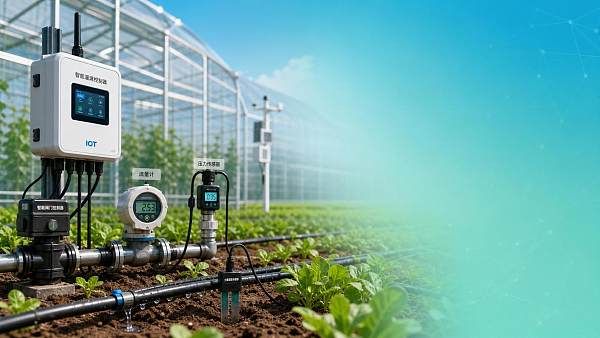
Water efficiency in irrigation rarely improves through a single device choice. It improves when IoT gadgets match crop behavior, hydraulic design, weather volatility, and maintenance capacity.
That is why smart irrigation is becoming a systems decision rather than a hardware purchase. Sensors, controllers, gateways, and valves now shape water use as much as pipes and pumps do.
In practice, the same IoT gadgets can perform very differently across open fields, orchards, greenhouses, and landscaped infrastructure. The useful question is not which device is most advanced.
The better question is which connected tools create measurable water savings under real operating conditions. That distinction matters across agriculture, infrastructure, and industrial ESG programs.
Within cross-sector benchmarking environments such as GIM, the value of IoT gadgets is often judged through traceable performance data, compatibility standards, and lifecycle efficiency rather than headline features.
Why one irrigation site asks for different IoT gadgets than another
Two sites may both report overwatering, yet the causes can be completely different. One may lack soil visibility. Another may have uneven pressure, delayed valve response, or poor scheduling logic.
This is where smart irrigation planning becomes more disciplined. IoT gadgets should be selected around the source of water loss, not around a generic automation checklist.
Field conditions also change the decision. Sandy soil dries faster than loam. Sloped terrain distorts runoff. Intermittent connectivity can weaken cloud-dependent control. Harsh water quality can shorten sensor life.
A connected rain gauge may be valuable in one region, while flow meters and pressure sensors deliver greater savings in another. The judgement point shifts with climate, crop cycle, and system maturity.
The devices that usually influence water efficiency most
Not every connected component has equal impact. In most smart irrigation deployments, water efficiency improves fastest when these IoT gadgets work together:
- Soil moisture sensors that trigger irrigation from root-zone conditions rather than calendar rules.
- Flow meters that detect leakage, emitter blockage, or abnormal runtime before waste becomes chronic.
- Weather stations or evapotranspiration inputs that adjust schedules after rainfall, heat spikes, or strong wind.
- Smart valve controllers that segment zones and prevent unnecessary full-system activation.
- Pressure sensors that reveal hydraulic imbalance, especially in large or aging networks.
The real efficiency gain appears when these devices exchange reliable data and translate it into irrigation decisions with minimal delay.
Open-field cropping usually benefits from sensing depth and timing discipline
In broad-acre conditions, water loss often comes from broad scheduling assumptions. Irrigation windows may be set around labor routines instead of actual moisture depletion.
Here, IoT gadgets that monitor soil moisture at multiple depths often outperform simple weather-only automation. Surface readings can look acceptable while the active root zone remains too dry or too wet.
Flow meters also matter more than expected in these sites. Long lateral lines and hidden leaks can consume large volumes before visual signs appear.
A common mistake is assuming one sensor cluster can represent an entire field. Variability in soil texture and elevation usually requires zone-based sampling, even when budgets are tight.
Orchards and vineyards need zone control more than broad automation claims
Permanent crops create a different water logic. Tree age, row orientation, canopy density, and microclimate can shift irrigation demand across short distances.
In these environments, IoT gadgets that support fine zone control usually improve water efficiency more than platforms that emphasize dashboard visuals alone.
Smart valves, pressure monitoring, and localized moisture probes help prevent overwatering at one block while another remains stressed. That balance is difficult to manage through manual timing.
Another overlooked point is maintenance access. Devices installed deep inside rows may deliver excellent data but fail operationally if battery replacement and cleaning are too disruptive.
Greenhouses often gain more from integration than from adding more sensors
Controlled environments already produce dense data. The problem is often fragmentation rather than absence. Irrigation data, climate control, and fertigation records may sit in separate systems.
For greenhouse operations, the most useful IoT gadgets are usually those that integrate cleanly with dosing units, recirculation loops, and environmental controls.
A standalone moisture sensor may help, but water efficiency improves more when irrigation pulses respond to substrate conditions, humidity trends, and drain recovery rates together.
This is where benchmarking against communication stability, calibration drift, and standards alignment becomes practical. Data quality matters more than adding another isolated node.
Landscape and infrastructure irrigation brings another set of constraints
Urban landscapes, roadside plantings, campuses, and public green assets usually operate under tighter staffing and more variable asset conditions than production agriculture.
In these settings, IoT gadgets should reduce avoidable runtime, simplify remote diagnostics, and flag failures before they become visible complaints or compliance issues.
Rain sensors, smart controllers, and leak detection can deliver fast returns here. Yet vandal resistance, enclosure durability, and network resilience may be just as important as water algorithms.
It is also common to inherit mixed hardware generations. The best smart irrigation upgrade may be a gateway layer that connects legacy valves and meters rather than a full system replacement.
Different scenarios change the buying logic
The table below shows why the same IoT gadgets should be judged differently depending on operating conditions.
Where smart irrigation projects are often misjudged
One frequent error is focusing on sensor accuracy in isolation. A precise sensor does not improve water efficiency if installation depth, calibration routine, or communication uptime are poor.
Another mistake is comparing IoT gadgets by purchase price only. Battery replacement cycles, enclosure ratings, firmware support, and integration labor often reshape the true cost.
Sites also underestimate compatibility risk. Older pump controls, mixed protocols, and proprietary dashboards can trap irrigation data inside closed systems, limiting future optimization.
In cross-industry environments, this is why technical benchmarking matters. Device claims should be checked against standards, field evidence, and lifecycle behavior, not only vendor literature.
Practical checks before selecting IoT gadgets
- Map where water is being lost: scheduling, leakage, runoff, pressure imbalance, or poor zone definition.
- Confirm power and connectivity constraints before choosing cloud-heavy smart irrigation devices.
- Review ingress protection, chemical exposure, and temperature range for every field device.
- Check whether data can move into existing control, ESG, or maintenance systems without custom rework.
- Define how success will be measured: reduced runtime, lower water per hectare, fewer leak events, or better crop uniformity.
A more useful next step is to build a scenario-based shortlist
The strongest smart irrigation decisions usually start with a short operational profile, not with a catalog. List the irrigation zones, water source variability, climate pressure, and maintenance realities first.
Then compare IoT gadgets against those conditions using a narrow scorecard: sensing relevance, control impact, compatibility, service burden, and evidence of field performance.
That approach fits a broader industrial view as well. Water efficiency, device resilience, and digital interoperability increasingly connect agriculture with infrastructure, electronics, and ESG reporting.
When the scenario is clear, the right IoT gadgets stop being generic connected tools. They become measurable assets for water efficiency, system resilience, and better long-term operational control.
The Archive Newsletter
Critical industrial intelligence delivered every Tuesday. Peer-reviewed summaries of the week's most impactful logistics and market shifts.