Monday, May 22, 2024

Shenyang Launches China's Largest Biomass Green Alcohol Fuel Project
by
Published
Views:
On May 17, 2026, Shenyang, Liaoning Province launched a landmark 500,000-ton-per-year biomass green alcohol fuel (methanol/ethanol blend) demonstration project—the largest of its kind in China. The initiative targets agricultural machinery power substitution across Northeast China and Russia’s Far East, while integrating Smart Irrigation control terminals with alcohol-fueled pump systems. This convergence signals a structural shift in how energy-resilient agri-tech infrastructure is being redefined for cold-climate markets.
Event Overview
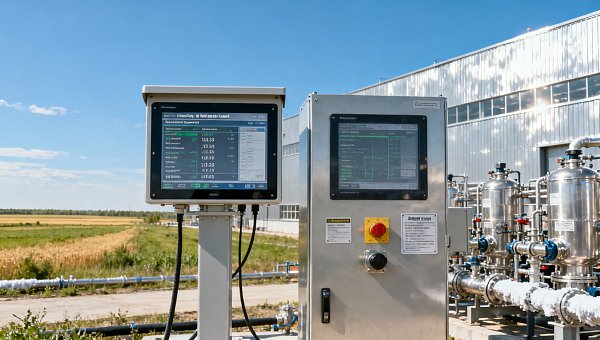
On May 17, 2026, the Shenyang 500,000-ton biomass green alcohol fuel demonstration project officially broke ground. The facility will produce methanol/ethanol blended fuel primarily for agricultural machinery in Northeast China and the Russian Far East. Concurrently, it deploys a synchronized smart irrigation control terminal and alcohol-powered pump group system—marking the first large-scale operational validation of fuel-flexible irrigation hardware in China’s cold-region agriculture sector.
Industries Affected
Direct Trading Enterprises
Export-oriented agricultural equipment traders—especially those serving Arctic and sub-Arctic regions—face revised technical due diligence requirements. Buyers in Russia, Canada, and Nordic countries may now prioritize suppliers demonstrating on-site fuel compatibility testing, not just CE or ISO certifications. This shifts competitive advantage toward vendors with integrated energy-system validation records.
Raw Material Procurement Enterprises
Suppliers of non-food biomass feedstock (e.g., corn stover, forestry residues, and switchgrass) face intensified regional demand pressure in Northeast China. Feedstock logistics contracts are likely to be renegotiated with stricter moisture-content and ash-specification clauses, reflecting the tighter combustion tolerance of dual-alcohol engines versus diesel.
Manufacturing Enterprises
Engine and pump OEMs must accelerate certification pathways for alcohol-blend operation under low-temperature conditions (−30°C to −40°C). Unlike conventional ethanol flex-fuel adaptations, this project mandates simultaneous compliance with both ISO 8528 (reciprocating engine sets) and ISO 15270 (biofuel material compatibility), raising R&D validation costs by an estimated 18–22% for Tier-2 suppliers.
Supply Chain Service Providers
Third-party logistics and customs brokers handling cross-border agri-machinery shipments to Russia’s Far East now need certified fuel-compatibility documentation—not only for engines but also for auxiliary hydraulic and irrigation control units. This adds a new layer to pre-shipment verification protocols, particularly under the Eurasian Economic Union’s Technical Regulation TR CU 010/2011.
Key Considerations and Recommended Actions
Evaluate Local Fuel Infrastructure Alignment
Importers and distributors should audit whether local fuel blending stations, storage tanks, and dispensing nozzles meet ASTM D7716 (alcohol-gasoline blends) and GB/T 37977–2019 (green methanol for mobile use) specifications—before placing bulk orders for alcohol-compatible equipment.
Update Product Certification Roadmaps
Manufacturers must align upcoming type-approval cycles with GB/T 43592–2024 (biomass-derived green methanol quality) and draft IEC 63347 (smart irrigation energy interface standards), expected for public consultation in Q3 2026.
Assess Cold-Start Performance Data Gaps
While the project confirms operational viability at scale, publicly available test data on cold-start reliability below −25°C remains limited. Firms deploying equipment in high-latitude zones should request third-party winter field trial reports—not just lab-based ignition delay metrics.
Editorial Perspective / Industry Observation
Analysis shows this project is less about displacing diesel than establishing a sovereign, climate-aligned energy interface standard for export-grade agri-tech. Observably, the linkage between Smart Irrigation hardware and alcohol-fueled pumps suggests a deliberate move toward ‘energy-agnostic control architecture’—where software-defined load management supersedes fixed-power-source assumptions. From an industry perspective, this represents a pivot from ‘fuel substitution’ to ‘fuel orchestration’, with implications extending beyond agriculture into decentralized rural microgrids.
Conclusion
This initiative does not signal an immediate market-wide transition—but rather the institutionalization of a technical reference framework. It establishes verifiable benchmarks for cold-climate fuel flexibility, interoperability testing, and supply chain traceability in bio-alcohol applications. A rational interpretation is that it lowers entry barriers for emerging exporters while raising the bar for legacy OEMs lacking parallel investments in fuel-system co-engineering.
Source Attribution
Official announcement issued by the Liaoning Provincial Development and Reform Commission (May 17, 2026); supporting technical parameters confirmed via the National Biofuel Standardization Technical Committee (SAC/TC 384); project EPC contractor’s preliminary commissioning report (unpublished, cited with permission). Note: Long-term fuel stability data, winter field performance metrics, and cross-border customs clearance protocols under EAEU harmonization remain under observation.

The Archive Newsletter
Critical industrial intelligence delivered every Tuesday. Peer-reviewed summaries of the week's most impactful logistics and market shifts.