Monday, May 22, 2024

Smart Irrigation Sensors That Drift Without Notice
by
Published
Views:
In precision farming, smart irrigation sensors that drift without notice can quietly erode operational efficiency, distort energy management decisions, and undermine crop performance. For stakeholders evaluating smart irrigation across modern industrial ecosystems—from electronics manufacturing and printed circuit board assembly to PC hardware-enabled control platforms—understanding sensor reliability is essential to protecting quality, investment, and long-term Green Mobility-aligned sustainability goals.
When irrigation sensors drift silently, the real problem is not only measurement error. It is decision error. A moisture probe that reads slightly too dry may trigger unnecessary irrigation, increase pumping costs, waste water, and create disease pressure. A sensor that reads too wet may delay irrigation, stress crops, reduce yield consistency, and distort agronomic analysis. For buyers, engineers, operators, and project leaders, the key question is simple: how do you detect, prevent, and manage sensor drift before it turns into hidden operating loss?
Why unnoticed sensor drift is a business risk, not just a technical issue
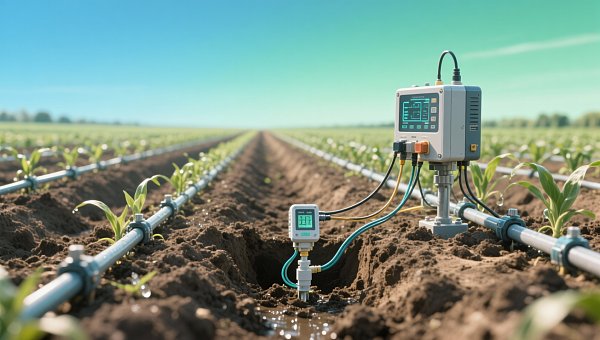
Smart irrigation systems are often evaluated for automation, remote visibility, and water-use efficiency. But in practice, long-term sensor stability is just as important as connectivity or dashboard features. If the sensing layer becomes unreliable, the entire control logic above it becomes questionable.
That matters to different stakeholders in different ways:
- Operators need irrigation triggers they can trust in the field.
- Technical evaluators need evidence of calibration stability, environmental robustness, and signal integrity.
- Procurement and business teams need to understand lifecycle cost, not just purchase price.
- Decision-makers and finance approvers need to avoid systems that appear efficient on paper but create hidden waste over time.
- Quality and safety teams need predictable system behavior, traceable performance, and reduced risk of process failure.
In other words, unnoticed drift compromises three things at once: crop outcomes, resource efficiency, and confidence in automated control.
What causes smart irrigation sensors to drift over time?
Sensor drift usually does not come from a single dramatic failure. More often, it results from gradual degradation across materials, electronics, installation conditions, and maintenance practices.
Common causes include:
- Soil chemistry effects: salinity, pH variation, fertilizer buildup, and mineral deposits can alter readings over time.
- Temperature cycling: repeated heating and cooling can affect sensor electronics, seals, and compensation accuracy.
- Moisture ingress: enclosure weakness, cable damage, or connector exposure can degrade signal stability.
- Mechanical stress: vibration, installation pressure, root intrusion, and equipment movement can shift probe behavior.
- Biofouling and contamination: in some environments, organic material buildup changes sensor response.
- Electronics aging: component drift in analog front ends, power regulation, and reference circuits can slowly bias output.
- Poor installation standardization: inconsistent depth, poor soil contact, and uneven placement create apparent drift that is actually deployment error.
For technically informed buyers, this is why product evaluation should extend beyond headline accuracy claims. A sensor may be accurate on day one in a controlled test, but still perform poorly after months of field exposure.
How drift shows up in operations before anyone notices
One of the reasons unnoticed drift is so damaging is that it often looks like something else. Teams may blame weather variability, pump performance, crop sensitivity, or operator inconsistency before they suspect sensor integrity.
Typical warning signs include:
- Water consumption rising without a clear agronomic reason
- Unexpected divergence between zones with similar soil and crop conditions
- Frequent manual overrides by field staff
- Crop stress appearing despite “normal” dashboard readings
- Pump runtime trends no longer matching historical moisture behavior
- Analytics outputs becoming less useful for irrigation scheduling
- Yield variability increasing between blocks, rows, or managed sections
For enterprises managing distributed sites or large irrigation programs, unnoticed drift can also corrupt benchmarking. Once bad sensor data enters planning systems, energy reporting, water-efficiency scoring, and ROI calculations all become less reliable.
What target readers should check before selecting or approving a sensor system
If the goal is long-term operational value, evaluation should focus on reliability under actual field and industrial conditions. This is especially relevant for organizations that rely on integrated electronics, control hardware, and cross-platform data environments.
Key assessment criteria include:
- Drift specification over time: ask for stability data, not just initial accuracy.
- Calibration method: determine whether calibration is factory-set, field-adjustable, or software-compensated.
- Environmental protection: review ingress protection, connector durability, UV resistance, and temperature limits.
- Signal architecture: assess shielding, noise resistance, transmission quality, and compatibility with controllers and gateways.
- Diagnostics and alerts: prioritize systems that flag abnormal variance, signal degradation, or out-of-profile values.
- Maintenance burden: understand cleaning, recalibration, replacement intervals, and field service requirements.
- Traceability: verify serial tracking, batch quality control, and documentation support.
- Standards and test evidence: request validation against relevant electrical, environmental, and industrial quality frameworks where applicable.
For distributors, resellers, and project-based integrators, these points also help reduce post-sale disputes. A sensor platform that is easier to validate, maintain, and explain typically creates better long-term channel performance.
How to reduce the risk of hidden drift in real deployments
The most effective strategy is not to assume sensors will remain stable indefinitely. Instead, design a verification process into the deployment model from the beginning.
Practical risk-reduction steps include:
- Use baseline commissioning data: record initial readings, soil context, installation depth, and reference conditions for each zone.
- Cross-check with secondary indicators: compare sensor output with weather data, plant condition, manual sampling, or reference probes.
- Create drift thresholds: define when variance becomes operationally significant, not just statistically interesting.
- Schedule validation intervals: inspect and test sensors at planned stages rather than waiting for visible crop issues.
- Standardize installation: ensure consistent procedures for placement, compaction, cable routing, and labeling.
- Segment by criticality: apply tighter verification to high-value crops, water-constrained sites, or energy-intensive pumping systems.
- Log maintenance and anomalies: build traceable service records to identify patterns by sensor model, lot, or environment.
This approach matters particularly in larger organizations, where sensor issues can remain hidden because no single team owns the full chain from field hardware to business reporting.
Why electronics quality and system integration matter more than many buyers expect
Smart irrigation sensors are not isolated field accessories. They are part of a larger technical stack that may include embedded electronics, communication modules, PCB assemblies, edge controllers, cloud dashboards, and enterprise reporting systems. A weakness in any of these layers can amplify drift-related problems.
For example, signal instability from poor PCB design, connector fatigue, inadequate shielding, or power fluctuations can mimic sensor drift or worsen its impact. That is why advanced buyers increasingly evaluate irrigation solutions with the same discipline used in other industrial sectors: component traceability, environmental durability, control-system compatibility, and lifecycle validation.
This is also where cross-sector benchmarking becomes useful. Lessons from electronics manufacturing, industrial control, automotive-grade reliability thinking, and environmental infrastructure can all improve how smart agri-tech systems are specified and managed.
How to judge ROI when sensor reliability is uncertain
Many irrigation business cases are built on projected water savings, labor reduction, and yield improvement. Those assumptions only hold if the sensing data remains dependable. If drift goes unmanaged, the ROI model can become overly optimistic.
To evaluate realistically, decision-makers should ask:
- What is the expected stability window before recalibration or replacement?
- What are the direct and indirect costs of verification?
- How does drift risk affect water, energy, labor, and crop variability?
- Is the vendor offering diagnostic transparency or only marketing claims?
- Can the system support auditability for internal review and future scaling?
A lower-cost sensor with frequent hidden performance deviation may be more expensive over its actual service life than a higher-quality platform with stronger reliability controls. For finance approvers, this is the difference between nominal cost and operational cost.
What a strong purchasing or technical evaluation decision should look like
A sound decision does not depend on whether a sensor is labeled “smart.” It depends on whether the system can support repeatable, trustworthy irrigation decisions over time.
That means the best choice is usually the one that combines:
- credible long-term stability data,
- clear maintenance and calibration processes,
- robust electronics and enclosure design,
- practical diagnostics for field teams,
- integration readiness with controllers and enterprise platforms, and
- evidence that performance can be validated under real operating conditions.
For organizations navigating modern manufacturing and agricultural convergence, this broader evaluation mindset is essential. Reliable sensing is not just a feature. It is an operational control point.
Smart irrigation sensors that drift without notice create a quiet but serious risk: they lead good teams to make bad decisions with confidence. The right response is not to avoid automation, but to demand better validation, stronger system design, and clearer lifecycle accountability. When buyers and operators evaluate irrigation technology through the lens of reliability, traceability, and total operational impact, they make better technical and business decisions—and protect both field performance and long-term investment value.

The Archive Newsletter
Critical industrial intelligence delivered every Tuesday. Peer-reviewed summaries of the week's most impactful logistics and market shifts.