Monday, May 22, 2024

Smart Irrigation Tech: What Cuts Water Waste in 2026
by
Published
Views:
As water stress and input costs reshape global agriculture, agricultural technology for smart irrigation is becoming a strategic priority for enterprise leaders in 2026. From sensor-driven scheduling to AI-based flow optimization, the right systems can reduce waste, improve crop consistency, and strengthen operational resilience. This article explores which irrigation technologies deliver measurable savings and how decision-makers can evaluate them against performance, scalability, and long-term sustainability goals.
For procurement teams, farm operators, infrastructure planners, and industrial strategists, irrigation is no longer a narrow agronomy topic. It now intersects with telemetry, controls engineering, water treatment, ESG reporting, and cross-border supply chain reliability. That is why enterprise buyers increasingly assess agricultural technology for smart irrigation with the same rigor they apply to automation, energy systems, and process equipment.
Within this broader industrial context, the technologies that cut water waste most effectively in 2026 are not necessarily the most complex. The strongest results usually come from integrated systems that connect sensing, control logic, field hardware, and measurable operating thresholds across 1 to 3 growing cycles.
What Actually Reduces Water Waste in 2026
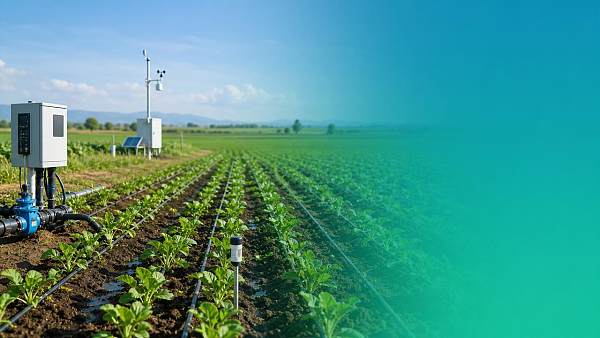
The central shift in 2026 is moving from fixed irrigation schedules to responsive irrigation systems. In practical terms, waste declines when water is applied by zone, by crop stage, and by verified soil or climate conditions rather than by calendar habit. For enterprise operations managing 200 hectares or more, even a 5% to 12% reduction in over-irrigation can materially improve water budgets and pumping costs.
1. Soil Moisture Sensing with Zone-Level Control
Among all forms of agricultural technology for smart irrigation, soil moisture sensing remains one of the most dependable waste-reduction tools. The reason is simple: it prevents irrigation events that are unnecessary. When probes are installed at 2 to 3 depth bands, such as 20 cm, 40 cm, and 60 cm, managers gain a clearer view of root-zone conditions instead of relying on surface appearance.
The key is not the sensor alone, but the control architecture around it. A single sensor dashboard without automated valve logic often improves visibility but delivers limited savings. By contrast, zone-level control linked to threshold rules can stop early-morning or overnight runs when volumetric water content is already within target range.
Typical performance conditions
- Best fit for orchards, vineyards, row crops, and greenhouse blocks with variable soil profiles
- Common sensor density: 1 monitoring point per 5 to 20 hectares, depending on uniformity
- Useful review frequency: every 15 minutes to 1 hour for automated systems
- Most effective when paired with pressure-regulated drip or micro-sprinkler networks
2. Weather-Based Irrigation Scheduling
Weather-driven scheduling is now more accurate than earlier rule-of-thumb models because station data, satellite imagery, and local forecasting are better integrated. Systems that use evapotranspiration estimates, rainfall probability, wind speed, and temperature windows can avoid irrigation in the 12 to 24 hours before effective precipitation or reduce run time during low-demand periods.
For decision-makers, the value is strongest where multiple sites need standardized oversight. A regional operator with 8 to 15 farms can use weather-linked control to harmonize scheduling logic while still preserving local zone adjustments. This reduces not only water waste but also supervisory labor.
3. AI-Assisted Flow Optimization
AI-based optimization is attracting attention, but its real enterprise value comes from exception handling rather than marketing claims. Advanced platforms can compare historical application rates, pressure variation, weather data, and crop stage to recommend runtime changes. In some operations, these models identify leak patterns, underperforming valves, or uneven pressure that manual reviews may miss for 7 to 14 days.
However, AI only performs well when data quality is stable. If flow meters are uncalibrated, field mapping is incomplete, or telemetry loss exceeds 3% to 5%, optimization outputs become less reliable. Buyers should therefore treat AI as a high-value layer on top of solid instrumentation, not as a substitute for it.
The table below compares the leading categories of agricultural technology for smart irrigation based on enterprise decision criteria rather than promotional claims.
A consistent pattern emerges: the biggest reductions in waste come from combinations of control and verification. Hardware without data visibility leaves blind spots, while analytics without field-grade components cannot maintain performance over full production seasons.
Why Enterprise Buyers Prioritize Smart Irrigation Now
Water efficiency is no longer only an environmental talking point. For many enterprises, it is now linked to three hard operational issues: cost control, supply resilience, and compliance readiness. Irrigation water often carries hidden costs through pumping energy, filtration wear, labor oversight, and nutrient loss. When water application is 10% higher than agronomic need, the total operating penalty can extend beyond the water line item.
Input Cost Pressure and Energy Linkage
Every extra cubic meter pumped requires energy, and energy price volatility remains a board-level concern in many regions. In pressurized irrigation systems, waste reduction can lower pump runtime, reduce peak-load exposure, and ease stress on filtration assemblies. Over a 6 to 9 month irrigation window, these indirect gains can become as important as direct water savings.
Operational Resilience Across Multi-Site Agriculture
Enterprise farms rarely operate under uniform field conditions. Soil texture, salinity risk, climate exposure, and water source quality may differ across neighboring plots. Agricultural technology for smart irrigation helps create repeatable control logic across variable environments, especially when remote monitoring covers tank levels, line pressure, valve position, and runtime history on one platform.
Common executive priorities
- Lower water loss without sacrificing yield consistency
- Standardize monitoring across 3 to 10 operating zones or more
- Reduce manual intervention for scheduling and exception detection
- Generate traceable data for sustainability reporting and capital planning
The Cross-Sector Procurement View
For organizations like Global Industrial Matrix that benchmark industrial systems across agriculture, electronics, mobility, and environmental infrastructure, smart irrigation is best understood as a systems-integration category. Buyers are no longer choosing a standalone irrigation product. They are evaluating sensor durability, communication protocols, pump compatibility, filtration requirements, data governance, and lifecycle service capacity in one decision frame.
This is especially important when procurement teams compare equipment from multiple regions. A lower upfront bid may still create higher lifecycle risk if spare parts lead time exceeds 4 to 6 weeks or if software support is not aligned with local field conditions.
How to Evaluate Agricultural Technology for Smart Irrigation
Selection should begin with measurable operating requirements, not vendor feature lists. The most effective evaluation models use 4 core dimensions: agronomic fit, hydraulic performance, digital interoperability, and supportability. Enterprise buyers should score each dimension separately because strong performance in one area cannot compensate for weakness in another.
Agronomic and Field Fit
The irrigation method must match crop type, root depth, field layout, and soil variability. Drip systems may offer stronger precision for perennial crops, while center pivot retrofits with variable rate capability may better suit large field crops. If the design ignores infiltration rate or soil layering, even advanced controls will struggle to avoid runoff or deep percolation losses.
Hydraulic Stability and Distribution Uniformity
Many water losses are caused by poor hydraulic balance rather than poor scheduling. Pressure drops, emitter clogging, and uneven line lengths can distort actual delivery by zone. Decision-makers should therefore request design review around pressure bands, filtration stage, flushing routine, and meter placement. In practical terms, an irrigation network should be able to maintain stable performance across daily operating cycles, not just at commissioning.
Data, Controls, and Interoperability
A modern system should integrate field sensors, controllers, and reporting tools without creating isolated data silos. Enterprise users should verify communication reliability, alarm logic, dashboard access levels, and export capability for planning or ESG review. Systems that cannot deliver clean time-series records every 15 to 60 minutes limit future optimization value.
The following table provides a practical procurement framework for evaluating agricultural technology for smart irrigation in B2B environments.
This framework helps enterprise buyers avoid a common mistake: overvaluing interface features while underweighting hydraulic reliability and service readiness. In most field operations, uptime and calibration discipline produce more savings than software aesthetics.
Implementation Roadmap: From Pilot to Scaled Deployment
The most efficient rollout model is usually staged. Instead of a full-site replacement, organizations often start with a pilot covering 5% to 15% of irrigated area, ideally across 2 or 3 representative zones. This creates a usable baseline for water application, energy consumption, labor hours, and crop response before broader capital commitment.
Phase 1: Baseline and System Audit
Begin with field mapping, pressure checks, current schedule review, and water balance estimation. If possible, collect 2 to 4 weeks of runtime and flow data before changing controls. This establishes whether the main loss source is scheduling, leakage, poor distribution, or operator inconsistency.
Phase 2: Pilot Configuration
Install the selected agricultural technology for smart irrigation in a controlled area with clear KPIs. Typical pilot metrics include water applied per hectare, pressure stability, variance between planned and actual runtime, and frequency of manual overrides. A pilot should run long enough to capture weather shifts, usually 6 to 10 weeks during active irrigation.
Phase 3: Scale and Standardize
Once thresholds are validated, rollout can expand by block, crop type, or water source. Enterprises should standardize alarm settings, maintenance intervals, training checklists, and reporting templates. This reduces variation across sites and makes performance review easier at management level.
Practical rollout checklist
- Define 4 to 6 measurable KPIs before procurement approval
- Verify spare parts and support coverage for peak season periods
- Train operators on both normal use and exception response
- Schedule calibration and filter inspections at fixed intervals
- Review data quality weekly during the first 30 to 60 days
Common Risks, Misconceptions, and Maintenance Realities
One misconception is that smart irrigation automatically guarantees water savings. In reality, underperforming deployments usually fail because of 3 avoidable issues: poor installation discipline, inadequate maintenance, or weak operating governance. Sensors drift, filters clog, pressure varies, and users bypass automation if the system does not match field routines.
Risk 1: Data Without Action Rules
Many sites collect large volumes of data but lack trigger thresholds. If soil readings, flow deviations, or rainfall forecasts do not link to decision rules, dashboards become passive records rather than management tools. Enterprises should set clear intervention bands, such as pressure deviation alerts or abnormal overnight flow patterns.
Risk 2: Maintenance Underestimation
Agricultural technology for smart irrigation depends on field reliability. That means regular inspection of probes, valves, emitters, communication hardware, and filtration assemblies. A realistic service model may include weekly visual checks, monthly calibration review, and seasonal system flushing. Buyers should ask whether local teams can execute these steps without excessive external dependency.
Risk 3: Overbuying Advanced Features
Not every operation needs predictive AI or highly granular mapping from day one. If a site still lacks stable pressure control or accurate flow meters, adding advanced analytics may only increase complexity. The most sustainable capital path is to build capability in layers: core hydraulics first, verified sensing second, optimization tools third.
FAQ for enterprise decision-makers
How quickly can savings become visible? In many operations, scheduling improvements can be observed within the first 2 to 6 weeks, while full seasonal evaluation usually requires one complete irrigation cycle.
Does every site need AI? No. Many enterprises gain strong results from sensor-based automation and weather-linked control before introducing machine-learning layers.
What matters most in procurement? Fit between crop system, water source, hydraulics, telemetry reliability, and service support matters more than the length of a feature list.
In 2026, the technologies that cut water waste most effectively are the ones that connect agronomic reality with industrial discipline. Sensor-based control, weather-responsive scheduling, pressure-stable delivery, and well-governed data workflows are delivering the clearest operational gains. For enterprise buyers, the strongest agricultural technology for smart irrigation is not just smart in software terms; it is measurable, maintainable, and scalable across real operating conditions.
If your organization is evaluating irrigation modernization, benchmarking system components, or comparing cross-sector infrastructure options, Global Industrial Matrix can help frame the decision through technical transparency and performance-based evaluation. Contact us to explore a tailored assessment, request a customized solution roadmap, or learn more about smart agri-tech strategies that align water efficiency with long-term operational resilience.
The Archive Newsletter
Critical industrial intelligence delivered every Tuesday. Peer-reviewed summaries of the week's most impactful logistics and market shifts.