Monday, May 22, 2024

Sustainable Agriculture Benefits in Water-Stressed Regions
by
Published
Views:
In water-stressed regions, sustainable agriculture benefits extend beyond crop survival. They improve water productivity, stabilize input costs, and reduce operational risk across interconnected industrial systems.
For sectors linked to food processing, mobility, water treatment, sensors, and infrastructure, these gains matter. Better farm performance supports resilient sourcing, predictable quality, and stronger environmental compliance.
This article explains the strategic value of sustainable agriculture benefits through practical questions. It also connects farm-level choices with broader manufacturing and supply chain outcomes.
What do sustainable agriculture benefits mean in water-stressed regions?
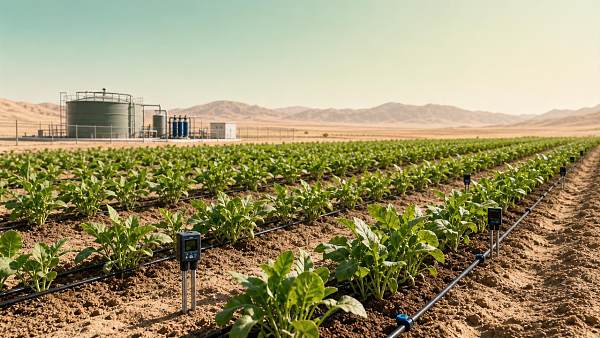
Sustainable agriculture benefits refer to measurable improvements in productivity, resource efficiency, and environmental performance. In dry regions, water becomes the main constraint, so every farming decision affects resilience.
These benefits include lower irrigation losses, better soil moisture retention, and more stable yields during heat or rainfall variability. They also include reduced energy use and fewer nutrient runoff events.
From an industrial perspective, sustainable agriculture benefits support traceable raw materials, improved planning accuracy, and lower exposure to sudden production shortfalls.
Water-stressed regions often face overlapping pressures. Aquifer depletion, energy price swings, and climate volatility can weaken agricultural output and strain downstream processors.
That is why sustainable agriculture benefits should be viewed as system-level gains. They are not limited to farms. They influence transport schedules, storage utilization, and quality consistency.
Key components behind the gains
- Precision irrigation that matches water delivery to crop needs
- Soil management that improves infiltration and organic matter
- Crop selection suited to local climate and water availability
- Digital monitoring through sensors, mapping, and forecasting
- Reuse and treatment strategies that extend limited water resources
How do sustainable agriculture benefits improve water efficiency and output?
The first advantage is better water-use efficiency. Sustainable systems reduce evaporation, leakage, and over-application while maintaining crop health.
Drip irrigation is a common example. It delivers water directly to the root zone, which lowers non-productive losses compared with flood irrigation.
Another source of sustainable agriculture benefits comes from soil structure. Mulching, cover crops, and reduced tillage help the soil hold moisture longer.
When moisture stays available, crops experience less stress between irrigation cycles. That often improves uniformity, quality, and harvest timing.
Technology adds another layer. Soil probes, weather stations, and remote sensing can guide irrigation scheduling based on real field conditions.
This creates two operational gains. Water is applied only when needed, and pumping energy is used more efficiently.
Practical outcomes often seen
- Higher yield per unit of water
- Lower fertilizer loss from runoff or deep percolation
- Reduced pumping hours and energy consumption
- Stronger crop quality consistency
- Better response during drought restrictions
These sustainable agriculture benefits become more valuable when water prices rise or allocations tighten. Efficiency is no longer optional. It becomes a competitive requirement.
Which industries and use cases gain the most from these improvements?
The impact reaches far beyond farms. Food and beverage operations depend on stable agricultural inputs, especially in regions with recurring drought risk.
Water infrastructure providers also benefit. Efficient irrigation reduces pressure on local supplies and can improve planning for treatment, reuse, and storage assets.
Electronics and sensor suppliers gain from rising demand for field monitoring devices, automated valves, telemetry modules, and control software.
Mobility and machinery segments see value as well. Precision agriculture equipment, electric pumping systems, and autonomous field tools support efficient operations in constrained environments.
These cross-sector effects align with a system-level view. Sustainable agriculture benefits strengthen industrial coordination where agriculture, infrastructure, and technology increasingly overlap.
High-impact application scenarios
- Export-oriented crop systems facing quality and traceability demands
- Dryland regions with declining groundwater tables
- Agri-industrial zones integrating wastewater reuse
- Processing clusters that need predictable raw material supply
- Mixed farming areas using digital irrigation controls
How can decision-makers evaluate the right sustainable agriculture strategy?
A good evaluation starts with water accounting. Measure how much water is available, how much is lost, and how much value each unit creates.
Next, examine field conditions. Soil type, salinity, slope, crop mix, and energy costs strongly influence the best intervention.
Then compare options across performance and implementation criteria. Sustainable agriculture benefits are greatest when technology, agronomy, and infrastructure work together.
This type of review helps translate sustainable agriculture benefits into measurable business outcomes. It also prevents investment decisions based only on equipment trends.
What risks, trade-offs, and common mistakes should be considered?
One common mistake is treating irrigation equipment as a complete solution. Hardware alone cannot deliver sustainable agriculture benefits without agronomic discipline and maintenance.
Another risk is poor data quality. Sensors that are uncalibrated or badly placed may encourage overconfidence and incorrect irrigation decisions.
Salinity is another concern in dry regions. If drainage and water quality are ignored, efficiency gains can be offset by long-term soil degradation.
Short payback expectations can also create failure. Some sustainable agriculture benefits appear quickly, but soil health and landscape resilience often require longer timelines.
Risk reminders before scaling
- Match irrigation design to crop, soil, and water source
- Plan maintenance for filters, emitters, pumps, and valves
- Track salinity, drainage, and nutrient balance continuously
- Use baseline data before claiming efficiency improvements
- Integrate training, not only equipment procurement
What are the cost, timeline, and implementation realities?
Implementation costs vary widely. Basic soil moisture monitoring may start small, while full precision irrigation networks need larger capital and integration effort.
Still, sustainable agriculture benefits can justify phased investment. Many projects begin with monitoring, then add automation, then expand to reuse or predictive analytics.
Timelines also differ by intervention. Irrigation scheduling changes may show results within one season. Soil organic matter improvements can take several cycles.
The best approach is often staged and evidence-based. That allows organizations to capture early sustainable agriculture benefits while reducing implementation risk.
How do sustainable agriculture benefits support long-term resilience and competitiveness?
Long-term resilience depends on using fewer critical resources for each unit of output. In dry regions, that principle starts with water but extends to energy, land, and logistics.
Sustainable agriculture benefits help create that efficiency. They lower vulnerability to drought rules, volatile input costs, and inconsistent yields.
They also support stronger reporting and benchmarking. Verified data on water productivity, soil performance, and process stability can improve financing and compliance readiness.
For integrated industrial ecosystems, this matters greatly. Agriculture is now linked with digital infrastructure, ESG expectations, and technical performance standards across multiple sectors.
Sustainable agriculture benefits therefore act as both a field-level improvement and a strategic resilience lever. They protect output today while building a more dependable supply base tomorrow.
Quick FAQ summary
Water scarcity is redefining how agricultural and industrial systems perform. Sustainable agriculture benefits offer a practical path to stronger efficiency, lower risk, and better long-term competitiveness.
The next step is to assess current water productivity, identify the largest losses, and prioritize actions that can be measured clearly. A system-based approach turns sustainable agriculture benefits into durable operational value.
The Archive Newsletter
Critical industrial intelligence delivered every Tuesday. Peer-reviewed summaries of the week's most impactful logistics and market shifts.