Monday, May 22, 2024

Sustainable Water Solutions That Hold Up in Drought Seasons
by
Published
Views:
As drought seasons intensify, sustainable water solutions have become essential to resilient manufacturing and infrastructure planning. For procurement teams, engineers, and technical evaluators, combining industrial filtration, Verifiable data, and Manufacturing standards is key to improving Manufacturing efficiency while supporting CO2 removal goals. This article explores how cross-sector innovation, from Digital foundations to practical Procurement insights, helps organizations build water systems that endure stress and deliver measurable value.
Across modern industry, water is no longer a low-cost utility that can be managed in isolation. It is a strategic input that affects uptime, product quality, compliance exposure, energy demand, and long-term site resilience. During drought seasons, even facilities with stable power and strong logistics can face production disruption if intake quality changes, water allocations tighten, or wastewater discharge limits become harder to meet.
For cross-sector decision-makers, the challenge is not simply to save water. It is to design systems that can maintain process stability under variable conditions, often across 3 to 5 linked domains: pretreatment, storage, reuse, discharge control, and digital monitoring. That is where technical benchmarking matters. A structured view spanning manufacturing, infrastructure, agriculture, mobility, and environmental systems helps teams avoid narrow decisions that look efficient on paper but fail in real operating conditions.
Why Drought-Resilient Water Systems Matter Across Industrial Operations
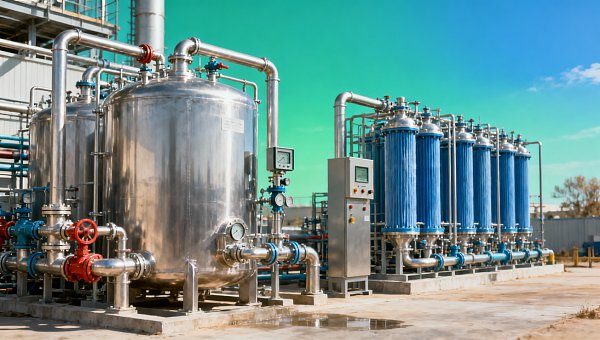
Drought pressure does not impact all facilities in the same way, but the pattern is consistent: lower source availability, higher variability in feedwater quality, and tighter pressure on operating costs. In sectors tied to precision manufacturing, food production, electronics cleaning, cooling loops, or membrane-based wastewater reuse, a 10% to 20% shift in feedwater solids or conductivity can trigger downstream instability if systems are not designed with enough flexibility.
This is especially relevant in integrated industrial ecosystems where one plant’s water stress can ripple into supplier performance, maintenance intervals, and delivery schedules. Procurement officers increasingly need to ask not only whether a system meets current flow requirements, but whether it can hold performance under 2 to 3 seasonal stress conditions without excessive chemical use, emergency trucking, or unplanned shutdowns.
From a technical evaluation standpoint, drought resilience depends on three linked factors: source diversity, treatment adaptability, and data visibility. A system that relies on a single intake source, fixed filtration settings, and manual sampling once per week may appear inexpensive initially, yet expose the site to high risk when turbidity, biological loading, or salinity rises beyond design assumptions.
Operational risks that often appear too late
Many organizations underestimate the compounding effect of drought on water-intensive operations. Reduced water availability can increase concentration factors in cooling systems, shorten membrane cleaning cycles, and raise the load on sludge handling or brine management. In practical terms, this can mean maintenance frequency moving from once every 6 months to once every 8 to 10 weeks in poorly optimized systems.
There is also a quality risk. In industries where rinse water quality influences coating adhesion, electronic yield, or microbial control, variable water input can create hidden defects. Quality control and safety teams should therefore treat water system stability as part of process capability, not merely utility management.
Core indicators to track early
- Daily intake volume variance over a 30-day period
- Feedwater turbidity and conductivity range during peak heat weeks
- Filter differential pressure trend and membrane fouling interval
- Reuse percentage versus total site demand, often targeted at 15% to 60% depending on process type
- Energy use per cubic meter treated, especially when RO, MBR, or advanced oxidation is involved
When these indicators are benchmarked across comparable facilities and standards-based design criteria, teams can move from reactive utility management to structured resilience planning. This is where cross-sector intelligence becomes useful: lessons from automotive paint shops, semiconductor ultrapure water loops, smart agriculture fertigation, and municipal-grade reuse systems often reveal transferable design logic.
Key Sustainable Water Solutions That Hold Up Under Stress
No single technology solves drought resilience on its own. Sustainable water solutions work best when they are combined into a layered architecture that matches local water quality, process sensitivity, maintenance capability, and discharge constraints. In most industrial settings, the strongest results come from pairing robust pretreatment with reuse loops, storage buffering, and digital monitoring rather than relying on oversized standalone equipment.
Pretreatment remains the first stability layer. Media filtration, cartridge filtration, dissolved air flotation, ultrafiltration, or clarifiers can reduce solids loading before sensitive assets such as reverse osmosis or membrane bioreactors. This matters because membrane performance is not only about nominal flux; it is about how well the upstream system limits fouling and keeps cleaning frequency within a manageable range such as every 30 to 90 days instead of every 2 to 3 weeks.
Reuse technologies form the second layer. Depending on process goals, facilities may recover water from rinse lines, cooling blowdown, washdown streams, or biologically treated wastewater. Typical reuse pathways include MBR plus RO for high-quality process reuse, ultrafiltration for cooling or utility reuse, and polishing steps such as UV or activated carbon for odor, organics, or microbial control.
Technology comparison for drought-season durability
The table below compares common sustainable water solutions using practical B2B criteria rather than generic marketing claims. These criteria help engineers, procurement teams, and project managers align system choice with maintenance realities, water risk profile, and required output quality.
A key conclusion is that drought resilience usually depends on system integration more than on any one premium component. Facilities that combine pretreatment, reuse, and smart buffering often achieve more stable output than sites that invest heavily in one advanced skid while leaving source variability unmanaged.
Selection priorities by operating context
- For process-sensitive manufacturing, prioritize output consistency and validation points over maximum nominal capacity.
- For infrastructure-heavy sites, prioritize maintainability, spare parts access, and operator workload over complex optimization claims.
- For multi-site groups, prioritize benchmarkable KPIs so procurement and engineering teams can compare performance across regions.
This integrated approach aligns with the kind of cross-sector benchmarking that organizations such as GIM use to connect environmental infrastructure decisions with manufacturing efficiency, standards-based evaluation, and long-term supply chain resilience.
How to Evaluate Water Systems for Procurement, Quality, and Technical Approval
In drought-sensitive projects, procurement cannot be reduced to price per unit or short-term installation cost. Technical evaluators, quality managers, and commercial teams need a decision framework that includes lifecycle reliability, standard alignment, service capability, and verifiable performance windows. A system that is 8% cheaper at purchase may become significantly more expensive if it needs frequent consumable replacement, unplanned maintenance visits, or emergency water supplementation.
A practical procurement review should assess at least four categories: design suitability, operating cost visibility, compliance readiness, and service response. This matters for distributors and project leaders as well, because downstream customer dissatisfaction often traces back to unclear assumptions during tendering, especially around feedwater variability, cleaning chemicals, or expected reuse ratios.
Procurement decision matrix
The following matrix provides a structured way to compare sustainable water solutions in B2B purchasing cycles. It is especially useful when cross-functional teams need to align engineering, operations, finance, and quality expectations before final approval.
The matrix shows that reliable procurement depends on verification discipline. In other words, the strongest purchasing position comes from making assumptions explicit: water quality variation, operator skill level, service reach, spares lead time, and validation needs. This reduces the chance that a system performs well only under laboratory conditions while failing under site-specific drought stress.
Questions technical teams should ask before approval
- What happens if intake turbidity doubles for 7 to 14 days during seasonal runoff or low-flow concentration?
- Can the system maintain output quality at 80% to 90% of nominal source availability?
- What spare parts are critical, and what is the realistic replacement lead time: 72 hours, 2 weeks, or longer?
- How are performance guarantees linked to actual site water data and operator practices?
For commercial evaluators, these questions improve not only technical selection but also contract clarity. For distributors and agents, they reduce warranty conflicts and strengthen after-sales positioning. For quality and safety teams, they provide a basis for acceptance criteria that can be checked during commissioning and normal operation.
Implementation, Monitoring, and Standards-Based Control
Even a well-selected sustainable water solution can underperform if implementation lacks structure. In drought-prone conditions, the most successful projects usually follow a staged deployment model with defined baselines, acceptance tests, and operator handover. For medium-scale industrial systems, a practical implementation window may range from 6 to 16 weeks depending on civil scope, instrumentation needs, and whether reuse loops or discharge modifications are included.
A useful implementation framework has five stages: site assessment, design verification, equipment integration, commissioning, and performance stabilization. During site assessment, teams should capture process demand by shift, not just daily total consumption. A plant using 300 m³/day may still face critical shortages if 45% of that demand occurs in a narrow 6-hour production window and storage has not been sized for peak drawdown.
Standards-based control is equally important. While exact requirements depend on the project, organizations benefit from aligning documentation, inspection, and acceptance methods with recognized quality systems and sector-relevant norms. In cross-sector manufacturing environments, this can include material traceability, weld inspection plans, sensor calibration logs, electrical integration checks, and documented FAT/SAT procedures.
A practical rollout checklist
- Collect 30 to 90 days of source and process water data where possible, including seasonal anomalies.
- Define target water quality by use point, such as cooling makeup, rinse water, washdown, or agricultural irrigation support.
- Confirm mechanical, electrical, controls, and drainage interfaces before fabrication release.
- Set acceptance criteria for flow, pressure, recovery rate, and alarm functionality before commissioning starts.
- Train operators with normal operation, upset response, and cleaning procedures documented in a usable format.
Digital monitoring turns these steps into an operating advantage. With basic remote visibility, teams can detect early drift in transmembrane pressure, conductivity, dosing rates, or tank turnover. In practice, this reduces the lag between issue detection and corrective action. Instead of waiting for a weekly manual report, engineers can review trend deviations within hours, improving both uptime and water efficiency.
Common implementation mistakes
One frequent mistake is designing purely for average demand while ignoring drought-season extremes. Another is failing to define who owns water quality verification after startup: the OEM, site utilities team, production engineering, or an external service provider. A third mistake is treating automation as optional. Even a modest monitoring package with 5 to 10 meaningful sensor points often produces better lifecycle value than overspending on mechanical capacity without visibility.
For project managers and engineering leads, the most resilient path is to link implementation milestones to measurable outcomes. These outcomes may include a target reuse rate, reduced freshwater dependency, stable output conductivity, lower cleaning frequency, or documented response time for alarms and service interventions.
FAQ and Practical Guidance for Long-Term Water Resilience
Teams planning sustainable water solutions often face similar questions, especially when balancing technical ambition with budget control and operational realism. The answers below are designed for real purchasing and implementation scenarios rather than theoretical best cases.
How do you choose the right water solution for a drought-prone site?
Start with three variables: source variability, required output quality, and operator capability. If intake quality changes sharply across the year, flexible pretreatment and buffering become essential. If the process requires high-purity water, reuse trains may need multiple barriers. If site staffing is limited, simpler systems with clear maintenance windows may outperform technically advanced but service-intensive designs.
What reuse level is realistic for industrial operations?
That depends on process segregation and treatment scope. Many facilities begin with 15% to 30% reuse through low-risk utility applications. Sites with stronger wastewater separation, better pretreatment, and higher treatment investment may pursue 40% to 70% reuse in selected operations. The critical point is to match reuse targets with actual water quality requirements rather than setting a high number that cannot be maintained consistently.
How long does a typical project take?
For modular retrofits with limited civil work, 6 to 10 weeks is common. For integrated reuse systems involving tanks, controls, piping changes, and performance testing, 10 to 16 weeks is more realistic. Procurement teams should also review consumables, sensors, and spare parts availability early, because lead times can affect commissioning even when main equipment arrives on schedule.
What are the most common buying mistakes?
The most common mistakes are using average water data instead of seasonal ranges, overlooking maintenance burden, under-specifying instrumentation, and accepting vague performance language. Another frequent issue is failing to define acceptance conditions for startup. Clear technical documentation and verifiable performance thresholds protect both buyer and supplier.
Recommended long-term practices
- Review water balance and reuse opportunities at least once every 12 months.
- Revalidate source quality assumptions before major capacity expansion.
- Track maintenance labor hours, not just consumables cost.
- Use benchmarking data to compare sites and identify underperforming assets.
Sustainable water solutions that hold up in drought seasons are rarely accidental. They result from disciplined design choices, realistic procurement standards, structured implementation, and ongoing performance visibility. For organizations navigating manufacturing, infrastructure, smart agriculture, and environmental systems at the same time, cross-sector benchmarking offers a practical way to reduce risk while improving operational efficiency and resilience.
GIM supports this process by connecting technical evaluation, standards-based comparison, and procurement insight across multiple industrial pillars. If your team is assessing filtration, reuse, monitoring, or broader water resilience strategy, now is the time to align system design with measurable operating conditions. Contact us to discuss your application, request a tailored benchmarking view, or explore more sustainable water solutions built for real drought-season performance.
The Archive Newsletter
Critical industrial intelligence delivered every Tuesday. Peer-reviewed summaries of the week's most impactful logistics and market shifts.