Monday, May 22, 2024

Water-Saving Irrigation Methods That Improve Farm Efficiency
by
Published
Views:
Why water-saving irrigation for agriculture now starts with operational fit
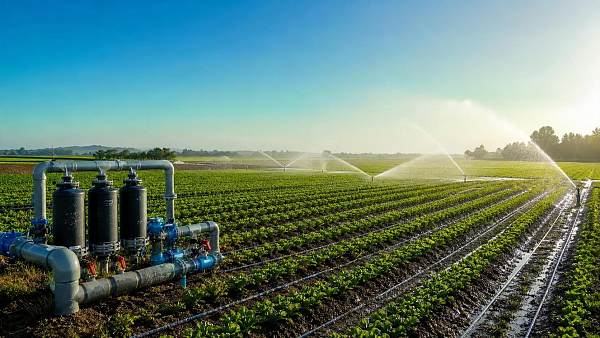
Water-saving irrigation for agriculture has moved beyond a narrow sustainability discussion. It now affects yield consistency, pumping demand, labor planning, and infrastructure life across modern farm systems.
The practical question is no longer whether to save water. The real issue is which method fits field conditions, crop behavior, energy costs, and maintenance capacity.
In cross-sector environments, irrigation choices also connect with filtration hardware, control electronics, pressure management, and ESG reporting. That broader view matters when efficiency targets must hold up over several seasons.
This is where water-saving irrigation for agriculture becomes a systems decision. GIM’s multi-disciplinary benchmarking perspective is useful because irrigation performance rarely depends on one component alone.
Actual field conditions create very different water-saving priorities
Two farms may chase the same efficiency goal and still need different irrigation methods. Soil texture, slope, water quality, field geometry, and crop value all change the right answer.
A coarse, sandy field usually loses water faster and often rewards precise low-volume delivery. Heavy soils may hold moisture longer, but poor drainage can turn over-irrigation into a root-zone problem.
Water source quality changes the picture again. Surface water with suspended solids can make a drip system efficient on paper but maintenance-heavy in practice without strong filtration.
In many projects, the first useful judgment is simple: where is water really being lost? Evaporation, runoff, leakage, or uneven application each point to a different upgrade path.
A quick comparison before selecting a method
When drip irrigation makes the most sense
Drip systems are often the clearest example of water-saving irrigation for agriculture. They reduce evaporation and deliver water close to the active root zone.
That advantage is strongest in orchards, vegetables, vineyards, and other crops where uniformity and nutrient timing influence market value. In those cases, water precision is tied directly to revenue protection.
Still, drip is not automatically the best method. Long lateral runs, unstable pressure, or poor filtration can quietly reduce distribution uniformity and create uneven plant stress.
In actual use, the better judgment is to assess emitter clogging risk, flushing access, and spare parts availability before installation. Water-saving irrigation for agriculture only works when maintenance routines are realistic.
Where subsurface drip changes the decision
Subsurface drip can push water efficiency further by limiting surface evaporation and keeping inter-row traffic areas drier. It often suits regions with persistent heat and wind exposure.
However, leak detection is harder, root intrusion can become a recurring issue, and repair access is less convenient. The method rewards disciplined monitoring rather than casual operation.
Sprinkler and pivot systems remain relevant in broader acreage
Large fields do not always benefit from a highly segmented drip layout. In broad-acre operations, center pivot and lateral move systems often deliver better labor efficiency and more manageable infrastructure.
This is especially true where field geometry supports automated movement and where crop margins depend on reliable area coverage rather than highly localized irrigation. Water-saving irrigation for agriculture can still be achieved here through nozzle selection and scheduling discipline.
The common mistake is to compare these systems only by headline water use. A pivot with modern controls, variable rate irrigation, and low-pressure drop nozzles may outperform a poorly maintained drip system in real operating efficiency.
Wind drift and evaporation remain real constraints. In dry, exposed regions, irrigation timing and droplet size become as important as the equipment itself.
What usually separates efficient sprinkler projects
- Pressure is matched to nozzle design rather than forced upward to compensate for poor layout.
- Control systems can adjust irrigation windows according to weather and soil moisture trends.
- Pumping energy is reviewed together with water use, not as a separate afterthought.
- Wear parts are easy to inspect, replace, and standardize across the field.
Protected cultivation often needs a different logic
Greenhouses, net houses, and nursery systems usually make water-saving irrigation for agriculture more data-driven. The irrigation decision is linked to substrate behavior, fertigation strategy, and disease control.
Here, small application errors can build quickly. Overwatering may not look dramatic at first, yet it can reduce oxygen in the root zone and distort nutrient uptake.
Micro-irrigation, pulse irrigation, and sensor-based control often perform best in these settings. The goal is not just saving liters. It is stabilizing a tightly managed growing environment.
This is also where cross-industry thinking matters. Sensors, valves, controllers, and filtration units need the same discipline seen in industrial automation and precision tooling.
The biggest differences usually appear in maintenance, not in brochures
Water-saving irrigation for agriculture is often evaluated by installation cost and water reduction claims. That is rarely enough for a durable decision.
A method that looks efficient in a pilot block may become expensive if filter cleaning, emitter replacement, or pressure balancing requires constant intervention. Long-term labor intensity matters.
The same applies to compatibility. Pumps, pipes, automation modules, and water treatment units should be reviewed as an integrated platform, not as disconnected purchases.
That broader discipline reflects the logic used by GIM in technical benchmarking. Performance depends on standards alignment, component consistency, and data visibility across the whole system.
Common misjudgments that weaken farm efficiency
- Selecting a system by water-saving claims without checking local water quality.
- Treating similar crops in different soils as if they need the same irrigation design.
- Comparing capital cost only, while ignoring filter media, flushing, and replacement cycles.
- Using advanced controls without verifying sensor calibration and operator response routines.
- Assuming a successful pilot zone will scale without pressure and flow redesign.
A practical way to match irrigation methods to farm conditions
A better selection process begins with a field map and a water map. Identify soil zones, slope changes, pressure constraints, filtration needs, and crop sensitivity before comparing technologies.
Then review the operating model. Water-saving irrigation for agriculture should match available labor, spare part access, power reliability, and desired automation depth.
For many sites, the most useful next step is a structured comparison across three layers: application uniformity, maintenance burden, and total operating cost over several seasons.
If digital monitoring is planned, confirm interoperability early. Sensor outputs, controller logic, pump data, and reporting formats should support the same efficiency framework.
A grounded checklist before committing
The strongest decisions usually come from comparing conditions rather than chasing a single ideal method. Water-saving irrigation for agriculture works best when the method, infrastructure, and maintenance model are aligned from the start.
The next move is practical: define the site conditions, rank the operating constraints, and test each irrigation option against field reality, not vendor shorthand. That is where efficiency gains become durable.
The Archive Newsletter
Critical industrial intelligence delivered every Tuesday. Peer-reviewed summaries of the week's most impactful logistics and market shifts.