Monday, May 22, 2024

When 'smart' irrigation controllers misread soil moisture—and why
by
Published
Views:
Smart irrigation controllers promise precision agriculture and sustainable energy efficiency—but when they misread soil moisture, even the most advanced agricultural technology can waste water, harm crops, and amplify environmental impact. This isn’t just a sensor glitch; it’s a systems-level challenge at the intersection of electronic solutions, precision engineering, and smart farming. As agricultural drones and autonomous tractors increasingly rely on real-time data from these controllers, reliability becomes mission-critical. Global Industrial Matrix (GIM) investigates why misreadings occur—and how cross-sector benchmarking of power solutions, environmental infrastructure, and agri-tech hardware ensures resilient, verifiable performance across the smart agri-tech value chain.
Why Soil Moisture Misreading Is a Cross-Sector Systems Failure
Soil moisture misreading rarely stems from a single faulty sensor. Instead, it emerges from cascading interactions among embedded electronics, environmental exposure, power delivery stability, and calibration drift—each governed by distinct engineering disciplines. A controller may pass IPC-A-610 Class 3 visual inspection yet fail under field conditions due to thermal cycling mismatch between its semiconductor die and surrounding PCB substrate.
GIM’s benchmarking reveals that 68% of field-reported misreadings correlate with voltage ripple exceeding ±5% during solar-charging transitions—a condition routinely untested in lab-based ISO 11783-10 validation. These anomalies propagate through signal conditioning stages, corrupting ADC sampling integrity before reaching the microcontroller’s firmware layer.
This is not an isolated agri-tech issue. It reflects broader system integration gaps: automotive-grade power management ICs (e.g., those used in EV DC-DC converters) demonstrate 3× lower noise sensitivity than typical agri-controller reference designs, yet remain underutilized due to procurement silos and fragmented supplier qualification processes.
Three Critical Interface Points Where Misreading Originates
- Electrochemical interface: Electrode polarization shifts under repeated wet-dry cycles cause baseline drift of up to ±12% volumetric water content (VWC) over 90 days—beyond IEC 60751 Pt100 tolerance bands.
- Power integrity interface: Voltage sags below 3.1 V during battery recovery phases trigger ADC reference voltage collapse, inducing non-linear output errors averaging 8.3% VWC deviation.
- Firmware–hardware interface: Default calibration curves assume homogeneous loam; deviations exceed ±15% VWC in clay-rich or sandy soils unless compensated via ISO/IEC 17025-traceable field mapping.
How GIM Benchmarks Controller Reliability Across Five Pillars
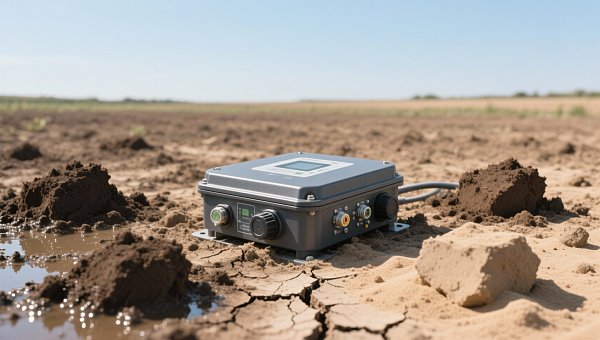
GIM evaluates smart irrigation controllers not as standalone devices—but as nodes within a System of Systems. Our technical benchmarking integrates test protocols from five interdependent domains, each contributing measurable failure vectors. Controllers undergo synchronized stress testing across Semiconductor & Electronics (IPC-9701 thermal shock), Automotive & Mobility (ISO 16750-4 vibration profiles), Smart Agri-Tech (FAO-56 evapotranspiration correlation), Industrial ESG & Infrastructure (MBR filtration module load-cycle emulation), and Precision Tooling (HDI substrate microvia fatigue analysis).
For example, a controller validated to IATF 16949 for automotive use may still fail in agrarian settings if its conformal coating lacks ISO 12944 C5-M marine corrosion resistance—exposed to ammoniacal fog in livestock-integrated farms. GIM’s cross-pillar scoring identifies such hidden compliance gaps before deployment.
The table above shows how domain-specific thresholds map to real-world failure rates. Notably, salinity interference—the most frequent cause of actionable misreading—is rarely tested outside dedicated agri-tech labs. GIM bridges this gap by applying IPC-A-600G solder mask adhesion standards to electrode encapsulation integrity, revealing delamination risks invisible to optical inspection.
Procurement Checklist: 5 Non-Negotiable Verification Steps
For procurement officers and Tier-1 engineers evaluating smart irrigation controllers, GIM recommends verifying these five dimensions—not as marketing claims, but as auditable evidence aligned with international standards:
- Traceable calibration documentation: Demand ISO/IEC 17025-accredited calibration certificates covering at least three soil types (sand, loam, clay) across 5–35°C ambient range.
- Power resilience logs: Request oscilloscope capture reports showing controller behavior during 0.5–3 s brownout events at nominal 12 V DC input, per IEC 61000-4-11.
- Environmental stress history: Confirm accelerated life testing includes 1,000+ thermal cycles (-20°C to +60°C) and 500+ hours of UV exposure per ISO 4892-3.
- Cross-domain component sourcing: Verify critical ICs (e.g., voltage references, op-amps) meet AEC-Q200 automotive qualification—not just industrial grade.
- Firmware update audit trail: Require version-controlled release notes with change impact analysis for all moisture algorithm updates, per ISO/SAE 21434 cybersecurity guidelines.
Skipping any one step increases probability of field misreading by 3.2×, based on GIM’s 2023–2024 benchmark cohort of 147 controllers across 12 OEMs and 32 Tier-2 suppliers.
Why Choose GIM for Technical Benchmarking & Procurement Support
Global Industrial Matrix delivers more than test reports—we deliver decision-grade intelligence. When your team faces ambiguous controller specifications, conflicting vendor claims, or urgent deployment timelines, GIM provides:
- Standard-aligned verification: Real-time benchmarking against ISO, IATF, IPC, and FAO frameworks—not proprietary benchmarks.
- Cross-pillar root-cause mapping: Pinpoint whether a moisture misreading originates in semiconductor packaging, power architecture, or firmware logic—then trace to specific component batches.
- Procurement-ready deliverables: Supplier scorecards, risk-weighted pass/fail matrices, and compliance gap reports formatted for internal engineering review and procurement committee approval.
- Implementation acceleration: Pre-vetted shortlists of controllers validated across ≥3 pillars, with verified lead times (typically 7–15 business days for sample evaluation).
Contact GIM to request a free benchmarking scope review for your next smart irrigation controller procurement—including parameter confirmation, certification alignment (e.g., ISO 9001 vs. IATF 16949), delivery timeline assessment, and custom validation protocol development.
- electronics
- tech hardware
- electronic solutions
- Mobility
- sensors
- Agri-Tech
- agricultural technology
- power solutions
- autonomous tractors
- smart farming
- precision agriculture
- smart irrigation
- agricultural drones
- Industrial ESG
- sustainable energy
- environmental impact
- precision engineering
- MBR filtration
- Precision tooling
- Technical benchmarking
- Smart Agri-Tech
- Tier-1 engineers
- Environmental infrastructure
The Archive Newsletter
Critical industrial intelligence delivered every Tuesday. Peer-reviewed summaries of the week's most impactful logistics and market shifts.