Monday, May 22, 2024

Agrochemicals Drift Risks and Safer Use Tips
by
Published
Views:
Agrochemicals are essential to modern crop protection, but spray drift can create serious quality, safety, environmental, and compliance risks when applications are not tightly controlled.
Drift can affect workers, nearby communities, water bodies, pollinators, livestock, and product integrity across agricultural and industrial supply chains.
Responsible use of agrochemicals depends on verified procedures, suitable equipment, weather awareness, operator discipline, and traceable records.
This article outlines practical controls for reducing drift risks and supporting safer, auditable, and standards-aligned agrochemical management.
Agrochemicals Drift Risks and Safer Use Tips
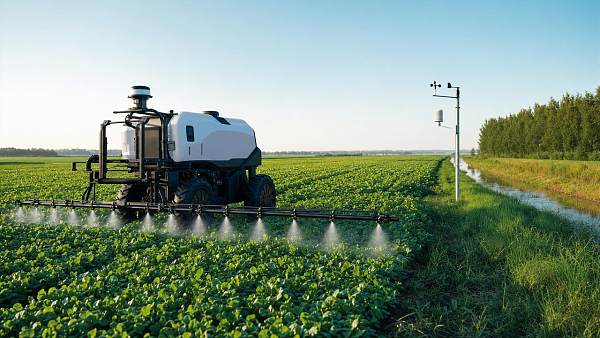
Agrochemicals include herbicides, insecticides, fungicides, growth regulators, seed treatments, and related crop protection inputs used in managed production systems.
When applied correctly, agrochemicals help protect yield, stabilize food supply, and reduce crop losses caused by weeds, pests, and disease.
When misapplied, agrochemicals may move beyond the intended target zone through air, runoff, residues, or contaminated equipment.
Spray drift is the airborne movement of droplets, vapors, or particles away from the treated area during or after application.
This risk is influenced by droplet size, nozzle condition, pressure, boom height, wind speed, humidity, temperature, and field boundaries.
A safer-use program treats agrochemicals as controlled technical inputs, not simply consumables stored and sprayed by routine habit.
How Drift Occurs in Practical Operations
Drift usually begins with poor droplet management. Fine droplets remain airborne longer and travel farther under unstable weather conditions.
High spray pressure, worn nozzles, incorrect nozzle angle, and excessive boom height increase the chance that agrochemicals leave the target canopy.
Thermal inversions are especially concerning because suspended droplets may move laterally after application, sometimes beyond visible field boundaries.
Volatile agrochemicals can also drift as vapors, particularly under high temperature, low humidity, or incompatible formulation conditions.
Drift risk increases near sensitive crops, schools, residential areas, watercourses, greenhouses, apiaries, and organic or specialty production zones.
Current Industry Concerns Around Agrochemicals
Agrochemicals now sit within a broader industrial risk landscape that includes traceability, ESG performance, worker safety, and export compliance.
Residue expectations are becoming stricter, and documentation gaps can damage trust even when field performance appears acceptable.
Food processors, retailers, insurers, and regulators increasingly expect proof that agrochemicals are selected, mixed, applied, and stored responsibly.
The same pressure applies to smart agriculture systems, where application data may be connected to sensors, drones, autonomous tractors, and digital logs.
For platforms such as Global Industrial Matrix, agrochemicals are part of a wider system linking agriculture, infrastructure, compliance, and technology benchmarking.
- Residue control affects market access, product claims, and confidence in agricultural supply chains.
- Worker exposure requires clear labeling, personal protective equipment, and emergency response readiness.
- Environmental protection depends on buffers, drainage awareness, weather checks, and spill prevention.
- Digital records improve traceability when agrochemicals are used across multiple fields and operators.
- Equipment benchmarking supports consistent performance across sprayers, drones, pumps, sensors, and nozzles.
Business Value of Safer Agrochemical Management
Better control of agrochemicals reduces avoidable losses from rework, crop injury, rejected shipments, insurance claims, and regulatory enforcement.
It also protects brand credibility by showing that crop protection decisions are based on evidence, not improvisation.
A safer application system supports consistent quality because agrochemicals reach the intended target at the correct rate and timing.
It strengthens operational efficiency by reducing overlap, under-application, excess mixing, downtime, and corrective inspections.
It also enables stronger comparison of equipment, chemical handling workflows, and smart agri-tech investments across regions and production models.
Typical Scenarios Requiring Strong Drift Control
Different operating environments require different safeguards. A single procedure rarely covers all agrochemicals, equipment types, and site risks.
Ground sprayers, aerial systems, greenhouse equipment, and drone platforms each present different exposure pathways and verification needs.
Field maps should identify sensitive borders before agrochemicals are mixed, transported, or loaded into application systems.
Equipment Checks Before Application
Equipment condition determines whether agrochemicals are delivered accurately or dispersed unpredictably beyond the planned treatment zone.
Before each job, inspect tanks, hoses, filters, pressure gauges, pumps, nozzles, seals, agitation systems, and shutoff controls.
Calibration should confirm output rate, travel speed, pressure range, boom height, nozzle spacing, and spray pattern uniformity.
Nozzle selection is central. Air-induction and low-drift designs may reduce fine droplets when matched to the product label.
Worn nozzles can over-apply agrochemicals and generate uneven distribution, even when the sprayer appears visually acceptable.
- Replace nozzles when flow rate exceeds tolerance against reference output.
- Keep boom height as low as practical while maintaining pattern overlap.
- Check pressure gauges against a reliable reference instrument.
- Clean filters and strainers before they restrict flow or alter pressure.
- Document calibration results before agrochemicals are applied in sensitive zones.
Weather Monitoring and Application Windows
Weather decisions should be based on current field conditions, not only forecasts from distant stations.
Wind speed, wind direction, temperature, humidity, rainfall probability, and inversion risk should be checked before and during application.
Agrochemicals should not be sprayed when wind direction carries droplets toward sensitive receptors or legally restricted zones.
Very calm conditions can also be unsafe if they indicate a thermal inversion with limited vertical air mixing.
Practical programs define stop-work limits and authorize operators to pause spraying when conditions change unexpectedly.
Handling, Mixing, and Storage Safeguards
Drift control begins before the sprayer enters the field. Safe handling reduces spills, contamination, dosing errors, and exposure.
Agrochemicals should remain in original labeled containers unless transfer is specifically controlled, labeled, and documented.
Mixing areas should prevent uncontrolled drainage into soil, stormwater channels, wells, or irrigation sources.
Compatibility checks are essential because incompatible mixtures can separate, clog nozzles, increase volatility, or change spray behavior.
Rinsate, empty containers, and contaminated absorbents should be managed according to label directions and local regulatory requirements.
- Read the label and safety data sheet before opening any product.
- Confirm target crop, pest, rate, interval, and restrictions.
- Wear required personal protective equipment during mixing and loading.
- Measure agrochemicals with dedicated tools that are never used for food or drink.
- Clean equipment in approved areas after application is complete.
Training and Documentation for Audit Readiness
Training turns written procedures into reliable field behavior. It should cover product hazards, drift prevention, emergency response, and recordkeeping.
Operators should understand why agrochemicals require weather discipline, equipment verification, and label compliance at every application stage.
Short refresher sessions are useful before high-pressure seasons, new product introductions, or equipment changes.
Records should include product name, batch details, rate, field, weather, equipment settings, operator, date, time, and observed incidents.
Digital logs, sensor feeds, and geotagged maps improve traceability when agrochemicals are applied across complex production networks.
Such records also support benchmarking against internal rules, certification schemes, insurance expectations, and international management practices.
Safer-Use Checklist for Agrochemicals
A practical checklist helps standardize decisions when field conditions, crop urgency, and operational schedules create pressure.
The following actions support safer agrochemicals management without relying on complex or expensive systems alone.
- Confirm that the selected product is approved for the crop and target pest.
- Map sensitive receptors and define buffers before mixing begins.
- Select nozzles that produce the recommended droplet spectrum.
- Calibrate sprayers after maintenance, seasonal storage, or nozzle replacement.
- Check wind speed and direction at the actual application site.
- Stop work when weather moves outside approved limits.
- Use personal protective equipment specified for the task.
- Prevent backflow into water sources during filling.
- Record application details immediately after completion.
- Investigate complaints, visible drift, spills, or abnormal spray patterns.
Actionable Next Steps
Start by reviewing the full lifecycle of agrochemicals, from purchasing and storage to application, cleanup, and disposal.
Then compare existing procedures against equipment data, weather records, incident history, residue findings, and site-specific boundary risks.
Priority improvements should focus on calibration discipline, nozzle management, operator training, digital documentation, and clear stop-work authority.
GIM supports a systems-based view of agrochemicals by connecting smart agri-tech, industrial ESG, environmental infrastructure, and technical benchmarking.
With verifiable data and consistent field controls, agrochemicals can be used more safely while supporting productivity, compliance, and environmental responsibility.
The Archive Newsletter
Critical industrial intelligence delivered every Tuesday. Peer-reviewed summaries of the week's most impactful logistics and market shifts.