Monday, May 22, 2024

Harvest Trends to Watch in 2026 for Better Supply Planning
by
Published
Views:
As supply chains grow more volatile, understanding harvest trends is becoming essential for better planning, sourcing, and risk control in 2026. For business evaluators, shifting crop yields, climate pressures, mechanization, and global trade dynamics are no longer agricultural variables alone—they are strategic signals that influence procurement stability, pricing, and cross-industry supply resilience.
Why harvest trends matter differently across business scenarios
For a business evaluator, the value of harvest trends depends on the decision context. A food processor may read them as a near-term cost signal. A packaging buyer may treat them as a volume forecast. A manufacturer with exposure to bio-based inputs may see them as an operational continuity issue. Even financial reviewers and procurement teams outside agriculture now use harvest trends to anticipate supplier stress, logistics bottlenecks, and regional concentration risk.
That is why 2026 planning cannot rely on a single “good harvest” or “bad harvest” narrative. The practical question is which harvest trends matter in which scenario, and what each team should monitor before adjusting sourcing, inventory, pricing assumptions, or supplier qualification. In complex industrial ecosystems such as those mapped by GIM, harvest performance also affects water systems, transport capacity, energy use, automation demand, and ESG reporting. The result is a cross-sector planning issue, not a narrow farm outlook.
Scenario background: what is changing in 2026
Several harvest trends are converging in 2026. Climate variability is making output less predictable across grains, oilseeds, fruits, and specialty crops. Precision agriculture and autonomous equipment are improving yield visibility in well-capitalized regions, but technology adoption remains uneven. Water scarcity is reshaping crop choices in vulnerable zones. At the same time, trade policy, fertilizer costs, labor availability, and sustainability compliance are changing the economics of production and delivery.
For evaluators, these changes create a new planning environment where harvest trends should be read alongside supplier maturity, infrastructure quality, and geopolitical exposure. In other words, yield data alone is insufficient. The better question is whether a harvest trend will be amplified or softened by storage capacity, transport reliability, local energy cost, or processing concentration.
Core harvest trends to watch and what they signal
The most useful harvest trends for 2026 are not always the most visible headlines. Business evaluators should focus on signals that translate into actionable sourcing decisions.
1. Yield volatility by region
A stable global supply picture can still hide sharp local disruption. If one region suffers weather stress, prices and lead times may rise even when total global production looks adequate. This matters especially when suppliers are clustered around a single export corridor.
2. Crop switching and land-use shifts
Farmers are increasingly moving acreage toward crops with better margins, lower water exposure, or easier regulatory compliance. This trend can reduce availability of specific inputs even without a formal shortage. Buyers should not assume last year’s acreage mix will repeat.
3. Mechanization and data visibility
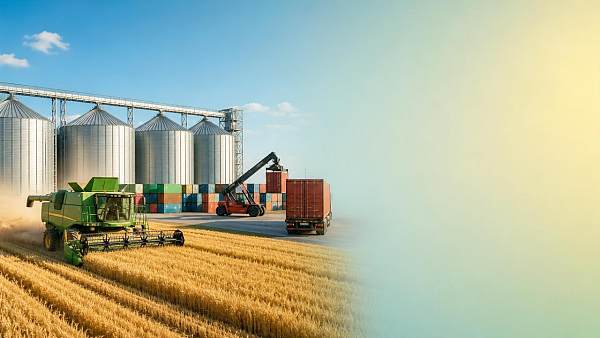
Where smart agri-tech adoption is high, harvest trends become easier to forecast and verify. Regions using connected machinery, remote sensing, and predictive models often support more accurate contract planning. Low-visibility regions may still offer low cost, but with higher variance risk.
4. Post-harvest infrastructure performance
A strong harvest does not guarantee reliable supply if storage, drying, transport, or port systems fail. For many procurement teams, the most important harvest trends are actually post-harvest trends: spoilage rates, handling delays, and quality consistency during movement.
5. Compliance-driven market separation
Traceability, deforestation controls, water-use scrutiny, and carbon disclosure are segmenting the market. In 2026, harvest trends must be evaluated not only by volume, but by certifiable volume. This distinction matters for multinationals under ESG and customer audit pressure.
Typical application scenarios where harvest trends shape planning
Below are the most common business scenarios in which harvest trends directly affect evaluation, planning, and sourcing decisions.
How needs differ by scenario
Scenario 1: Procurement teams securing agricultural or bio-based inputs
In this scenario, harvest trends are mainly used to reduce cost shocks and avoid supply interruptions. The evaluator should focus on harvest calendars, concentration of origin, weather disruption frequency, and supplier hedging behavior. If demand is seasonal or contract-driven, a moderate reduction in yield may create outsized pricing pressure. The right response is not always stockpiling; often it is earlier contract negotiation, diversified origin strategy, and substitute material assessment.
Scenario 2: Manufacturers indirectly exposed through packaging, additives, or natural fibers
Many industrial buyers do not purchase crops directly, yet harvest trends still affect them through paper, starches, plant oils, natural rubber, cotton-based materials, or biomass-derived chemicals. In this case, the evaluator should ask which bill-of-materials items are harvest-sensitive, how much supplier inventory cushions exist, and whether alternative formulations have been validated. The risk is often hidden because the agricultural component is a small cost line until disruption occurs.
Scenario 3: Financial and commercial assessment of supplier stability
When the task is evaluating supplier viability, harvest trends become leading indicators of margin stress. A supplier exposed to poor local harvests may face higher input prices, lower throughput, or quality claims. The evaluator should compare regional crop outlooks with the supplier’s plant location, energy dependence, storage infrastructure, and customer concentration. A supplier in a strong harvest region with weak logistics may still be riskier than one in a moderate harvest region with excellent operational controls.
Scenario 4: ESG, traceability, and customer audit readiness
Here, harvest trends matter because climate and land-use pressure can change the availability of compliant supply. Evaluators should distinguish between headline output and auditable output. If a company must prove origin, water stewardship, or low-deforestation sourcing, the relevant question is not whether total harvest is sufficient, but whether enough certified, traceable, and document-ready material will be available at scale.
A practical comparison: what to watch in each business context
Scenario-fit recommendations for 2026 supply planning
To apply harvest trends effectively, business evaluators should build scenario-based review routines rather than relying on annual assumptions. First, segment inputs into direct agricultural, indirect agricultural, and harvest-sensitive industrial categories. Second, identify where a change in harvest trends would affect cost, lead time, quality, or compliance. Third, rank suppliers by transparency: those able to provide field-level, regional, or post-harvest data deserve higher confidence in 2026 planning.
Another strong practice is to align harvest trends with operational triggers. For example, a forecasted yield decline above a set threshold may trigger alternate sourcing. A delay in harvest movement may trigger safety stock adjustments. A drop in traceable volume may trigger customer communication or reformulation review. This approach turns trend watching into a decision system.
Common misjudgments when reading harvest trends
One frequent error is assuming global abundance cancels local risk. In reality, freight constraints, trade restrictions, and qualification barriers may prevent smooth substitution. Another mistake is overvaluing production estimates without checking post-harvest handling capacity. A third is treating mechanization as a guarantee of resilience; technology improves visibility, but it does not remove water, labor, or policy risk.
Evaluators also sometimes miss the timing gap between harvest trends and procurement impact. A weak harvest may not hit immediately if suppliers have carryover inventory, but the price and availability effects may surface later in contract cycles. Conversely, a strong harvest may not reduce costs quickly if logistics, quality sorting, or downstream conversion capacity remain tight.
FAQ for business evaluators
Which companies should pay the closest attention to harvest trends?
Any business with direct or indirect exposure to crop-based inputs, packaging materials, natural fibers, food ingredients, biomass chemicals, or regulated traceable sourcing should monitor harvest trends closely.
Are harvest trends only relevant for agriculture-related firms?
No. In integrated supply networks, harvest trends influence transportation loads, energy usage, water systems, material costs, and supplier cash flow across multiple industries.
What is the best early warning indicator?
There is no single indicator, but the best combination is regional yield outlook, usable storage capacity, supplier transparency, and policy or logistics changes that could limit actual market access.
Turning harvest trends into better decisions
For 2026, the most effective use of harvest trends is scenario-based interpretation. The same yield forecast means different things for a strategic buyer, a supplier auditor, an operations planner, or an ESG reviewer. Better supply planning comes from matching the signal to the business context, then converting it into sourcing, inventory, compliance, or supplier development actions.
Organizations that want stronger resilience should go beyond headline crop outlooks and build cross-functional review between procurement, operations, finance, and sustainability teams. With a platform mindset like GIM’s cross-sector benchmarking approach, harvest trends become more than seasonal news—they become a structured lens for evaluating supply reliability, technical readiness, and long-term operational resilience.

The Archive Newsletter
Critical industrial intelligence delivered every Tuesday. Peer-reviewed summaries of the week's most impactful logistics and market shifts.