Monday, May 22, 2024

Sustainable agriculture practices that cut input costs first
by
Published
Views:
As margins tighten across global production systems, Sustainable agriculture is emerging as a practical strategy to cut input costs without sacrificing resilience or compliance. From automotive technology and electronic components to water purification, wastewater treatment, and smart power grids, today’s industrial benchmarks increasingly intersect with farm operations. This article explores how data-led methods, ISO standards, CNC milling machines, plastic injection molds, and even carbon capture thinking can shape more cost-efficient agri-tech decisions.
For procurement teams, operators, technical evaluators, and financial approvers, the central question is no longer whether farms should modernize, but which sustainable agriculture practices reduce spend first and recover investment fastest. In integrated production systems, the earliest savings usually come from fertilizer efficiency, water control, energy use, maintenance discipline, and better equipment sourcing rather than from headline technologies alone.
That is where a cross-sector view matters. When agricultural operations are assessed with the same benchmarking mindset used in electronics, mobility, and industrial infrastructure, decision-makers can compare lifecycle cost, tolerance, uptime, compliance, and replacement risk more rigorously. The result is a clearer path to sustainable agriculture practices that cut input costs first while strengthening operational resilience.
Why the fastest savings in sustainable agriculture usually come from input efficiency
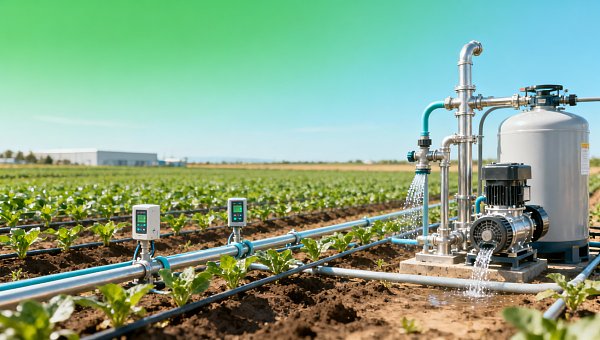
Many organizations initially associate sustainable agriculture with long-payback investments such as advanced robotics or full-farm digital transformation. In practice, the first savings often come from fixing high-frequency cost leaks. Across field crops, protected cultivation, and mixed agri-industrial operations, 4 input categories typically account for the earliest measurable gains: water, nutrients, fuel or electricity, and wear-related maintenance.
For example, a farm that reduces fertilizer over-application by 10% to 20%, irrigation losses by 15% to 30%, and unplanned equipment downtime by even 5% to 8% may achieve a more immediate cost impact than a capital-heavy upgrade with a 3- to 5-year payback. This matters to project managers and CFO-level reviewers who need faster financial visibility in 1 or 2 growing seasons, not only long-term sustainability claims.
The industrial lesson is simple: control variability first. Just as electronics manufacturing relies on process stability and automotive suppliers focus on repeatable tolerances, sustainable agriculture performs best when input decisions are measured, documented, and corrected at short intervals such as daily, weekly, and per cycle. Farms that still rely on fixed-rate application across variable soil, moisture, and crop conditions often carry hidden cost inflation.
A second reason these practices work early is that they do not always require a full equipment replacement. Retrofitting flow meters, pressure sensors, variable-rate control modules, or improved mold-made components for nozzles and housings can be far less expensive than replacing entire systems. Precision tooling and better component quality can extend service intervals from 3 months to 6 months in some use cases, especially where abrasive water, chemical exposure, or dust are common.
Where cost leakage appears first
- Excess application of nitrogen, phosphorus, and crop protection materials due to coarse calibration or poor field segmentation.
- Irrigation oversupply caused by low-quality valves, inaccurate pressure control, or no link between weather data and watering schedules.
- Fuel and energy waste from oversized pumps, inefficient motors, poorly timed operations, or weak maintenance planning.
- Component replacement costs driven by low-durability plastics, seals, bearings, and fabricated parts that fail in corrosive or high-load conditions.
The benefit of approaching sustainable agriculture through an industrial benchmarking lens is that cost reduction becomes auditable. Instead of broad claims, managers can track liters per hectare, kWh per cubic meter pumped, nutrient use per ton of output, and mean time between failures. Those are metrics procurement, quality, and operations teams can align on.
High-impact practices that lower water, nutrient, and energy costs first
Not all sustainable agriculture practices deliver equal short-term returns. The most effective early measures are usually those that improve input accuracy without overcomplicating field execution. In many operations, the first 90 to 180 days should focus on irrigation control, nutrient placement, and equipment efficiency before adding more sophisticated automation layers.
Drip and micro-irrigation systems, when correctly designed and maintained, can reduce water use materially compared with uncontrolled flood or high-loss spray methods. However, hardware quality matters. Pressure-compensating emitters, UV-stable polymers, and precise mold tolerances can determine whether the system remains efficient after one season or drifts into clogging, leakage, and uneven delivery. Water savings mean little if maintenance and replacement costs escalate.
Nutrient efficiency follows a similar rule. Variable-rate application, split dosing, and sensor-informed application windows often cut unnecessary input use faster than switching to premium products alone. Farms using a 3-stage nutrient strategy—base application, mid-cycle correction, and yield-stage optimization—typically gain more control than farms applying one large early dose with no verification.
Energy costs can also be reduced through motor right-sizing, better pump curves, scheduled filtration cleaning, and load shifting where tariffs vary by hour. In greenhouse, controlled irrigation, and treatment-linked farming systems, a 5 kW to 20 kW mismatch between actual demand and installed pumping or ventilation capacity can create recurring monthly waste. Sustainable agriculture becomes financially credible when these engineering details are measured rather than assumed.
Priority practice comparison for early cost reduction
The table below compares common sustainable agriculture actions by typical cost impact timing, implementation complexity, and the operational conditions where they perform best.
The key takeaway is that lower-cost process corrections often create the best first wave of savings. They can be staged, verified, and scaled across sites, which is especially useful for distributors, integrators, and multi-location operators managing different crop, water, and equipment conditions.
Implementation priorities for mixed agri-industrial sites
- Measure current input intensity for at least 2 to 4 weeks before changing equipment or dosing schedules.
- Correct obvious inefficiencies such as leaks, low-pressure zones, clogged filters, and poor calibration.
- Upgrade components that directly affect precision, including nozzles, valves, seals, and sensor housings.
- Only then expand into larger automation, analytics, or fleet-level modernization.
How industrial standards and component quality reduce lifecycle cost in agri-tech
Sustainable agriculture is often discussed at the level of agronomy, but procurement performance is heavily influenced by component quality and standardization. Farms and agri-process facilities depend on pumps, filtration units, enclosures, connectors, molded parts, machined brackets, and drivetrain elements that behave much like equipment in broader industrial settings. If those parts are weak, cost savings achieved through lower input use can be eroded by downtime and rework.
This is why ISO-aligned sourcing and technical benchmarking matter. Buyers should review dimensional repeatability, material suitability, ingress protection where relevant, chemical compatibility, and maintenance accessibility. For CNC-milled parts and injection-molded components, tolerance consistency can influence fit, leakage, vibration, and service life. A low-cost part with poor repeatability can multiply failure rates across a 50-unit or 200-unit deployment.
Water treatment and reuse systems are a good example. In sustainable agriculture operations using fertigation, recirculation, or wastewater polishing, membrane support assemblies, housings, and control interfaces must tolerate real operating conditions. If filtration modules are paired with inconsistent brackets, unsuitable plastics, or poorly sealed electrical interfaces, operating cost rises through replacement labor, contamination risk, and unplanned shutdowns.
The same logic applies to electrified farm assets and smart infrastructure. Controllers, sensor nodes, and power modules exposed to dust, UV, vibration, and heat need the same disciplined sourcing used in automotive-adjacent supply chains. Sustainable agriculture practices cut input costs first when hardware reliability prevents those savings from leaking back out through maintenance events every 6 to 8 weeks.
Technical checkpoints before approving agri-tech components
Before procurement teams approve components or subsystem upgrades, it helps to use a common benchmark table that links engineering quality to operational cost outcomes.
For technical evaluators and project owners, this framework helps distinguish between low purchase price and low lifecycle cost. The difference is critical when sustainable agriculture systems are expected to run across multiple seasons, in remote fields, or within regulated water and environmental infrastructure environments.
Common sourcing mistakes
- Approving components on unit price alone without reviewing replacement intervals and labor burden.
- Ignoring tolerance stack-up in assemblies that include valves, housings, brackets, and seals from multiple suppliers.
- Using generic materials for high-UV or chemically aggressive applications where service life may drop below 12 months.
- Overlooking traceability and inspection records in systems tied to food, water, or environmental compliance.
A practical procurement and rollout framework for cost-first sustainable agriculture
A strong sustainable agriculture program should not begin with a broad technology list. It should begin with a staged rollout plan that aligns procurement, operations, quality, and finance. The most successful teams use a 5-step framework: baseline, prioritize, pilot, standardize, and scale. This reduces the risk of overbuying and helps financial approvers see which actions have the shortest payback and lowest execution risk.
In the baseline phase, collect 30 to 60 days of practical operating data. This should include water use, fertilizer spend, pump energy, machine idle time, service frequency, and seasonal constraints. For mixed operations, segment by crop type, field block, or facility zone. A single average rarely reflects actual waste concentration.
During prioritization, rank opportunities by three factors: cost magnitude, control feasibility, and implementation disruption. For instance, replacing low-grade seals in fertigation manifolds may be less visible than buying autonomous equipment, but if the change lowers leakage and service calls within 6 weeks, it may deserve higher priority. Procurement teams should also score supply risk and lead time, especially for imported electronic components and specialized molded parts.
The pilot phase should stay narrow. Test on one block, one greenhouse zone, or one representative line for 1 full cycle if possible. Measure not only direct savings but also operator adoption, spare consumption, and service burden. Once the result is stable, standardize specifications and approved vendors, then scale in batches rather than all at once.
Procurement checklist for decision-makers
- Define the target metric first: for example, 12% lower water use, 8% lower fertilizer spend, or 15% fewer maintenance interventions.
- Review component-level quality, not just system brochures, especially in pumps, filters, connectors, housings, and dosing units.
- Confirm lead times, spare availability, and local service capability over a 12- to 24-month horizon.
- Request pilot documentation with inspection, calibration, and maintenance records.
- Align approval criteria between operations, quality, finance, and environmental compliance teams before full rollout.
Who benefits most from this approach
This framework is especially useful for Tier-1 supply managers working with agricultural OEMs, processors integrating water infrastructure, distributors comparing subsystem quality, and farm groups that need repeatable standards across regions. It also supports end users who want practical improvements rather than theoretical sustainability language.
For organizations managing cross-border sourcing, a platform such as GIM can add value by connecting benchmarks from semiconductor reliability, automotive quality discipline, smart agri-tech hardware, and environmental infrastructure. That broader comparison helps teams reduce blind spots in supplier selection and lifecycle costing.
FAQ: selecting and implementing sustainable agriculture practices with measurable cost returns
Real-world search intent around sustainable agriculture is usually practical: what saves money first, how long implementation takes, and what risks to avoid. The questions below address those buying and operating concerns directly.
Which sustainable agriculture practice usually pays back first?
In many operations, irrigation control and nutrient calibration deliver the earliest returns because they affect recurring inputs used every week or every cycle. If a site has visible leakage, pressure imbalance, or over-application, savings can begin within 4 to 12 weeks. Hardware reliability still matters; poor-quality fittings or sensors can delay or reverse those gains.
How long does a pilot project normally take?
A practical pilot usually lasts 30 to 90 days for irrigation, pumping, dosing, or component upgrades. If crop-cycle effects are important, one full growing cycle may be the better evaluation window. Shorter pilots can miss seasonal variability, operator learning effects, and maintenance patterns.
What should procurement teams focus on besides price?
Three areas matter most: lifecycle durability, standards-based quality control, and serviceability. A component that costs 8% less upfront but fails twice as often is usually the more expensive option after labor, downtime, and scrap are included. Documentation, traceability, and spare availability should be part of every review.
Are advanced technologies necessary to start cutting costs?
No. Many early savings come from disciplined basics: calibration, leak elimination, better scheduling, right-sized motors, and higher-quality wear parts. Advanced analytics and automation add value later, but only after the core system is stable. Sustainable agriculture works best when the first improvements are operationally simple and measurable.
Sustainable agriculture practices that cut input costs first are rarely the most dramatic on paper, but they are often the most durable in practice. Water control, nutrient efficiency, energy discipline, and component quality create a strong foundation for lower operating cost, better compliance, and more reliable production across agriculture-linked industrial systems.
For organizations comparing equipment, subsystems, or suppliers across agri-tech, electronics, mobility, and environmental infrastructure, a benchmark-driven approach reduces uncertainty and improves capital allocation. To evaluate the right mix of specifications, lifecycle risk, and rollout priorities for your operation, contact GIM to get a tailored assessment, compare technical options, and explore more cost-efficient solutions.
- electronics
- electronic components
- tech hardware
- electronics manufacturing
- Mobility
- automotive technology
- sensors
- Agri-Tech
- wastewater treatment
- water purification
- carbon capture
- smart power grids
- CNC milling machines
- plastic injection molds
- Precision tooling
- Technical benchmarking
- Smart Agri-Tech
- ISO standards
- Industrial infrastructure
- Sustainable agriculture
- Environmental infrastructure
- Sustainable agriculture practices

The Archive Newsletter
Critical industrial intelligence delivered every Tuesday. Peer-reviewed summaries of the week's most impactful logistics and market shifts.