Monday, May 22, 2024

Using Crop Data to Spot Yield Risk Early
by
Published
Views:
For enterprise decision-makers, yield volatility is no longer just a field issue—it is a strategic risk. By turning crop data into early warning signals, companies can identify emerging yield threats, strengthen supply planning, and improve operational resilience. This article explores how data-driven visibility helps agricultural and industrial stakeholders act sooner, reduce uncertainty, and make smarter decisions across complex value chains.
When Yield Risk Becomes a Cross-Industry Planning Problem
Yield risk affects far more than harvest volume. It shapes input timing, logistics pressure, storage use, food processing schedules, and capital allocation across interconnected operations.
In modern supply networks, crop data acts as an operational signal. It connects field conditions with demand forecasts, procurement exposure, and infrastructure readiness.
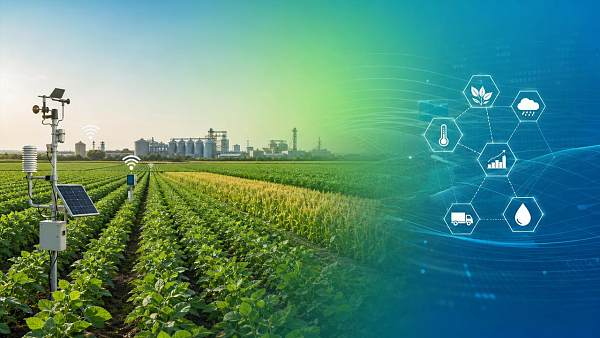
This matters in a blended industrial environment. Agriculture now intersects with sensors, satellite imaging, environmental systems, automation, and benchmarking platforms like GIM.
Early yield detection is valuable because different scenarios require different responses. A moisture issue, nutrient gap, pest outbreak, or weather anomaly will not carry the same business consequence.
The practical goal is not perfect prediction. The real goal is faster recognition, better prioritization, and earlier intervention using reliable crop data.
How to Judge Yield Risk Earlier in Different Operating Scenarios
Not every operation needs the same signal depth. The right crop data strategy depends on crop stage, regional volatility, asset intensity, and contractual exposure.
Scenario 1: Weather-sensitive regions with unstable growing windows
In weather-exposed regions, timing matters more than averages. Weekly changes in heat, rainfall, and evapotranspiration can quickly alter yield expectations.
Useful crop data here includes vegetation indices, soil moisture, canopy stress, rainfall deviation, and short-term forecast overlays. These signals help detect risk before visible crop decline.
Scenario 2: Contract supply chains with strict volume commitments
When output is tied to delivery commitments, yield uncertainty becomes a contractual risk. Even moderate production drift can trigger sourcing gaps or pricing pressure.
In this case, crop data should support rolling risk scoring. The most useful signals combine field health, planting progress, stand uniformity, and expected harvest timing.
Scenario 3: Input-heavy operations facing rising cost pressure
Where fertilizer, water, fuel, or crop protection costs are high, yield risk must be judged alongside return on input decisions.
Here, crop data helps determine whether added intervention will recover enough output. It supports targeted spending instead of blanket treatment across all acres.
Scenario 4: Processing and storage systems that depend on steady intake
Yield shortfalls can disrupt plant loading, storage turnover, labor scheduling, and transport flow. The earlier the signal appears, the easier it is to rebalance capacity.
For these operations, crop data should be linked to intake models, not reviewed in isolation. Field-level stress only matters when translated into supply timing and volume scenarios.
Which Crop Data Signals Matter Most by Decision Context
Early warning quality depends on choosing the right indicators. More data is not automatically better. Decision value comes from signal relevance and update speed.
The best crop data systems combine remote sensing with local verification. Satellite patterns provide scale, while field checks improve confidence and reduce false signals.
How Scenario Needs Differ Across Agricultural and Industrial Operations
A useful early warning model reflects operational differences. A single dashboard rarely serves every risk profile with equal value.
- Field-intensive operations need high-frequency crop data and micro-zone alerts.
- Supply chain planning teams need aggregated yield probability and timing ranges.
- Processing assets need location-linked intake forecasts and quality risk estimates.
- Sustainability programs need traceable crop data tied to water, land, and emission performance.
This is where cross-sector intelligence becomes important. GIM’s benchmarking approach helps align agricultural signals with wider manufacturing and infrastructure decisions.
For example, weak yield outlooks may influence packaging demand, transport utilization, irrigation equipment service needs, or environmental control planning.
Practical Recommendations for Matching Crop Data to the Right Scenario
Organizations often collect more information than they can use. The stronger approach is to map each scenario to a small set of trigger conditions and response actions.
- Define the risk event clearly, such as delayed emergence, water stress, or harvest compression.
- Select the crop data sources that can reveal that event early enough to matter.
- Set thresholds for escalation, not just observation.
- Link each threshold to an operational decision, budget action, or sourcing adjustment.
- Review model performance after harvest to improve next-cycle accuracy.
A scenario-based framework prevents wasted attention. It turns crop data from passive reporting into an active control layer for yield risk management.
Common Misreads That Delay Early Yield Risk Detection
Many yield risk programs fail because they confuse visibility with readiness. Seeing a map is not the same as knowing what to do next.
Mistake 1: Treating regional averages as local truth
Regional trends can hide severe local decline. Early action requires field or zone-level crop data, especially in variable soils or fragmented weather patterns.
Mistake 2: Waiting for visual damage before acting
By the time stress is visible, recovery options may be limited. The strongest signals often come from subtle temperature, vigor, or moisture deviations.
Mistake 3: Separating field signals from business consequences
Crop stress does not create value unless translated into sourcing, pricing, storage, logistics, or service decisions. Connected planning gives crop data real business power.
Mistake 4: Ignoring data quality and benchmarking discipline
Signal confidence depends on calibration, update frequency, and validation. Benchmarking against trusted standards and comparable operations reduces noise and improves actionability.
The Next Step: Build an Early Warning Workflow Around Crop Data
The most resilient operations do not wait for final yield reports. They use crop data to spot risk early, compare scenarios, and coordinate response across connected functions.
A practical starting point is simple. Identify the most exposed crop-dependent workflows, define three to five early indicators, and assign response owners for each threshold.
From there, integrate field signals with planning systems, supplier risk reviews, and infrastructure capacity checks. This creates a stronger foundation for faster, evidence-based decisions.
In a world where agriculture, technology, and industry increasingly overlap, crop data is no longer just an agronomic input. It is a strategic intelligence asset for anticipating yield risk and protecting operational continuity.

The Archive Newsletter
Critical industrial intelligence delivered every Tuesday. Peer-reviewed summaries of the week's most impactful logistics and market shifts.