Monday, May 22, 2024

Yield Statistics That Improve Harvest Planning
by
Published
Views:
Reliable yield statistics turn harvest planning from guesswork into a data-driven process. For researchers and industry analysts tracking modern agriculture, understanding yield trends helps evaluate crop performance, benchmark regional efficiency, and anticipate supply chain impacts. This article explores how yield statistics support smarter harvest decisions, improve forecasting accuracy, and connect field-level outcomes with broader operational and market insights.
Why do yield statistics matter beyond the farm gate?
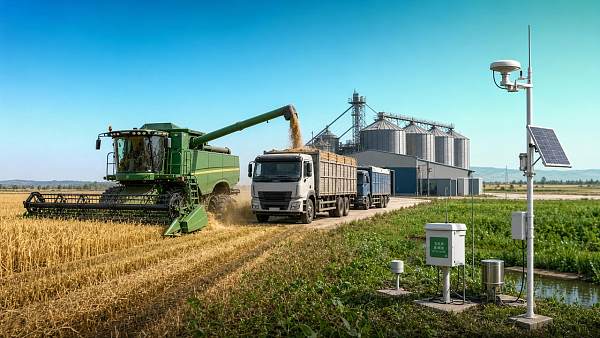
In a converged industrial environment, yield statistics are no longer useful only to growers. They influence procurement timing, storage planning, processing capacity, export assumptions, equipment demand, and environmental resource allocation.
For information researchers, the challenge is not simply finding crop yield data. The harder task is deciding which statistics are decision-grade, how current they are, and whether they align with operational reality across regions and supply chains.
This is where cross-sector interpretation matters. A change in yield can affect fertilizer demand, transport utilization, food processing throughput, irrigation infrastructure stress, and even component demand for smart agricultural machinery.
What yield statistics actually indicate
- Field productivity per hectare or acre, often used as the base metric for harvest planning and production forecasting.
- Variability across districts, seasons, and input regimes, which helps analysts separate structural performance from one-off anomalies.
- The operational relationship between crop outcome, climate exposure, machinery deployment, irrigation efficiency, and post-harvest logistics.
At GIM, yield statistics are most valuable when they are not isolated from adjacent systems. Smart Agri-Tech data gains strength when it is benchmarked alongside infrastructure, tooling, electronics, and mobility constraints.
Which yield statistics improve harvest planning most effectively?
Not every metric has equal planning value. Some numbers are descriptive after harvest, while others support decisions before labor, equipment, or transport are committed. Information researchers should prioritize statistics that improve timing, capacity, and risk visibility.
The table below organizes high-value yield statistics by planning function, helping analysts identify which data points are most useful for forecasting, regional comparison, and supply chain coordination.
A single yield number can be misleading. The most useful yield statistics combine output, quality adjustments, and geographic resolution. That combination helps harvest planners move from broad assumptions to executable schedules.
Priority data points for pre-harvest decisions
- Current-season field estimates with standardized sampling methods.
- Historical yield statistics normalized for weather extremes where possible.
- Regional distribution data that shows whether volume is concentrated or dispersed.
- Quality-linked yield measures relevant to storage loss, processing recovery, and shipment acceptance.
How can analysts judge data quality before using yield statistics?
Many harvest planning errors come from weak source validation rather than weak modeling. A dataset may look complete but still fail under operational use if sampling methods, update cycles, or regional definitions are inconsistent.
The comparison below helps information researchers screen yield statistics before they are used in planning models, procurement forecasts, or technical benchmarking exercises.
For cross-border analysis, data quality also depends on harmonization. If one region reports biological yield and another reports marketable yield, apparent productivity differences may reflect methodology rather than true field performance.
A practical screening checklist
- Check whether the reporting unit is aligned across datasets before comparing productivity.
- Confirm if quality discounts, moisture corrections, or harvest losses are included.
- Review whether the source updates fast enough for harvest planning rather than only post-season reporting.
- Test yield statistics against logistics or processing data to identify hidden inconsistencies.
Where do yield statistics connect with broader industrial planning?
In modern manufacturing ecosystems, agriculture is linked to hardware, energy, water systems, environmental compliance, and transport assets. That means yield statistics can reshape planning far outside the field.
Cross-sector decision points
- Agricultural machinery utilization rises or falls based on expected harvest volume and crop concentration windows.
- Storage and drying systems must match the mix of wet yield, usable yield, and regional intake timing.
- Water and filtration infrastructure planning depends on crop intensity, irrigation reliance, and post-harvest cleaning loads.
- Component sourcing for sensors, control electronics, and precision tooling is influenced by anticipated equipment demand in strong harvest cycles.
GIM’s value in this context is systems visibility. Instead of reading yield statistics as standalone agricultural outputs, researchers can connect them to manufacturing inputs, infrastructure readiness, and technical benchmarks across adjacent sectors.
That perspective is especially useful when a strong yield does not automatically improve profitability. A region may produce more crop, yet still experience bottlenecks in drying, transport, packaging, or water treatment capacity.
How should researchers compare regions using yield statistics?
Regional comparison is one of the most common uses of yield statistics, but it is also one of the easiest places to make analytical mistakes. High output in one area may come from better irrigation, larger farms, different crop genetics, or more favorable reporting assumptions.
Comparison rules that improve accuracy
- Compare the same crop stage and measurement basis, not mixed reporting categories.
- Use multi-year averages alongside the current season to avoid overreacting to a single weather event.
- Overlay yield statistics with logistics distance, input intensity, and storage availability for operational context.
- Separate biological productivity from commercially recoverable yield when planning downstream utilization.
For procurement and industrial strategy teams, the best region is not always the one with the highest yield. It is often the region with stable performance, transparent reporting, infrastructure compatibility, and lower volatility across seasons.
Procurement and benchmarking: what should decision teams look for?
Information researchers often support procurement, engineering, or strategy teams that need more than an academic explanation of yield statistics. They need evidence that translates into supplier decisions, timeline assumptions, and technical risk controls.
Questions to ask before using yield data in operational decisions
- Does the dataset support field-level or district-level planning, or only broad macro analysis?
- Can the yield statistics be matched to transport corridors, storage nodes, and processing capacity?
- Are the figures compatible with internal forecasting models used by procurement or production teams?
- Do the numbers reflect usable yield after quality adjustments, not only field output?
Benchmarking also benefits from technical discipline. In sectors influenced by ISO, IATF, or IPC-style documentation cultures, decision-makers expect traceable methods, clear assumptions, and repeatable data logic. Agricultural analytics increasingly needs the same rigor.
Common misconceptions about yield statistics
Higher yield always means stronger supply security
Not necessarily. A high-yield season can still create supply chain stress if harvest timing is compressed, moisture is elevated, or transport assets are limited. Yield statistics should be read together with infrastructure and logistics indicators.
National averages are enough for planning
National averages are useful for market summaries, but harvest planning often depends on subregional concentration. Local variance affects machine routing, labor demand, storage loading, and delivery timing.
Historical data is too old to matter
Current-season data is essential, but historical yield statistics reveal stability, resilience, and trend direction. Without that history, short-term decisions can become overly reactive.
FAQ: practical questions researchers ask about yield statistics
How often should yield statistics be updated for harvest planning?
The answer depends on crop type and harvest window, but shorter-cycle crops and weather-sensitive regions benefit from more frequent updates during the pre-harvest period. If data is updated too slowly, the planning value drops even if the figures are accurate.
Which yield statistics are best for comparing suppliers or sourcing regions?
Use a combination of average yield, variability, quality-adjusted output, and multi-year trend data. This combination shows not only how much a region produces, but how consistently it performs under operational conditions.
Can remote sensing replace field-based yield statistics?
Remote sensing can improve coverage and speed, but it works best when calibrated against field observations and reporting standards. For high-stakes planning, blended methods are usually more robust than a single-source approach.
What is the biggest risk when using yield statistics in market analysis?
The biggest risk is assuming that production potential equals deliverable volume. Losses, quality downgrades, storage constraints, and transport limitations can reduce the amount that actually reaches processors or buyers.
Why choose us for yield statistics research and harvest-planning insight?
GIM helps information researchers move beyond isolated crop data. Our multidisciplinary benchmarking model connects yield statistics with machinery readiness, infrastructure constraints, technical standards, and supply chain exposure across modern industrial systems.
If you are evaluating regional productivity, comparing sourcing options, or validating assumptions behind harvest planning, we can support structured analysis around data scope, parameter confirmation, methodology review, and scenario comparison.
- Confirm which yield statistics are most relevant to your crop, geography, and planning horizon.
- Compare regions or supply sources using consistent technical and operational criteria.
- Review how harvest forecasts affect equipment demand, infrastructure loading, and delivery schedules.
- Discuss custom benchmarking needs, reporting scope, data interpretation, and quotation requirements.
When harvest planning must stand up to procurement scrutiny and cross-functional review, better yield statistics are only the start. Better interpretation is what turns them into reliable decisions. Contact us to discuss data selection, scenario modeling, delivery timelines, and tailored benchmarking support.
The Archive Newsletter
Critical industrial intelligence delivered every Tuesday. Peer-reviewed summaries of the week's most impactful logistics and market shifts.