Monday, May 22, 2024

Agricultural Machinery Costs: Lease, Buy, or Share in 2026?
by
Published
Views:
Agricultural Machinery Costs: Lease, Buy, or Share in 2026?
As 2026 approaches, Agricultural machinery decisions are getting harder, not easier.
Input prices remain volatile. Interest rates still affect financing. Equipment lead times also vary by region and category.
That changes how companies evaluate lease, ownership, and shared-use models.
A tractor, harvester, sprayer, or baler is no longer just a capital asset.
It is a cash flow decision, a utilization decision, and a supply chain risk decision.
In practice, the right Agricultural machinery strategy depends on workload patterns, maintenance capacity, and operating certainty.
This is where many firms make expensive mistakes.
They compare sticker prices, but miss downtime risk, residual value swings, and compliance costs.
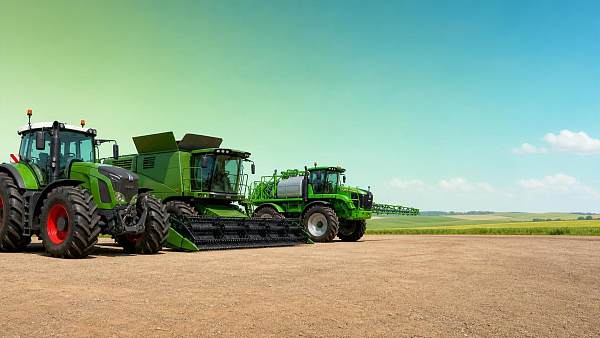
A more useful approach is to compare total cost of use over time.
That means looking beyond monthly payments and asking how each model supports resilience and productivity.
What is driving Agricultural machinery costs in 2026?
Several market signals are shaping Agricultural machinery budgets for 2026.
First, machine prices remain elevated because advanced electronics, emissions systems, and precision controls cost more.
Second, labor pressure pushes operators toward higher automation and larger machine capacity.
Third, repair parts and service availability still differ across brands and geographies.
More importantly, cost pressure is no longer only about acquisition.
It is about uptime, fuel efficiency, software support, and data compatibility with precision farming systems.
For many operations, Agricultural machinery value now depends on how well equipment fits a connected workflow.
That includes telematics, operator training, maintenance alerts, and seasonal deployment planning.
The main cost buckets to compare
- Acquisition or lease payment
- Financing rate and capital lockup
- Fuel, tires, wear parts, and consumables
- Maintenance labor and service contracts
- Downtime risk during peak windows
- Residual value and remarketing exposure
- Compliance, insurance, and operator training
- Software subscriptions and precision data integration
When leasing Agricultural machinery makes sense
Leasing Agricultural machinery can protect liquidity when expansion plans are active or revenue is less predictable.
It usually lowers upfront cash needs and can simplify fleet refresh cycles.
This matters when technology is changing quickly.
If autonomy features, smart spraying, or guidance systems are improving fast, leasing limits obsolescence risk.
It can also align costs with seasonal revenue if contract terms are flexible.
Still, leasing is not automatically cheaper.
Over several years, total payments may exceed ownership economics, especially for heavily used machines.
Usage limits, return conditions, and bundled maintenance terms need close review.
Leasing works best when
- Utilization is uncertain or highly seasonal
- Cash preservation matters more than asset ownership
- Technology refresh is a strategic priority
- In-house maintenance capabilities are limited
- The supplier offers strong uptime support
For companies entering new crop regions or testing a new service model, leased Agricultural machinery often provides the cleanest entry point.
When buying Agricultural machinery creates better value
Buying Agricultural machinery still makes sense for core assets with high and predictable annual use.
Ownership gives full control over schedules, attachments, modifications, and maintenance standards.
That flexibility matters during planting and harvesting peaks, when waiting is not an option.
Owned Agricultural machinery can also produce a lower cost per operating hour over time.
This is especially true when the machine remains productive beyond the financing period.
Another advantage is asset planning.
Companies with disciplined maintenance programs often protect resale value better than expected.
However, ownership increases exposure to repair surprises, disposal timing, and balance sheet pressure.
Buying works best when
- The machine is mission-critical every season
- Annual operating hours are consistently high
- The business has strong maintenance discipline
- Residual value for the model is stable
- The organization can absorb upfront capital needs
In short, buying Agricultural machinery rewards predictability, utilization, and operational control.
Why shared Agricultural machinery is gaining attention
Shared Agricultural machinery is becoming more attractive where asset utilization is low or highly uneven.
The model includes cooperatives, contractor networks, and multi-party fleet pools.
Its biggest advantage is simple.
It spreads capital and maintenance costs across more users.
That can improve access to higher-spec Agricultural machinery without a full ownership burden.
Yet shared models fail when governance is weak.
Peak demand often hits everyone at the same time.
Without clear scheduling rules, service accountability, and usage tracking, savings disappear quickly.
Shared-use models fit when
- Specialized machines are only needed briefly
- Several users have complementary schedules
- A trusted service partner manages maintenance
- Digital booking and usage data are available
- Contract terms define liability and downtime response
For niche equipment, shared Agricultural machinery can be the most efficient option if execution is disciplined.
A practical cost comparison framework
A useful Agricultural machinery decision should compare cost per productive hour, not just contract value.
That keeps the discussion tied to output.
The table below shows how decision criteria usually differ across models.
In real procurement reviews, one answer rarely fits the full fleet.
Many organizations use a mixed Agricultural machinery strategy across core, seasonal, and specialized assets.
How to choose the right Agricultural machinery model
Start with operating hours, not supplier pitches.
Then map each Agricultural machinery category to its real business role.
- Classify machines as core, seasonal, or specialized.
- Measure annual hours, peak demand, and downtime cost.
- Estimate total five-year cost, including service and software.
- Stress-test assumptions for weather disruption and delayed parts.
- Compare supplier support quality, not only quoted price.
- Review data compatibility with guidance, telematics, and reporting tools.
This process usually reveals a clearer path.
Buy the machines that carry the operation every season.
Lease the machines exposed to rapid technology change or uncertain use.
Share the machines with narrow use windows and strong coordination potential.
That balanced model often produces the best Agricultural machinery economics in 2026.
For procurement teams working across regions, benchmarking matters even more.
Platforms such as Global Industrial Matrix support this by connecting equipment choices to technical standards and cross-sector risk signals.
That broader visibility helps reduce blind spots before capital is committed.
Final takeaway for 2026 planning
The best Agricultural machinery decision in 2026 is not about following a single model.
It is about matching asset strategy to utilization, risk, and operational timing.
If cash flexibility is the priority, leasing may lead.
If uptime and long-term hourly cost matter most, ownership often wins.
If usage is occasional and coordination is strong, shared Agricultural machinery can unlock better returns.
The smart move now is to audit fleet utilization, model three cost scenarios, and negotiate support terms before peak ordering cycles begin.
That approach turns Agricultural machinery procurement from a budget burden into a strategic advantage.
The Archive Newsletter
Critical industrial intelligence delivered every Tuesday. Peer-reviewed summaries of the week's most impactful logistics and market shifts.