Monday, May 22, 2024

Colombia Issues Preliminary AD Ruling on Chinese Rubber Tires
by
Published
Views:
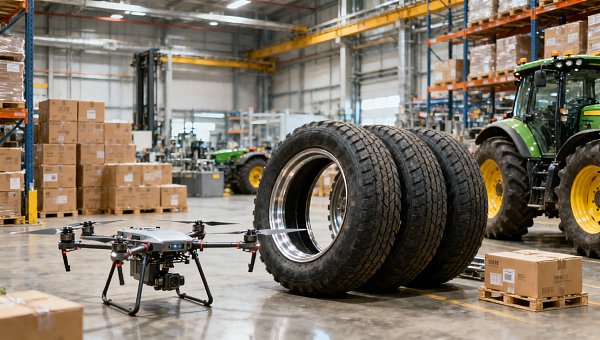
On June 8, 2026, Colombia’s Ministry of Trade, Industry and Tourism released Preliminary Ruling No. 142, opening an anti-dumping case on new rubber tires imported from China, including agricultural specialty tires and cushioning tires used in drone landing gear. For companies involved in Autonomous Tractors, Agri-Drones, wheel hub systems, and customized tire assemblies, this development matters because it extends beyond a component issue and may affect full-equipment compliance reviews as well as sourcing and assembly decisions in the Colombian market.
What the preliminary ruling confirms
The confirmed facts are limited but commercially significant. According to the information provided, the Colombian authority’s preliminary determination identified a dumping margin of 23.5% to 41.1% for the covered Chinese-origin new rubber tires. The scope described in the case includes both agricultural special-use tires and buffer tires used in unmanned aerial vehicle landing systems.
The same information also indicates that many manufacturers of Autonomous Tractors and Agri-Drones export using customized tire assembly sets sourced from China. On that basis, the ruling is expected to trigger renewed compliance review for complete equipment and to increase demand for localized assembly.
Where the pressure may appear first
Customized tire assembly exporters face an immediate review point
From an industry perspective, exporters shipping customized tire-and-wheel related assemblies into Colombia may be the first to feel the effect. The reason is that the preliminary action directly concerns the tire category itself, while those products are already embedded in equipment exports for smart agricultural machinery and drone chassis applications. What deserves closer attention is whether existing shipment structures, product declarations, and market access assumptions remain workable under the new review environment.
Equipment manufacturers may need to revisit full-unit compliance
Manufacturers of Autonomous Tractors and Agri-Drones may be affected not only at the parts level but also in complete-machine compliance workflows. Analysis shows that when a key imported component becomes the subject of a preliminary anti-dumping action, the practical impact may move upstream into documentation, product configuration, and delivery planning. The immediate concern is less about broad market conclusions and more about whether ongoing exports that rely on Chinese customized tire assemblies will require additional review.
Local assembly and supply-chain service providers may see shifting demand
Observably, the information provided points to rising demand for localized assembly. For supply-chain operators, local integrators, and service providers supporting market entry or final assembly, the relevant issue is whether customers begin adjusting fulfillment models away from fully configured imported assemblies. The business impact would likely center on assembly sequencing, sourcing coordination, and lead-time management rather than on a simple component substitution.
What companies should watch now
Follow the wording of subsequent official notices
Companies should pay close attention to how later official language defines product scope, applicable procedures, and compliance expectations. Analysis shows that the practical effect of a preliminary anti-dumping action often depends on how the covered categories are interpreted in trade and customs execution, especially when products are used as part of larger equipment systems.
Check exposure by product configuration
Businesses shipping agricultural specialty tires, drone landing cushioning tires, or equipment that incorporates customized Chinese tire assemblies should map their exposure by configuration rather than by headline alone. What deserves closer attention is which exported products rely on the covered tire categories and whether those components are central to the final equipment specification supplied to Colombia.
Separate the policy signal from the operating impact
From an industry perspective, the ruling is a confirmed policy development, but the full business effect still depends on how reviews, implementation, and customer-side responses unfold. Companies should avoid treating the preliminary finding as either a minor procedural step or a finalized market outcome. The more practical approach is to compare policy language with current contracts, delivery schedules, and compliance files.
Prepare documents and customer communication early
For manufacturers, exporters, and supply-chain teams, a near-term priority is readiness in documentation and communication. Observably, if complete-equipment compliance reviews increase, supporting records related to product composition, sourcing, and fulfillment timelines may become more important. Customer communication may also need to address possible adjustments in assembly location or delivery arrangements if localization demand rises.
Why this looks like a broader supply-chain signal
Analysis shows that this news is more than a narrow tire case for the smart agriculture and drone equipment chain. Because the products at issue include tires used in agricultural equipment and UAV landing systems, and because many exporters use Chinese customized tire assemblies in finished equipment, the ruling points to potential spillover from component trade measures into whole-machine compliance and localization decisions.
At the same time, it is more appropriate to understand this as a developing signal rather than a fully settled outcome. The preliminary nature of the ruling means the market impact still needs continued observation, especially in how Colombian compliance practice and buyer behavior respond in the next stage.
How this development is best understood for now
At present, this development is best read as a near-term operational issue with possible longer-term implications for equipment sourcing and assembly strategy in Colombia. The confirmed facts already justify attention from exporters, equipment makers, and service providers tied to Autonomous Tractors and Agri-Drones, but the final commercial effect should not be overstated. A measured reading is that the case creates an immediate compliance checkpoint while also signaling that localized assembly may gain importance if the current direction is maintained.
Basis of this article and what still needs verification
This article is based on the user-provided news title, event date, and summary of the June 8, 2026 development. Relevant source types for this kind of update typically include official government notices, corporate disclosures, industry association releases, authoritative media coverage, and standards-related documents. The specific official source link was not provided in the input, so further verification remains necessary. Continued attention should focus on later official wording, any clarification of covered product categories, and whether compliance review requirements for complete equipment are further defined.
The Archive Newsletter
Critical industrial intelligence delivered every Tuesday. Peer-reviewed summaries of the week's most impactful logistics and market shifts.