Monday, May 22, 2024

Electric Vehicles in Agriculture: Field Use Limits
by
Published
Views:
Electric Vehicles in agriculture are drawing serious interest because they cut local emissions, lower noise, and simplify drivetrains. Yet field performance is not defined by brochures alone. Daily use depends on terrain, duty cycles, charging access, weather, and seasonal peaks. In practical farm environments, matching electric machines to the right task matters more than chasing a general trend.
For broad industrial planning, this topic also reaches beyond farming. Battery supply chains, charging hardware, control electronics, precision tooling, and ESG metrics all affect equipment selection. Global Industrial Matrix connects these linked factors through cross-sector benchmarking, helping evaluate where Electric Vehicles in agriculture fit today and where field use limits still shape adoption.
Why field conditions decide whether Electric Vehicles in agriculture work
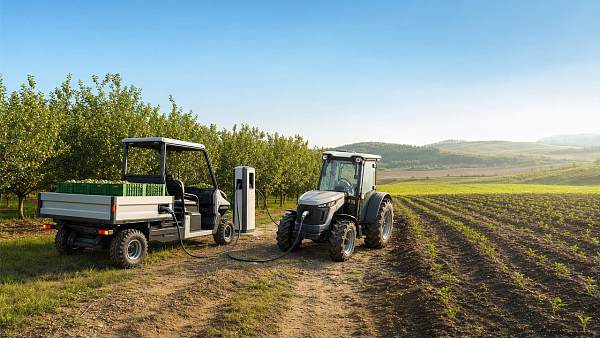
Electric Vehicles in agriculture do not face one uniform operating profile. A machine pulling a light cart on level land behaves very differently from a tractor climbing wet slopes with a loaded implement. The same battery pack can feel adequate in one setting and restrictive in another.
This is why field use limits should be judged by scenario. Energy demand rises with traction losses, repeated starts, hydraulic loads, transport distance, and idle support systems. Soil conditions and crop timing can turn a manageable duty cycle into a critical bottleneck.
A useful assessment starts with four questions:
- How many continuous hours must the machine work?
- How much torque is needed during peak load?
- Is charging possible between work windows?
- What happens if weather compresses the schedule?
Scenario 1: Light transport and yard operations are usually the best fit
Among current use cases, light transport is often the easiest entry point for Electric Vehicles in agriculture. Utility vehicles, feed carriers, greenhouse carts, and maintenance platforms usually run shorter routes. They also return frequently to a base area, making charging more predictable.
These jobs gain clear benefits from electric drive. Lower noise improves work near livestock and enclosed buildings. Fewer moving parts can reduce routine service needs. Smooth torque delivery also helps stop-and-go handling in yards, orchards, and indoor production zones.
Core judgment points include battery range per shift, charging time during breaks, and accessory power demand. In many cases, the main risk is not traction power but auxiliary loads such as cooling, lighting, lifting, or cabin conditioning.
When this scenario performs well
- Daily routes are fixed and short.
- Machines return to a charging point often.
- Payloads stay moderate and predictable.
- Operations value low noise and cleaner indoor air.
Scenario 2: Row crops and orchard work need closer duty-cycle checks
Electric Vehicles in agriculture can support row crop and orchard tasks, but suitability becomes more task-specific. Spraying, mowing, hauling bins, and inter-row cultivation all have different power patterns. Travel speed may stay moderate, yet repeated turns and implement loads increase energy use.
Orchards and vineyards often favor compact electric platforms because routes are defined and local air quality matters. However, slope, soft ground, and seasonal rush periods can quickly expose range limits. A battery that covers a test day may struggle during harvest intensity.
The key is to measure total system load, not just propulsion. Pumps, PTO alternatives, autonomous guidance, vision systems, and cooling all draw power. Underestimating these combined loads is one of the most common planning mistakes.
What to verify before deployment
- Average and peak slope across the working block.
- Implement power draw over a full cycle.
- Distance between field edge and charger.
- Weather-driven compression of work windows.
Scenario 3: Heavy tillage and long-shift fieldwork still face the hardest limits
This is where field use limits become most visible. Heavy tillage, deep ripping, large-scale seeding, and continuous harvesting demand sustained torque over long hours. Electric Vehicles in agriculture can technically perform some of these tasks, but battery size, charging downtime, and machine weight remain major barriers.
High drawbar loads rapidly drain batteries. Larger packs add mass, which may increase soil compaction and reduce operational efficiency. Fast charging can help, but rural power availability, connector durability, and thermal management must also be considered.
In this scenario, hybrid approaches, battery swapping, or partial electrification may be more practical than full replacement. A realistic comparison should include downtime cost, field completion risk, and infrastructure investment, not only fuel savings.
How scenario demands differ across typical farm applications
The table below helps compare where Electric Vehicles in agriculture are strongest and where constraints remain.
Practical matching rules for Electric Vehicles in agriculture
A strong deployment plan starts by sorting tasks into categories rather than replacing machines all at once. Electric Vehicles in agriculture deliver better results when introduced where operational boundaries are already measurable.
- Rank tasks by daily energy demand, not engine size alone.
- Map return-to-base frequency and available charging windows.
- Separate propulsion load from hydraulic and digital loads.
- Model worst-case weather and peak-season schedules.
- Check grid capacity, charger placement, and uptime risk.
It is also smart to benchmark machine components against recognized standards and supply chain reliability indicators. Battery modules, inverters, thermal systems, connectors, and control boards all influence field readiness. Cross-sector technical benchmarking helps reveal whether the full system can support real agricultural duty.
Common mistakes when judging field use limits
One frequent error is using average energy numbers instead of peak demand profiles. Agriculture rarely follows smooth lab conditions. Mud, incline, heat, and repeated stopping can create sharp spikes that shorten useful range.
Another mistake is assuming charger installation solves every issue. If a machine cannot leave the field during a narrow harvest window, even fast charging may not protect productivity. Timing matters as much as charging speed.
A third oversight is ignoring ecosystem dependencies. Electric Vehicles in agriculture rely on semiconductors, power electronics, software calibration, and stable service support. Equipment choice should reflect both machine capability and infrastructure maturity.
What to do next for a reliable scenario-based decision
Start with one clearly bounded application, such as yard logistics, greenhouse transport, or compact orchard work. Record route length, payload, idle time, and auxiliary loads for several weeks. Then compare that data with battery endurance under the toughest seasonal conditions.
From there, expand only after confirming charging uptime, thermal behavior, and task completion reliability. For broader industrial evaluation, Global Industrial Matrix supports this process with multi-disciplinary benchmarking across mobility, electronics, smart agri-tech, and ESG infrastructure. That perspective helps turn Electric Vehicles in agriculture from a promising concept into a field-matched operating choice.

The Archive Newsletter
Critical industrial intelligence delivered every Tuesday. Peer-reviewed summaries of the week's most impactful logistics and market shifts.