Monday, May 22, 2024

Farming Analysis That Helps Spot Weak Links Across the Season
by
Published
Views:
In modern agriculture, farming analysis is no longer just about yields at harvest—it is about identifying weak links early, comparing performance across the season, and making smarter operational decisions with confidence. For researchers and decision-makers seeking reliable insights, a structured analytical approach can reveal hidden inefficiencies, reduce risk, and support more resilient, data-driven farm management.
Why farming analysis matters when weak links are spread across systems
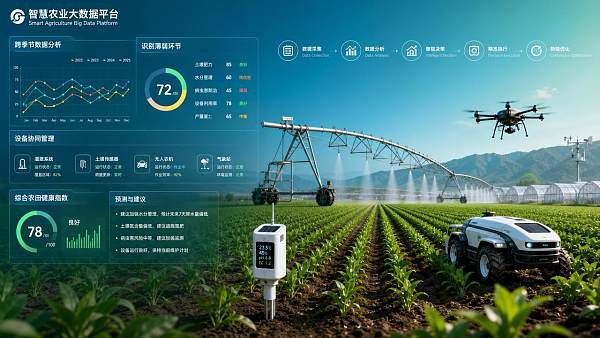
For information researchers, the main challenge is not a lack of farm data. It is fragmentation. Machinery logs, irrigation records, soil tests, weather patterns, input costs, labor timing, and post-harvest quality data often sit in separate systems. Effective farming analysis connects these signals and shows where a seasonal weakness begins, how it spreads, and which intervention has the highest operational value.
This matters even more in a cross-sector environment where agriculture overlaps with electronics, mobility, environmental infrastructure, and industrial tooling. A delayed sensor replacement, poor filtration performance, inconsistent battery behavior in autonomous equipment, or non-standardized component sourcing can all influence agronomic outcomes. That is why farming analysis should not be treated as a narrow farm report. It is a system-level decision tool.
Global Industrial Matrix (GIM) addresses this need by aligning smart agri-tech observations with broader industrial benchmarking logic. Instead of reviewing one isolated KPI, researchers can compare technical dependencies across equipment, water systems, control modules, and seasonal field performance. This improves clarity for procurement teams, engineering managers, and strategy functions that need evidence before making supply, upgrade, or replacement decisions.
- It helps identify whether weak performance comes from agronomy, equipment reliability, operator timing, or infrastructure bottlenecks.
- It supports more precise budgeting by linking field outcomes to actual technical causes rather than assumptions.
- It creates a stronger basis for vendor comparison, especially when parts, sensors, control systems, or environmental modules must meet recognized standards.
What should farming analysis measure across the season?
A useful farming analysis framework should follow the season in stages rather than rely on end-of-season summary numbers alone. Researchers looking for root causes need a layered structure that separates pre-season readiness, in-season execution, and post-harvest validation. This makes weak links easier to isolate and compare.
Core analytical layers
- Pre-season conditions: soil status, water availability, equipment calibration, spare parts readiness, and digital system integration.
- Planting and establishment: seed placement consistency, emergence rate, machine pass accuracy, and early stress indicators.
- Mid-season performance: irrigation efficiency, nutrient response, pest pressure, labor timing, machine uptime, and field variability patterns.
- Late-season and harvest: crop uniformity, downtime during harvest, quality losses, logistics delays, and storage-related degradation.
- Post-season review: yield variance by zone, input-to-output ratio, component failure frequency, maintenance quality, and compliance gaps.
The table below shows how farming analysis can convert seasonal observations into decision-ready categories for industrial and agri-tech stakeholders.
This structure improves farming analysis because it keeps field outcomes tied to operational causes. It also helps researchers compare farms, regions, or supplier setups on a more consistent basis.
Where do weak links usually hide in modern farming operations?
Weak links are often not visible in headline yield figures. A season can look acceptable in aggregate while still masking losses in water efficiency, equipment utilization, labor coordination, or compliance readiness. Good farming analysis focuses on hidden instability, not just obvious failure.
High-risk zones researchers should test first
- Sensor and control reliability. If telemetry is inconsistent, every downstream conclusion becomes weaker. This includes irrigation controls, machine guidance signals, and environmental monitoring devices.
- Water and filtration infrastructure. In many operations, inconsistent water quality or underperforming filtration modules quietly reduce system stability, especially in precision irrigation or recirculating environments.
- Autonomous and semi-autonomous equipment support. Battery condition, drivetrain efficiency, firmware compatibility, and service intervals can affect timing-sensitive agricultural tasks.
- Component sourcing and spare part lead time. A minor component shortage during a narrow field window can create larger seasonal losses than a major defect discovered off-season.
- Operator workflow and data handoff. Even strong equipment can underperform if the operational team lacks clear protocols for response thresholds and maintenance escalation.
Because GIM works across semiconductor and electronics, automotive and mobility, smart agri-tech, industrial ESG and infrastructure, and precision tooling, it can frame these weak points as connected industrial risks. That perspective is valuable for information researchers who need to explain not only what went wrong, but why the weakness persisted across systems.
How to compare farming analysis methods before making procurement or strategy decisions
Not all farming analysis approaches offer the same decision value. Some focus only on agronomic indicators. Others emphasize machinery telemetry or cost records. For procurement officers, technical evaluators, and research teams, the right method is the one that can connect performance, reliability, compliance, and replacement logic.
The following comparison table helps clarify which farming analysis model is better suited to different decision environments.
For organizations facing complex sourcing conditions, the cross-sector model usually provides more durable decision support. It is especially useful when equipment selection, environmental performance, and supply chain resilience all influence farm output.
What should information researchers look for in a farming analysis platform?
A strong farming analysis platform should not overwhelm users with raw dashboards. It should turn mixed technical and field data into comparable, decision-ready insight. For information researchers, that means the platform must support evidence quality, traceability, and cross-functional review.
Practical evaluation criteria
- Can it compare seasonal performance by field, machine type, input category, and supplier dependency?
- Can it connect field outcomes with technical benchmarks such as component durability, maintenance intervals, filtration behavior, or energy use?
- Can it support procurement questions such as lead time sensitivity, replacement urgency, standard compatibility, and lifecycle cost?
- Can it frame findings against recognized standards or common industrial expectations such as ISO-aligned process discipline, traceability logic, or quality management practices?
GIM is particularly relevant in this context because its benchmarking logic does not stop at agriculture. It evaluates the mechanical, digital, and ecological foundations that influence agricultural operations. That creates a more useful environment for research teams comparing smart equipment, environmental systems, and sourcing options under real operational constraints.
Procurement guide: how farming analysis supports better selection decisions
Procurement decisions in agriculture often fail when buyers compare initial price but ignore integration risk, downtime exposure, and service complexity. Farming analysis helps correct that by showing which variables actually affect seasonal performance. The goal is not to buy the cheapest system. The goal is to avoid buying a weak link.
A decision checklist for buyers and technical reviewers
- Define the operational problem first. Is the issue emergence inconsistency, irrigation inefficiency, machine downtime, environmental compliance pressure, or data fragmentation?
- Ask for compatibility evidence. Sensors, controllers, filters, drives, and software interfaces should be reviewed as a system rather than as isolated parts.
- Compare service and replacement realities. Lead times, local support access, maintenance intervals, and spare part commonality often matter more than brochure specifications.
- Review standards alignment. Depending on the component or system, buyers may need process traceability, quality management alignment, or sector-specific benchmark references such as ISO, IATF, or IPC-informed production discipline.
- Use seasonal evidence. A good farming analysis record should show whether a proposed solution addresses a recurring weakness or only treats the visible symptom.
This is where research-backed benchmarking becomes valuable. GIM helps teams move from product comparison to system comparison, which is often the difference between a stable season and repeated avoidable loss.
Common misconceptions and FAQ about farming analysis
Is farming analysis only useful for large or highly automated farms?
No. The level of data detail may differ, but the logic applies across scales. Even smaller operations benefit from structured farming analysis when they need to compare irrigation consistency, machinery reliability, seasonal timing, or input efficiency. The key is to start with the highest-cost uncertainty rather than attempt full digitalization immediately.
What is the biggest mistake when using farming analysis for decision-making?
A common mistake is relying on end-of-season yield alone. That hides timing losses, maintenance failures, water inconsistency, and component mismatch. Another mistake is treating every field problem as agronomic when the root cause may be technical, logistical, or procurement-related.
How often should farming analysis be reviewed?
At minimum, reviews should be tied to seasonal milestones: pre-season readiness, early establishment, mid-season stress periods, and harvest closeout. In more complex operations using connected equipment or environmental systems, monthly or event-triggered review is more effective because it captures emerging weak links before they become broad losses.
Can farming analysis support compliance and sustainability goals?
Yes, especially when the analysis includes water use, equipment efficiency, component traceability, waste handling, and environmental system performance. This is increasingly relevant where agricultural operations overlap with ESG reporting expectations, infrastructure investments, or procurement audits.
Why cross-sector insight is becoming essential for future farming analysis
Agriculture is becoming more dependent on connected electronics, autonomous mobility, precision tooling, water treatment systems, and higher verification demands. As a result, future farming analysis will rely less on isolated field reporting and more on integrated industrial intelligence. Researchers who can compare agronomic outcomes with technical benchmarks will be better prepared to identify resilient solutions.
This shift favors platforms that understand both field performance and industrial architecture. GIM’s multi-disciplinary model is designed for exactly that environment. By synchronizing insight across smart agri-tech, electronics, mobility, ESG infrastructure, and precision manufacturing logic, it helps decision-makers see the full risk chain behind seasonal performance.
Why choose us for deeper farming analysis and benchmarking support
If your team is evaluating farming analysis for research, procurement planning, technology selection, or system improvement, GIM offers a broader decision framework than single-domain review. We help connect field outcomes with the equipment, components, infrastructure, and standards context that often determines whether a solution performs reliably across the season.
You can contact us to discuss specific topics such as parameter confirmation for agri-tech systems, cross-supplier comparison, delivery cycle risk, component replacement logic, standards-related evaluation, sample assessment pathways, and quotation communication for data-driven solution planning. This is especially useful when you need to compare not just products, but the operational consequences of choosing one system architecture over another.
For information researchers, the value of farming analysis lies in clarity. When weak links are identified early and benchmarked correctly, decisions become faster, more defensible, and more resilient under real industrial conditions.
The Archive Newsletter
Critical industrial intelligence delivered every Tuesday. Peer-reviewed summaries of the week's most impactful logistics and market shifts.