Monday, May 22, 2024

Precision Agriculture Electronics: What Improves Yield Accuracy?
by
Published
Views:
As farming shifts toward data-driven performance, choosing the right electronic solutions for precision agriculture is now a practical yield decision, not only a technology decision.
Accuracy in seeding, irrigation, spraying, and harvesting depends on how sensors, controllers, and connectivity perform under real field conditions.
For cross-industry benchmarking, the best results come from evaluating electronics as part of a larger operating system.
That includes hardware durability, signal stability, environmental compliance, software integration, and maintenance visibility across the equipment lifecycle.
When field variability is high, electronic solutions for precision agriculture matter most
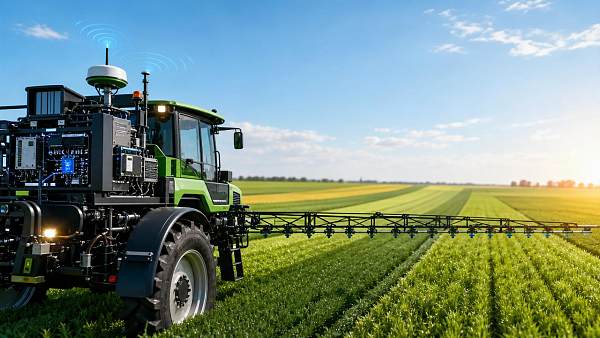
Not every farm environment requires the same electronic architecture.
The value of electronic solutions for precision agriculture rises sharply when soil types, moisture levels, terrain, or crop vigor change within short distances.
In stable fields, basic guidance and monitoring may be enough.
In variable fields, higher-resolution sensors and adaptive control loops can directly improve yield accuracy.
This is why scenario-based evaluation matters.
An electronic package that works well in broad-acre grain production may underperform in orchards, greenhouses, or mixed-topography vegetable operations.
Scenario 1: Broad-acre grain production needs stable guidance and application control
In cereal, corn, and soybean operations, yield accuracy improves when machines follow repeatable paths and apply inputs at consistent rates.
Here, electronic solutions for precision agriculture usually start with GNSS guidance, section control, variable-rate modules, and implement communication networks.
Core judgment points
- Positioning repeatability during planting and spraying
- Controller response speed during speed changes
- Signal continuity near tree lines or uneven terrain
- Compatibility with ISOBUS, CAN, and farm management software
If guidance drifts or rate control lags, overlap increases and yield maps become less trustworthy.
That reduces the value of any downstream analytics.
Scenario 2: Specialty crops require denser sensing and tighter environmental control
Vineyards, orchards, and high-value horticulture present different conditions.
Canopy density, row spacing, microclimates, and selective treatment zones increase the need for detailed sensing.
In these settings, electronic solutions for precision agriculture often include machine vision, LiDAR, micro-weather stations, and zoned irrigation controllers.
Core judgment points
- Sensor precision under shadow, dust, and variable lighting
- Edge computing ability for fast local decisions
- Ingress protection against moisture and chemical exposure
- Interoperability with irrigation and fertigation systems
Yield accuracy here is less about large-area pass efficiency.
It is more about detecting subtle crop differences before they become visible losses.
Scenario 3: Greenhouse and controlled environments depend on closed-loop electronics
Controlled agriculture relies on electronics more continuously than open-field systems.
Temperature, humidity, CO2, nutrient dosing, and lighting all require precise monitoring and actuation.
For this scenario, electronic solutions for precision agriculture must support closed-loop accuracy, alarm reliability, and continuous uptime.
Core judgment points
- Calibration stability over long operating hours
- Redundancy for critical environmental sensors
- Controller accuracy during rapid climate changes
- Data logging quality for traceability and optimization
A greenhouse can lose measurable production from short control errors.
That makes electronic reliability equal to agronomic strategy.
Scenario 4: Autonomous and semi-autonomous equipment raises integration standards
As tractors, sprayers, and robotic platforms gain autonomy, isolated devices are no longer enough.
The best electronic solutions for precision agriculture must exchange validated data across navigation, implement control, safety systems, and fleet software.
In this scenario, timing accuracy and fail-safe behavior are often more important than sensor quantity.
Core judgment points
- Latency between sensing, command, and actuation
- Functional safety logic for degraded operating states
- Firmware update traceability and cybersecurity control
- Mechanical and electrical connector durability under vibration
How scenario requirements differ across precision farming operations
What improves yield accuracy in electronic solutions for precision agriculture
Several technical factors consistently separate strong field performance from average performance.
1. Better sensor quality, not just more sensors
Resolution, calibration retention, and environmental robustness matter more than sensor count.
Low-quality data only increases noise in decision models.
2. Fast and consistent controller behavior
A precise recommendation has little value if actuation is delayed.
Controllers must respond predictably during turning, acceleration, pressure change, and variable terrain.
3. Integration across mechanical and digital systems
High-performing electronic solutions for precision agriculture are aligned with hydraulics, seed meters, pumps, and drive systems.
Poor integration creates hidden error even when individual components test well.
4. Durable connectivity and data traceability
Reliable field data transfer supports accurate records, benchmarking, and corrective action.
Without traceable data, yield analysis becomes harder to trust.
Scenario-based selection guidance for electronic solutions for precision agriculture
- Match electronics resolution to the economic value of each management zone.
- Verify IP rating, vibration resistance, and connector quality before comparing software features.
- Check protocol compatibility with existing implements, gateways, and data platforms.
- Review compliance pathways against ISO, IPC, and relevant machine safety benchmarks.
- Require serviceability data, firmware support plans, and calibration intervals.
- Test under realistic dust, heat, moisture, and signal-interruption conditions.
Common misjudgments that reduce precision agriculture returns
One common mistake is buying advanced electronics for fields that lack the variability to justify them.
Another is undervaluing installation quality, grounding, and harness protection.
Some systems also fail because analytics are prioritized before sensor validation.
Others underperform because decision-makers compare features, but ignore update support and component lifecycle risk.
In many mixed-equipment fleets, the largest yield penalty comes from weak interoperability rather than weak algorithms.
A practical next step for more accurate yield outcomes
The best path forward is to benchmark electronic solutions for precision agriculture by scenario, not by feature list alone.
Start with field variability, crop value, machine architecture, and data workflow requirements.
Then compare sensor integrity, controller response, compliance readiness, and integration depth against expected yield gains.
Within a cross-sector benchmarking model, this approach turns agriculture electronics into measurable operational advantage.
For organizations evaluating resilient, standards-aligned systems, a structured review framework reduces uncertainty and improves long-term field accuracy.
The Archive Newsletter
Critical industrial intelligence delivered every Tuesday. Peer-reviewed summaries of the week's most impactful logistics and market shifts.