Monday, May 22, 2024

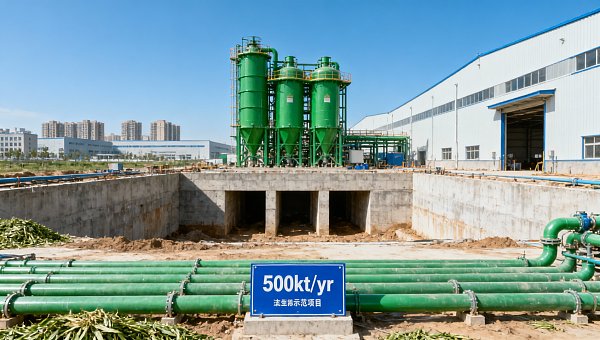
Shenyang 500kt Biomass Green Alcohol Fuel Project Breaks Ground
by
Published
Views:
On April 30, 2026, the Shenyang 500,000-ton-per-year biomass green alcohol fuel demonstration project officially commenced construction. The initiative introduces a novel integrated process—direct seawater electrolysis for hydrogen production coupled with biological fermentation—developed by Professor Xie Heping’s team. This development is of particular relevance to manufacturers and operators in agricultural machinery electrification, low-carbon fuel infrastructure, and export-oriented green powertrain supply chains.
Event Overview
On April 30, 2026, the Shenyang 500,000-ton biomass green alcohol fuel demonstration project broke ground. It employs the seawater direct electrolysis–biofermentation coupling process pioneered by Professor Xie Heping’s research team. The project aims to support regional low-carbon fueling infrastructure and provide green energy for autonomous tractors and agri-drones, thereby enhancing the full-life-cycle carbon footprint competitiveness of China’s agricultural power systems in international markets.
Industries Affected by This Development
Manufacturers of Autonomous Agricultural Machinery (e.g., autonomous tractors, agri-drones):
These OEMs may face evolving refueling infrastructure requirements as regional green alcohol fuel availability increases. Impact centers on energy compatibility validation, onboard fuel system redesign timelines, and lifecycle emissions reporting protocols—especially for EU and North American export compliance.
Low-Carbon Fuel Infrastructure Developers & Operators:
Project commissioning signals early-stage deployment of biomass-derived liquid fuels in non-transport sectors. Impact includes potential shifts in blending standards, storage material specifications (e.g., corrosion resistance for alcohol–hydrogen blends), and certification pathways for ‘green’ designation under emerging national biofuel frameworks.
Export-Oriented Powertrain & Engine System Suppliers:
As China strengthens its full-lifecycle carbon accounting for agricultural propulsion systems, suppliers engaged in Tier-1 or Tier-2 exports may need to reassess upstream feedstock traceability, biogenic carbon verification methods, and documentation alignment with ICAO/ISO 14067-based reporting expectations.
What Relevant Enterprises or Practitioners Should Monitor and Act On
Track official technical specifications and certification criteria for 'green alcohol fuel' as they emerge
Analysis shows that no national standard for biomass-derived green alcohol fuel has yet been published. Until formal definitions—including feedstock eligibility, GHG reduction thresholds, and measurement protocols—are released, procurement or engine calibration decisions should treat current pilot outputs as demonstrative rather than normative.
Monitor pilot-scale operational data—not just announcements—for fuel stability, logistics compatibility, and end-use performance
Observably, demonstration projects often prioritize technological feasibility over commercial scalability. Stakeholders should distinguish between lab-scale yield claims and field-validated metrics such as cold-start behavior, storage shelf life, and compatibility with existing diesel infrastructure retrofits.
Assess alignment between this pathway and existing low-carbon fuel incentives or export support mechanisms
From an industry perspective, current Chinese export promotion policies (e.g., tax rebates, green credit guidelines) do not explicitly reference biomass green alcohol fuels. Companies preparing for market entry should verify whether this fuel class qualifies under pending revisions to the Catalogue of Encouraged Industries for Foreign Investment or the Export Commodity Technical Guide for Agricultural Machinery.
Prepare for possible feedstock sourcing implications downstream
Current more relevant is the implied shift toward non-food biomass feedstocks (e.g., agricultural residues, energy grasses) to meet sustainability criteria. Entities involved in biomass logistics, pretreatment, or regional aggregation should review local residue availability baselines—notably in Liaoning and neighboring provinces—as pilot scaling may influence regional demand patterns.
Editorial Perspective / Industry Observation
This milestone is best understood as a signal—not yet an outcome—of institutional commitment to diversify low-carbon liquid fuels beyond conventional bioethanol or e-methanol pathways. Analysis shows it reflects a strategic convergence of two priorities: decarbonizing hard-to-electrify agricultural equipment, and advancing domestic seawater electrolysis IP. However, commercial viability hinges on three unresolved variables: long-term hydrogen cost parity, fermentation yield consistency at scale, and harmonization with international green fuel recognition schemes. Industry attention should therefore focus less on immediate capacity additions and more on how policy instruments evolve to govern this hybrid biochemical–electrochemical route.
It remains uncertain whether this project will catalyze replication elsewhere—or remain a geographically anchored testbed. What is clear is that its success metrics extend beyond tonnage output: they include verifiable carbon intensity reductions, interoperability with existing refueling hardware, and regulatory acceptance in key export destinations.
Concluding, this project does not represent an immediate shift in fuel supply but rather a structured experiment in integrating renewable hydrogen with biological conversion for distributed rural energy use. Its primary industry significance lies in signaling a deliberate expansion of the green fuel taxonomy—and the associated technical, logistical, and reporting adaptations required across agricultural machinery value chains. Currently, it is more appropriately interpreted as a policy-aligned technology validation step than a near-term commercial inflection point.
Source Note: Official announcement issued by Shenyang Municipal Development and Reform Commission, April 30, 2026. No further technical documentation, feedstock sourcing plans, or timeline for commercial operation has been publicly disclosed. Ongoing monitoring of project milestones and related regulatory updates is recommended.
The Archive Newsletter
Critical industrial intelligence delivered every Tuesday. Peer-reviewed summaries of the week's most impactful logistics and market shifts.