Monday, May 22, 2024

The Future of Autonomous Tractors in Smart Agriculture
by
Published
Views:
The Future of Autonomous Tractors in Smart Agriculture
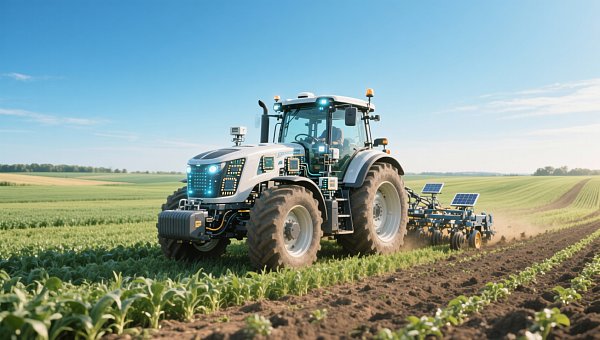
The rise of autonomous tractors is revolutionizing smart agriculture, merging cutting-edge technologies like sensors, semiconductors, and ADAS systems to redefine precision farming. As global industries from electronics to automotive engineering converge on sustainable solutions, these self-driving machines promise unprecedented efficiency for operators and procurement teams alike. This article explores how autonomous tractors integrate renewable energy and computer parts to optimize agricultural operations while meeting stringent ISO standards—delivering the data-driven transparency that technical evaluators and enterprise decision-makers demand in today's interconnected industrial landscape.
How Autonomous Tractors Deliver ROI for Farm Operators and Procurement Teams
For decision-makers evaluating autonomous tractors, the bottom-line question is ROI. These machines reduce labor costs by up to 40% while increasing field coverage accuracy to 2cm precision—critical for high-value crops. Tier-1 suppliers now integrate automotive-grade semiconductors with 20,000-hour lifespans, minimizing downtime. Procurement officers should prioritize models with ISO 25119 (safety) and ISO 11783 (compatibility) certifications to mitigate supply chain risks.
The Technical Benchmarking Checklist for Evaluators
Technical assessors need verifiable metrics when comparing autonomous tractor systems. Focus on three core subsystems: 1) Sensor fusion (LiDAR+radar accuracy under 5cm), 2) Powertrain efficiency (electric drivetrains achieving 8kWh/acre), and 3) Data interoperability (compatibility with Farm Management Information Systems). Leading models from John Deere and CNH Industrial now benchmark at IPC-7351B standards for electronic component reliability.
Risk Mitigation Strategies for Enterprise Adoption
Corporate farms face unique challenges in deploying autonomous fleets. Implement phased rollouts starting with 20% of acreage, focusing on repetitive tasks like tillage. Quality managers should demand IATF 16949-certified components—the automotive industry's gold standard—to ensure durability. For financial approvers, the breakeven point typically occurs at 1,500 annual operating hours when replacing three conventional tractors.
Conclusion: The Data-Driven Path to Smart Farming
Autonomous tractors represent more than technological novelty—they're strategic assets that synchronize agricultural operations with industrial-grade precision. For procurement teams, they offer supply chain resilience through standardized components. Technical evaluators gain quantifiable performance benchmarks, while operators achieve unprecedented efficiency. As the industry converges on ISO-certified, interoperable systems, these machines are redefining what's possible in sustainable agriculture.
The Archive Newsletter
Critical industrial intelligence delivered every Tuesday. Peer-reviewed summaries of the week's most impactful logistics and market shifts.