Monday, May 22, 2024

Where Precision Farming Tools Still Fall Short in 2026
by
Published
Views:
In 2026, the biggest limitation of precision farming is no longer whether tools exist—it is whether they can deliver consistent, measurable operational value across irrigation, energy use, labor efficiency, and multi-system integration. For buyers, operators, technical evaluators, and investment decision-makers, the real issue is not feature availability but performance reliability under field conditions, interoperability with broader industrial systems, and a clear path to return on investment. Precision farming platforms have advanced, but many still fall short where resilience, benchmark transparency, maintenance simplicity, and scalable deployment matter most.
For organizations comparing smart agri-tech solutions, the practical question is straightforward: which gaps are still material enough to affect cost control, farm uptime, compliance, sustainability targets, and future expansion? The answer is increasingly tied to three areas—smart irrigation precision, energy management, and operational execution at the edge. These are the points where technology often looks mature in presentations but remains uneven in deployment.
Where precision farming tools still fall short in 2026—and why it matters commercially
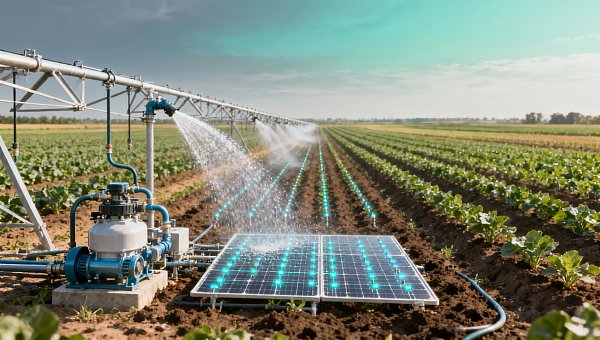
Precision farming has made major progress in sensing, automation, and data collection, but several weaknesses still limit value realization in real-world operations.
First, irrigation intelligence is still less precise than many buyers expect. Soil moisture sensors, weather-linked irrigation controllers, and variable-rate application systems can improve water efficiency, but performance often degrades when conditions become heterogeneous across fields. Sensor placement, calibration drift, soil variability, poor communications coverage, and limited model adaptation can all reduce decision accuracy. In many deployments, irrigation tools still optimize around average conditions rather than true micro-zone variability.
Second, energy management remains underdeveloped. Pumps, autonomous platforms, greenhouse systems, cold storage, and remote monitoring equipment all consume energy, yet many precision agriculture tools still treat energy as a secondary metric. This is a growing problem in 2026, especially where agriculture is increasingly linked to distributed power systems, electrified mobility fleets, and ESG reporting requirements. If a platform cannot benchmark energy draw at the equipment and process level, it becomes harder to control operating costs or evaluate electrification readiness.
Third, integration is still too fragmented. Farms and agri-industrial operations now rely on a mixture of telematics, machine controls, weather data, ERP inputs, remote sensing, and maintenance systems. But many precision farming products still operate as partial solutions. They collect useful data without making it easy to compare, normalize, or act on that data across brands, sites, or workflows. This weakens decision quality for procurement teams, project managers, and operators alike.
Fourth, operational usability is often overlooked. A tool may be technically advanced yet still fail because it is difficult to maintain, difficult to train on, or too dependent on vendor support. This is especially important for large farms, cooperatives, distributors, and industrial-scale agri-infrastructure projects, where deployment success depends on repeatability and local service capability.
What target readers are really trying to evaluate before investing
Different stakeholders approach precision farming tools with different priorities, but their concerns converge around a few practical questions.
Information researchers and technical evaluators want to know which precision farming tools truly perform under field variability, not just in controlled demonstrations. They need benchmark criteria for sensing accuracy, communication reliability, interoperability, machine uptime, environmental durability, and standards alignment.
Operators and users care about whether the tool saves time, reduces manual intervention, prevents mistakes, and works reliably during critical windows such as irrigation scheduling, planting, spraying, and harvesting. If setup is complex or alerts are too noisy, trust declines quickly.
Business evaluators, financial approvers, and enterprise decision-makers are focused on total cost of ownership. They want to understand whether the technology reduces water use, labor hours, fuel or electricity costs, crop loss, maintenance burden, and operational risk. They also need to know how long implementation takes and whether scale introduces hidden costs.
Quality, safety, and project management teams need assurance that systems are auditable, support compliance objectives, and can be rolled out without creating process instability. In larger organizations, this often matters as much as yield improvement.
That means the most useful evaluation framework is not “Does this solution use AI, drones, or automation?” but rather:
- Does it improve measurable field performance?
- Does it integrate with existing machinery, software, and reporting systems?
- Does it lower resource intensity without increasing operational fragility?
- Can it scale across sites, teams, and seasons?
- Can the vendor prove performance with verifiable benchmarks?
Why smart irrigation is still a major weak point
Among all precision agriculture functions, smart irrigation remains one of the most commercially important and technically inconsistent areas.
On paper, the value proposition is compelling: lower water consumption, better crop uniformity, improved input efficiency, and reduced stress exposure. In practice, the performance gap often comes from data quality and control responsiveness.
Many systems still struggle with:
- Insufficient spatial resolution: A limited number of sensors cannot represent highly variable soil conditions across large or mixed-use fields.
- Calibration decay: Sensor accuracy declines over time without disciplined maintenance and validation.
- Weak edge connectivity: Intermittent network coverage can delay irrigation decisions or reduce automation reliability.
- Simplistic control logic: Rule-based irrigation may not adapt well to changing crop stages, local weather swings, and root-zone variability.
- Poor hardware durability: Outdoor deployments still face issues with sealing, corrosion, cable damage, and connector reliability.
For buyers, the consequence is clear: a smart irrigation platform may look advanced but still fail to deliver stable water-use efficiency at scale. This matters even more in regions facing water pricing pressure, climate volatility, and stricter sustainability disclosures.
A better purchasing approach is to ask vendors for evidence on:
- Field-level accuracy over time, not just initial deployment performance
- Sensor maintenance intervals and failure rates
- Response time between field data capture and irrigation action
- Performance under variable soils, slopes, and microclimates
- Compatibility with pumps, valves, existing irrigation infrastructure, and remote power systems
Energy management is becoming a deal-breaker, not a secondary feature
One of the most overlooked gaps in precision farming tools is energy transparency. As farms become more automated and more electrically dependent, energy management is no longer just a utility concern—it is a strategic operating variable.
In 2026, agriculture increasingly intersects with industrial electrification, battery-supported field assets, smart pumping, remote monitoring nodes, and Green Mobility-linked logistics ecosystems. Yet many agri-tech tools still do not provide granular visibility into how much energy is consumed by irrigation cycles, machine routes, autonomous operations, or climate control processes.
This creates several problems:
- It obscures the real operating cost of automation
- It limits comparison between diesel-based and electric workflows
- It weakens sustainability reporting and ESG data quality
- It makes load planning and infrastructure sizing harder
- It reduces confidence in scaling autonomous or connected equipment fleets
For enterprise users and industrial strategists, this gap is especially relevant because agriculture no longer sits outside broader manufacturing and infrastructure logic. Equipment sourcing, electronics reliability, charging compatibility, and remote power resilience now affect precision farming performance just as much as agronomy does.
Tools that still separate agronomic optimization from energy optimization will increasingly underperform in commercial decision-making. The stronger solutions are those that connect agronomic actions with measurable energy intensity, uptime implications, and lifecycle cost data.
The integration problem: too much data, not enough decision support
Another key shortfall is that many precision farming systems generate data without converting it into cross-functional decisions. This is not just a software design issue—it directly affects procurement, maintenance, quality control, and strategic planning.
A farm or agri-enterprise may use:
- Autonomous tractors or guidance systems
- Soil and weather sensors
- Drone or satellite imagery
- Irrigation controllers
- Fertilizer or crop protection application tools
- Machine telematics
- Maintenance management systems
- Inventory, ERP, or supply planning software
If those systems cannot communicate in a usable way, managers end up with fragmented dashboards and delayed action. Operators may need to switch between interfaces. Project leads may struggle to standardize deployment. Finance teams may be unable to validate whether performance gains came from the tool itself or from unrelated process changes.
This is why interoperability and benchmarking transparency matter so much. Buyers should prioritize platforms that support open integration logic, exportable datasets, clear device compatibility, and a structured method for comparing field performance over time.
In practical terms, the best tools are not always the ones with the most features. They are the ones that reduce ambiguity between data collection and operational action.
What good evaluation looks like in 2026
For organizations assessing where precision farming tools still fall short, the most useful approach is a structured, benchmark-driven review rather than feature-based comparison.
A strong evaluation should cover five dimensions:
- Field performance: Accuracy, consistency, response speed, and agronomic impact under real conditions
- Operational resilience: Uptime, environmental durability, serviceability, and maintenance burden
- Integration maturity: Compatibility with existing machinery, software, data architecture, and reporting workflows
- Resource efficiency: Water, energy, labor, and input-use optimization with measurable baselines
- Commercial scalability: Training needs, rollout complexity, total cost of ownership, and multi-site viability
This framework helps each target audience make better decisions:
- Operators can judge whether the solution is practical day to day
- Engineers and technical teams can test reliability and interoperability
- Procurement and business teams can compare long-term value more accurately
- Executives and financial approvers can connect deployment to risk, ROI, and strategic fit
For distributors, integrators, and channel partners, this also creates a better sales model. Instead of selling generic “smart farming” claims, they can position solutions according to verified use-case fit, infrastructure readiness, and measurable deployment outcomes.
How decision-makers should interpret the gap between promise and performance
The fact that precision farming tools still fall short in 2026 does not mean the category is failing. It means the market is maturing. The easy gains from basic digitization have already been captured in many regions. What remains are harder questions involving system reliability, energy economics, standards alignment, and multi-layer operational integration.
Decision-makers should therefore treat underperformance not as a reason to avoid investment, but as a reason to raise evaluation discipline.
The most future-ready organizations will be those that ask:
- Which precision farming functions are truly mission-critical for our operation?
- Where are current tools weakest: irrigation, energy, connectivity, autonomy, or data integration?
- What technical benchmarks can we require before scaling?
- How does this solution fit into our broader equipment, infrastructure, and sustainability roadmap?
That perspective is especially important as agriculture becomes more connected to electronics, industrial infrastructure, precision tooling, and mobility ecosystems. The strongest solutions will not be isolated farm gadgets, but components in a resilient, benchmarked operating system for modern production.
In summary, precision farming tools in 2026 still fall short where real operations are least forgiving: smart irrigation accuracy, energy management visibility, system interoperability, and maintainable field execution. For buyers and evaluators, the best path forward is not chasing the most advanced-sounding platform, but selecting tools that can prove measurable performance, integrate across systems, and support scalable, resource-efficient operations with technical integrity.

The Archive Newsletter
Critical industrial intelligence delivered every Tuesday. Peer-reviewed summaries of the week's most impactful logistics and market shifts.