Monday, May 22, 2024

China Q1 2026 Smartphone Shipments: 69.01M Units, Huawei #1
by
Published
Views:
China’s smartphone shipment volume reached 69.01 million units in Q1 2026, up 12.3% year-on-year, with Huawei holding the top market share at 28.7% — according to IDC data released on April 15, 2026. This development carries direct implications for global electronics procurement, ODM/OEM partnership evaluation, and supply chain resilience assessment — particularly for firms engaged in 5G module integration, satellite communication hardware sourcing, and cross-border manufacturing coordination.
Event Overview
IDC reported on April 15, 2026 that China’s smartphone shipments totaled 69.01 million units in Q1 2026, reflecting a 12.3% year-on-year growth. Huawei accounted for 28.7% of the domestic market, retaining first place. The data reflects stability in China’s electronics manufacturing capacity, resilience in high-end component supply chains, and reliability in export delivery performance.
Industries Affected by This Development
Direct Trading Enterprises
Trading firms facilitating smartphone exports or importing finished devices into emerging markets may observe tighter lead times or revised MOQs as OEM/ODM capacity absorbs stronger domestic demand. The sustained growth signals improved production line utilization — potentially affecting spot pricing and order prioritization for non-domestic clients.
Raw Material & Component Procurement Firms
Suppliers of RF front-end modules, imaging sensors, and satellite communication chipsets may see increased inquiry volume from Chinese OEMs scaling for domestic demand. Huawei’s leadership — tied to vertical integration in key components — implies selective sourcing preferences and longer qualification cycles for new suppliers.
Contract Manufacturing & ODM/OEM Providers
Manufacturers serving international brands face dual pressure: maintaining export compliance while competing for domestic-tier capacity allocation. The 12.3% YoY growth suggests robust factory throughput — but also benchmarks for delivery reliability and technical adaptability (e.g., 5G mmWave or two-way satellite firmware integration) expected by global buyers.
Supply Chain Service Providers
Firms offering logistics coordination, customs brokerage, or component traceability solutions may experience higher demand for real-time shipment visibility and documentation accuracy — especially for dual-use components subject to evolving export control classifications linked to advanced wireless functionality.
What Relevant Enterprises or Practitioners Should Monitor & Act On
Track official updates on export classification guidelines
Given the emphasis on 5G and satellite communication modularity in the IDC report, enterprises should monitor upcoming revisions to China’s dual-use goods export control list — particularly around integrated baseband + RF solutions — which could affect cross-border component movement.
Assess capacity allocation patterns across domestic vs. export orders
OEMs and procurement managers should review current production slot bookings with Chinese contract manufacturers. A sustained domestic growth trend may shift priority windows — making early Q2 planning critical for Q3–Q4 delivery assurance.
Validate technical compatibility for next-gen connectivity features
Buyers specifying 5G-Advanced or NTN (non-terrestrial network) capabilities should confirm whether partner factories have certified test environments and firmware update protocols aligned with Huawei-level integration standards — not just baseline 5G NR compliance.
Prepare documentation packages for high-assurance procurement audits
International procurement teams evaluating Chinese ODMs should compile evidence of stable output (e.g., quarterly shipment reports), component traceability records, and modularity validation logs — aligning with the ‘delivery reliability’ and ‘technical adaptability’ criteria highlighted in the IDC analysis.
Editorial Perspective / Industry Observation
From an industry perspective, this Q1 data is better understood as a signal of structural stability — not merely cyclical recovery. The 12.3% growth occurs amid ongoing global component volatility and regional trade recalibration; its consistency suggests embedded improvements in localized high-end IC packaging, antenna co-design, and firmware validation workflows. Analysis来看, it reflects maturation in China’s vertically coordinated smartphone ecosystem — one where brand-led demand increasingly shapes upstream capacity decisions. Observation来看, Huawei’s continued leadership underscores how system-level integration capability (not just unit volume) now anchors partner evaluation frameworks for global buyers. Current more appropriate interpretation is that this is a benchmark — not a peak — for assessing long-term manufacturing partnership viability.
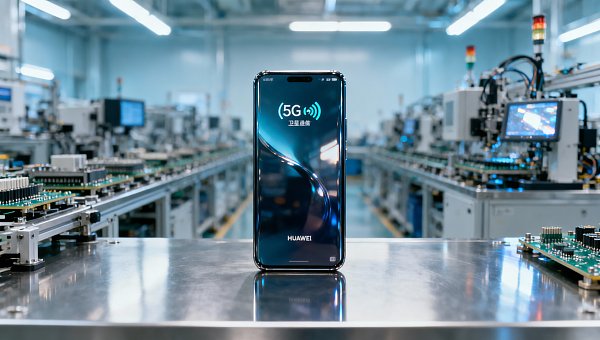
In summary, the Q1 2026 smartphone shipment data serves as an objective indicator of China’s electronics manufacturing execution capability under complexity — relevant not as a sales forecast, but as a reference point for supply chain due diligence. It does not indicate broad-based market expansion, but rather consolidated operational discipline across select technical domains. For stakeholders, it is more useful as a calibration tool for partner assessment than as a demand projection metric.
Source: IDC China Quarterly Mobile Phone Tracker, release date April 15, 2026. Note: Subsequent quarterly releases and methodology notes remain under observation for potential adjustments to shipment definition (e.g., channel inventory vs. sell-through).
The Archive Newsletter
Critical industrial intelligence delivered every Tuesday. Peer-reviewed summaries of the week's most impactful logistics and market shifts.