Monday, May 22, 2024

Electronic Components Sourcing: Avoiding Lead Time Surprises
by
Published
Views:
Electronic components sourcing has become a high-stakes task for procurement teams facing volatile demand, extended lead times, and limited supply visibility. For buyers who need to protect production schedules and control cost risk, understanding how to anticipate shortages, validate suppliers, and build resilient sourcing strategies is now essential.
Why electronic components sourcing now demands deeper procurement judgment
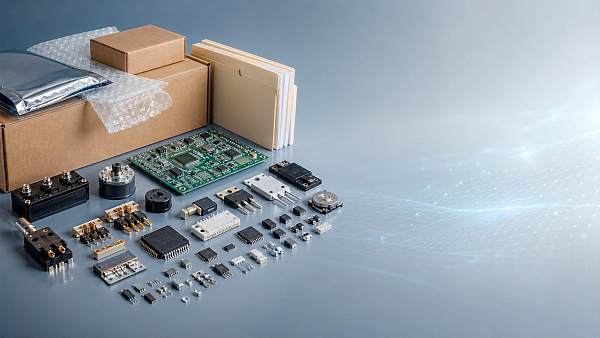
In modern manufacturing, a delayed microcontroller, connector, sensor, or power device can stop an entire line. That risk is no longer limited to consumer electronics. It now affects automotive systems, smart agriculture equipment, industrial filtration controls, mobility platforms, and precision tooling assemblies.
For procurement teams, electronic components sourcing is no longer a transactional task. It is a cross-functional decision that touches engineering validation, compliance review, supplier resilience, inventory policy, and total landed cost. The difficulty grows when one bill of materials supports multiple markets with different standards and demand cycles.
This is where a cross-sector intelligence model matters. Global Industrial Matrix, or GIM, helps buyers assess sourcing risk across interconnected industries rather than in isolation. When semiconductor demand shifts because of EV programs, automation upgrades, or smart agri-tech deployment, procurement needs visibility beyond a single category or region.
- Demand shocks can move quickly from one sector to another, making old supplier assumptions unreliable.
- Lead times quoted at RFQ stage may not reflect wafer capacity, packaging constraints, or logistics bottlenecks.
- Price stability often depends on volume commitment, allocation status, and approved alternates, not just list pricing.
Where lead time surprises usually start
Most lead time failures do not begin with the final supplier quote. They begin earlier, when procurement lacks insight into component criticality, lifecycle stage, manufacturing geography, or the real substitution difficulty of a part. A low-cost part can become the highest-risk item if there is only one qualified source.
Common root causes buyers should map first
- Single-source design decisions that were accepted during prototyping but never reviewed for production scale.
- Overreliance on distributor stock snapshots without checking factory authorization, date code continuity, or replenishment logic.
- Weak change control between engineering and purchasing when alternate parts, package changes, or firmware dependencies exist.
- Insufficient understanding of standards and qualification needs, especially when components move between industrial, mobility, and infrastructure applications.
In electronic components sourcing, lead time is rarely a simple number. It can include fabrication time, backend assembly, testing, export controls, freight timing, customs clearance, and incoming inspection delays. Procurement teams that monitor only the supplier promise date usually react too late.
What procurement teams should evaluate before placing orders
A disciplined sourcing review helps buyers reduce surprises before they enter allocation or expedite mode. The table below outlines a practical evaluation framework for electronic components sourcing in cross-industry manufacturing environments.
This type of review is especially valuable when one procurement team supports several business units. GIM strengthens this process by aligning benchmark data across semiconductor, automotive, infrastructure, and industrial equipment categories, helping buyers compare supply conditions with broader market signals.
How to compare sourcing strategies when supply is tight
Not every shortage should be handled with the same response. Some items need immediate buy coverage. Others need redesign, buffer stock, or supplier diversification. Procurement should compare options based on production criticality, qualification burden, and cost impact.
The comparison below helps structure electronic components sourcing decisions when lead time exposure increases.
The right answer often combines two or more strategies. For example, a buyer may place a short-term coverage order while engineering qualifies a second source. GIM supports that decision by mapping benchmark expectations across sectors where the same component families may face different demand pressure.
Which supplier signals matter most in electronic components sourcing?
A quoted lead time is useful, but procurement needs stronger indicators to judge whether a supplier can actually support continuity. Good sourcing discipline looks for signals that reveal process reliability, not just sales responsiveness.
Key signals to monitor
- Traceability depth. Buyers should confirm manufacturer linkage, batch control, packaging integrity, and date code consistency.
- Forecast engagement. Reliable suppliers challenge unrealistic forecasts and explain allocation conditions early.
- Documentation quality. Fast response on compliance declarations, test records, and product change notices reduces qualification friction.
- Cross-regional capability. Multi-site support can reduce disruption if one geography faces policy, logistics, or energy constraints.
For procurement teams in diversified manufacturing, supplier evaluation should also reflect end-use context. A component acceptable for general industrial equipment may not fit a mobility, safety-related, or long-life infrastructure application. GIM’s technical benchmarking perspective helps buyers distinguish where the same part number creates different operational risks.
How standards and compliance affect buying decisions
Electronic components sourcing is not only about availability and price. Compliance and process discipline directly affect approval speed, customer acceptance, and downstream warranty exposure. In cross-sector environments, procurement should coordinate with quality and engineering before confirming alternates.
Standards buyers frequently need to reference
- IPC documentation practices for electronics manufacturing, assembly quality, and material control.
- ISO-based management frameworks that affect supplier process consistency and traceability expectations.
- IATF-related quality expectations when electronics content supports automotive or mobility platforms.
- Material compliance declarations such as RoHS and REACH when products enter regulated export markets.
A frequent mistake is treating compliance documents as a final paperwork step. In reality, they should shape sourcing choices early, especially when a shortage pushes the team toward alternate channels or substitute components.
A practical procurement workflow to reduce lead time surprises
Procurement teams need a repeatable process, not just reactive expediting. A structured workflow improves forecast quality, reduces internal misalignment, and creates better leverage during supplier discussions.
Recommended workflow
- Segment the BOM into high-risk, long-lead, sole-source, and compliance-sensitive items.
- Attach demand scenarios to each critical part, including upside volume, launch timing, and service needs.
- Validate source options through authorized channels first, then define controlled escalation paths for shortages.
- Create alternate qualification plans with engineering before shortages become urgent.
- Review market signals monthly using cross-sector intelligence, not only past purchase history.
This workflow is especially relevant for organizations buying across electronics, automotive subsystems, environmental infrastructure, and advanced machinery. GIM’s multi-disciplinary platform helps teams translate technical benchmarks into sourcing priorities, so purchasing decisions are tied to real operating impact.
FAQ: what buyers ask most about electronic components sourcing
How early should procurement lock in supply for critical components?
There is no universal window, but critical parts should be reviewed as soon as the demand forecast becomes commercially meaningful. If a component is sole-source, tied to firmware, or used across several product families, buyers should evaluate supply coverage well before normal purchase release timing.
Is the lowest quoted price a reliable indicator in electronic components sourcing?
Not by itself. Buyers need to compare total risk-adjusted cost, including traceability, lead time confidence, incoming inspection burden, requalification effort, logistics exposure, and potential line-stop impact. A lower unit price can become the most expensive choice if delivery or authenticity fails.
When should a team approve an alternate part?
An alternate should be evaluated before shortages peak, especially for items with long validation cycles. The decision should consider electrical fit, package compatibility, thermal performance, software impact, compliance status, and customer approval requirements. Procurement should not carry this decision alone.
What is the biggest sourcing mistake in multi-industry manufacturing?
One major mistake is assuming that historical purchasing success in one sector guarantees continuity in another. The same component family may experience very different demand pressure when EV production rises, automation projects expand, or infrastructure upgrades accelerate. Cross-sector visibility is now a core buying advantage.
Why partner with a cross-sector intelligence platform
Procurement teams need more than quotes and stock checks. They need context. GIM supports electronic components sourcing with benchmark-driven visibility across Semiconductor & Electronics, Automotive & Mobility, Smart Agri-Tech, Industrial ESG & Infrastructure, and Precision Tooling.
That matters when your sourcing decisions must balance cost, qualification effort, delivery timing, and operational risk across diverse programs. Instead of treating components as isolated line items, GIM helps connect market behavior, technical fit, and standards expectations into a more resilient sourcing strategy.
- Discuss parameter confirmation for critical semiconductors, interconnects, sensors, and power devices.
- Review sourcing and selection options for long-lead or sole-source BOM items.
- Assess delivery cycle exposure by application, region, and supply channel structure.
- Clarify compliance and standards considerations tied to ISO, IATF, IPC, and material declarations.
- Explore custom benchmarking support, sample evaluation pathways, and quotation planning for risk-sensitive programs.
If your team is trying to avoid lead time surprises, improve sourcing resilience, or compare alternatives across multiple industrial sectors, contact GIM for a focused discussion on product selection, supplier evaluation, delivery planning, and technical benchmarking priorities.

The Archive Newsletter
Critical industrial intelligence delivered every Tuesday. Peer-reviewed summaries of the week's most impactful logistics and market shifts.