Monday, May 22, 2024

LED Lights Low Heat Emission: When It Matters
by
Published
Views:
LED Lights Low Heat Emission: When It Matters
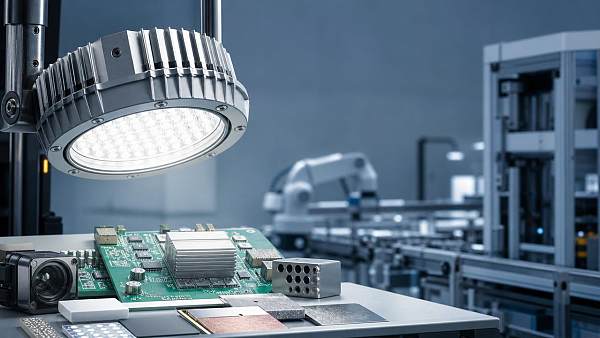
For technical evaluators, LED lights low heat emission is more than a comfort feature—it directly affects system reliability, thermal design, material compatibility, and lifecycle cost.
Across industrial, automotive, agricultural, and infrastructure environments, reduced heat output is becoming a measurable performance advantage, not a secondary specification.
As systems become denser and more connected, LED lights low heat emission helps protect sensors, electronics, polymers, coatings, and human operating zones.
Why Thermal Behavior Is Becoming a Cross-Industry Signal
Lighting once centered on brightness, wattage, and installation cost. That view is changing as equipment platforms become thermally constrained.
Factories now combine machine vision, robotics, edge computing, and compact control cabinets. Each element adds heat and reduces design tolerance.
In this environment, LED lights low heat emission supports more stable operating envelopes and fewer hidden cooling penalties.
The same trend appears in electric vehicles, greenhouses, cleanrooms, tunnels, logistics hubs, and water-treatment infrastructure.
GIM’s cross-sector benchmarking view shows one consistent shift: thermal performance is increasingly evaluated beside optical efficiency and lifetime claims.
Trend Signals Showing When Low Heat Output Matters
The value of LED lights low heat emission rises when lighting is close to sensitive systems, enclosed spaces, or temperature-sensitive materials.
It also matters when maintenance access is difficult, downtime is expensive, or thermal drift can reduce measurement accuracy.
These signals make LED lights low heat emission especially relevant where illumination becomes part of a larger engineered system.
The Forces Driving Demand for Cooler LED Lighting
Several technical and operational forces are pushing cooler lighting from preference to requirement.
- Higher equipment density increases sensitivity to local heat sources.
- Automation requires stable imaging, sensing, and inspection conditions.
- ESG reporting raises attention on energy losses and cooling demand.
- Longer warranty expectations expose weak thermal designs.
- Material-light interaction is becoming a design constraint.
LED lights low heat emission responds to each driver by limiting unwanted thermal transfer near the illuminated area.
However, low external heat does not mean heat disappears. It means heat is managed differently inside the luminaire.
The most reliable products combine efficient LEDs, suitable drivers, heat sinks, housings, and verified thermal test data.
Impact on Electronics, Mobility, Agriculture, and Infrastructure
In electronics facilities, LED lights low heat emission supports stable cleanroom temperatures, inspection accuracy, and safer proximity to sensitive components.
For automated optical inspection, lower heat near cameras can reduce focus drift, sensor noise, and calibration variation.
In mobility applications, lighting sits near batteries, wiring, polymers, displays, and compact control systems.
LED lights low heat emission can help reduce local thermal stress in cabins, battery service areas, charging stations, and maintenance bays.
In smart agriculture, heat affects plant transpiration, humidity balance, nutrient uptake, and climate-control energy.
Low heat LED lighting is valuable when photoperiod control is needed without unwanted warming of leaves, fruits, or seedlings.
For infrastructure, tunnels, stations, water plants, and warehouses benefit from lower heat accumulation in enclosed or poorly ventilated zones.
Where the Advantage Is Strongest
- Near optical sensors, cameras, LiDAR modules, and machine vision stations.
- Inside cabinets, compact fixtures, service pits, and sealed housings.
- Around heat-sensitive crops, food products, chemicals, and packaging materials.
- In spaces where air-conditioning or ventilation capacity is limited.
- Where touch safety, worker comfort, or maintenance access matters.
What Low Heat Emission Does Not Automatically Guarantee
LED lights low heat emission should not be confused with poor thermal loading inside the fixture.
A lamp can feel cool externally while internal junction temperatures remain too high for long-term reliability.
That distinction matters because LED lifetime depends heavily on junction temperature, driver quality, and heat dissipation design.
Claims should therefore be checked against measurable data, not only surface feel or marketing language.
Benchmarking LED Lights Low Heat Emission Across Applications
Effective benchmarking starts by defining the heat-sensitive boundary around the lighting system.
That boundary may be a crop canopy, a PCB inspection line, a vehicle cabin, or a membrane filtration module area.
LED lights low heat emission should then be evaluated through surface temperature, radiant heat, airflow impact, and operating stability.
International frameworks can support more disciplined comparison, including ISO-based environmental testing and relevant electrical safety standards.
For electronics-related environments, IPC expectations may also influence material selection, cleanliness, and assembly compatibility.
For automotive and mobility environments, IATF-aligned thinking encourages traceability, process control, and failure-mode awareness.
Useful Benchmark Questions
- What surface temperature is reached after thermal stabilization?
- Does heat affect nearby sensors, materials, or control equipment?
- Is lumen output stable under elevated ambient temperature?
- Are drivers protected against heat-related degradation?
- Does the luminaire support cleaning, sealing, and environmental exposure needs?
Decision Priorities for Cooler Lighting Specifications
When LED lights low heat emission becomes a requirement, specifications should move beyond simple wattage comparison.
The better approach is to define performance under actual mounting, ambient temperature, duty cycle, and airflow conditions.
- Specify maximum acceptable surface temperature at steady state.
- Request thermal curves, not only nominal data sheets.
- Compare lumen maintenance under high ambient temperature.
- Review driver location, heat sinking, and enclosure ventilation.
- Confirm compatibility with nearby plastics, seals, films, or coatings.
- Consider cooling energy reduction in total lifecycle cost.
This approach turns LED lights low heat emission into a verifiable engineering requirement rather than a vague benefit.
How the Trend May Evolve Next
The next phase will likely combine low heat LED lighting with smarter controls and predictive maintenance data.
Sensors may track fixture temperature, ambient variation, energy use, and lumen depreciation in real time.
That data will make LED lights low heat emission easier to validate across facilities, vehicles, farms, and infrastructure networks.
A Practical Path from Observation to Action
Start by mapping where heat from lighting could affect equipment, materials, measurements, comfort, or energy use.
Then compare LED lights low heat emission using measurable limits, not broad efficiency claims.
For demanding environments, run a pilot under actual duty cycles before full deployment.
Record temperature, light output, driver behavior, and nearby system performance during the test period.
This evidence-based process supports safer decisions across manufacturing, mobility, agriculture, ESG infrastructure, and precision tooling environments.
To move forward, build a short thermal checklist, request comparable test data, and align lighting choices with system-level reliability goals.
When verified carefully, LED lights low heat emission becomes a strategic lever for resilience, efficiency, and long-term operational control.

The Archive Newsletter
Critical industrial intelligence delivered every Tuesday. Peer-reviewed summaries of the week's most impactful logistics and market shifts.