Monday, May 22, 2024

Omdia: Global Smartphone Shipments Up 1% YoY in Q1 2026
by
Published
Views:
Omdia’s latest report indicates that global smartphone shipments rose approximately 1% year-on-year in Q1 2026, driven primarily by mid-tier models in emerging markets. This trend has renewed demand for active components—including HDI substrates and Mini-LED backlight driver ICs—and triggered follow-on orders from Tier-1 OEMs such as Samsung and Transsion for H2 2026. Stakeholders in semiconductor packaging, PCB supply chain management, and international component procurement should closely monitor implications for delivery reliability and certification compliance.
Event Overview
Omdia reported in early 2026 that global smartphone shipments in Q1 2026 increased by ~1% year-on-year. The growth was attributed to stronger sales of mid-tier devices in emerging markets. As a result, demand for high-density interconnect (HDI) substrates and Mini-LED backlight driver ICs—classified as active components—has rebounded. Several leading Chinese component manufacturers have received additional HDI substrate orders from Samsung and Transsion for the second half of 2026. No further timing, volume, or financial details were disclosed in the public release.
Industries Affected
Direct Trading Enterprises
These firms act as intermediaries between Chinese component suppliers and overseas OEMs. The uptick in HDI substrate orders signals improved order visibility and potential for longer-term contract renewals. However, tighter certification requirements (e.g., IPC-2221 Class 3) may increase pre-shipment verification overhead and delay customs clearance if documentation is inconsistent across production lots.
Raw Material Procurement Enterprises
Suppliers of copper foil, ABF (Ajinomoto Build-up Film), and specialty resins used in HDI substrate fabrication face rising demand pressure. Since HDI substrates require precise material uniformity and thermal stability, procurement teams must verify supplier adherence to IPC-2221 Class 3 process controls—not just final product test reports—to avoid downstream rework or rejection.
PCB & Substrate Manufacturing Firms
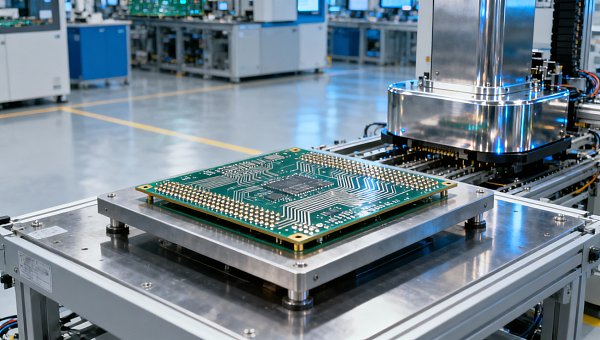
Manufacturers producing HDI substrates for smartphone applications are experiencing renewed order flow, particularly for 4+2+4 layer stack-ups used in flagship and upper-mid-tier handsets. The requirement for IPC-2221 Class 3 certification consistency implies stricter internal audit protocols and traceability systems—not only for final inspection but also for lamination, drilling, and plating process logs.
Supply Chain Service Providers
Logistics, testing, and certification support providers handling cross-border HDI substrate shipments must now accommodate more frequent IPC-2221 Class 3 conformance checks. This includes verifying that test reports reference the correct revision of IPC-2221, include full environmental stress validation (e.g., thermal cycling, humidity testing), and match lot-level manufacturing records.
Key Considerations for Relevant Enterprises and Practitioners
Monitor Certification Consistency Across Production Batches
Verify whether IPC-2221 Class 3 compliance is applied uniformly across all HDI substrate lots—not just sample batches—especially when scaling up for H2 2026 deliveries. Request full audit trails from suppliers, including equipment calibration logs and in-process metrology data.
Track Order Timing and Volume Signals from Tier-1 OEMs
Pay close attention to official purchasing announcements or tender updates from Samsung, Transsion, and other Tier-1 clients over Q2 2026. Early-stage procurement notices—particularly those referencing HDI substrate specifications aligned with IPC-2221 Class 3—may indicate broader platform adoption beyond current pilot volumes.
Prepare for Tighter Documentation Requirements in Export Clearance
Anticipate enhanced scrutiny at export control checkpoints for HDI substrates shipped to EU, US, and ASEAN destinations. Ensure technical documentation explicitly references IPC-2221 Class 3 compliance—including clause numbers, test methods, and pass/fail thresholds—rather than generic “Class 3–compatible” statements.
Distinguish Between Order Announcements and Production Ramp Signals
Treat confirmed H2 2026 orders as indicative of near-term capacity utilization—not yet as evidence of structural demand inflection. Monitor actual shipment data and inventory turns in subsequent Omdia or Counterpoint reports before adjusting long-term capacity planning or raw material contracts.
Editorial Perspective / Industry Observation
Observably, this Q1 2026 shipment uptick reflects tactical inventory replenishment and regional model launches—not a broad-based recovery in premium smartphone demand. Analysis shows the 1% growth remains fragile, heavily dependent on pricing discipline and carrier subsidy programs in Africa, Southeast Asia, and Latin America. From an industry perspective, the HDI substrate order uptick is better understood as a supply chain stabilization signal rather than a demand surge: it suggests improving confidence in Chinese suppliers’ ability to meet stringent Tier-1 quality gates, especially around IPC-2221 Class 3 repeatability. Current relevance lies less in absolute shipment volume and more in the tightening linkage between certification rigor and order allocation—making compliance consistency a de facto gatekeeper for market access.
Conclusion: This development does not signify a return to pre-2022 smartphone growth trajectories, but rather highlights a recalibration in how Tier-1 OEMs manage active component sourcing—prioritizing certified delivery reliability over lowest-cost procurement. It is more accurately interpreted as a mid-cycle supply chain reset than a macro demand reversal. Stakeholders should treat it as a prompt to audit certification readiness—not a trigger for aggressive capacity expansion.
Source: Omdia smartphone shipment and component demand report, Q1 2026 edition. Note: IPC-2221 Class 3 certification consistency across HDI substrate production lots remains a point requiring ongoing observation; no third-party verification data was included in the initial release.
The Archive Newsletter
Critical industrial intelligence delivered every Tuesday. Peer-reviewed summaries of the week's most impactful logistics and market shifts.