Monday, May 22, 2024

Semiconductor Parts Shortlist: Specs That Matter Most
by
Published
Views:
Selecting the right semiconductor parts begins with a disciplined review of the specifications that influence performance, continuity, and total sourcing risk.
A useful shortlist should go beyond unit cost. It should connect electrical fit, package alignment, lifecycle visibility, compliance, and supplier consistency across industrial applications.
In cross-sector manufacturing, semiconductor parts often support control boards, power modules, sensors, communication units, and embedded systems.
That means one weak specification can affect uptime, redesign effort, lead time, and field reliability. The sections below answer the most important selection questions.
What should a semiconductor parts shortlist include first?
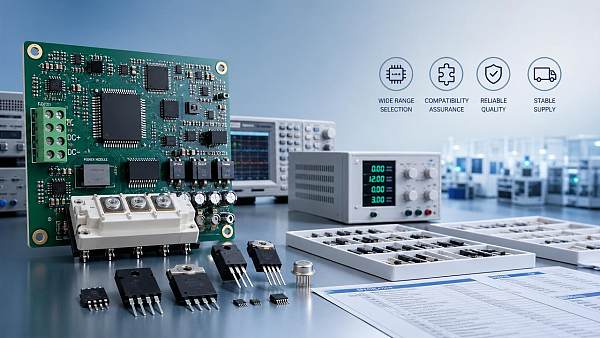
A strong semiconductor parts shortlist starts with non-negotiable technical filters. These remove options that cannot meet design, assembly, or compliance requirements.
The first screen should include voltage rating, current rating, power dissipation, operating temperature, package type, and interface compatibility.
For analog and power devices, derating margin matters. A part that only meets nominal conditions may fail under heat, surge, or continuous load.
For digital devices, timing, logic level, memory size, and communication protocol may be the decisive factors.
A practical first-pass checklist for semiconductor parts includes:
- Absolute maximum ratings and recommended operating conditions
- Package footprint and pin compatibility
- Temperature range, especially industrial or automotive grade
- Efficiency, leakage, switching speed, or signal integrity metrics
- Lifecycle status such as active, NRND, or obsolete
- Regulatory declarations including RoHS and REACH
This early structure reduces later surprises. It also keeps the semiconductor parts comparison focused on fit, not just inventory visibility.
Which electrical specs matter most when comparing semiconductor parts?
Electrical specifications decide whether semiconductor parts will operate safely and predictably in real conditions.
Voltage rating is often the first checkpoint. It must cover steady-state operation, startup events, and transient spikes with an adequate margin.
Current rating is equally important. Peak current and continuous current should both be checked, especially in motor drives, converters, and battery systems.
Thermal performance cannot be separated from electrical behavior. Junction temperature, thermal resistance, and power loss determine long-term stability.
For switching semiconductor parts, compare these values carefully:
- On-resistance or conduction loss
- Gate charge or drive requirements
- Switching frequency capability
- Reverse recovery and transient response
For signal-chain semiconductor parts, focus on noise, offset, bandwidth, tolerance, and stability across temperature.
Data sheets may show attractive headline values. The better decision comes from reviewing test conditions, typical-versus-maximum values, and application notes.
If the target environment includes vibration, humidity, or power fluctuation, electrical margins should be more conservative.
How do package, footprint, and assembly constraints affect semiconductor parts selection?
Package choice influences board layout, thermal path, solderability, inspection method, and replacement flexibility.
Two semiconductor parts with similar electrical ratings may create very different manufacturing outcomes if their packages differ.
A package mismatch can trigger PCB redesign, stencil changes, new thermal validation, and fresh qualification work.
Important package-related checks include:
- Pad layout compatibility with existing boards
- Pinout equivalence, not just package naming
- Moisture sensitivity level and storage handling
- Thermal pad design and heat spreading needs
- Automated optical inspection and rework practicality
This becomes critical in industrial controllers, automotive electronics, telecom hardware, and environmental monitoring systems.
When shortlist decisions involve second-source options, package similarity should never be assumed. Always confirm drawings, tolerances, and land pattern recommendations.
Why do lifecycle status and supplier consistency matter for semiconductor parts?
Lifecycle risk can be more expensive than performance risk. A technically suitable device loses value if supply becomes unstable after approval.
For semiconductor parts, check whether the item is active, mature, not recommended for new designs, or approaching end-of-life.
A short remaining lifecycle may force emergency redesigns, excess inventory, or acceptance of unverified alternatives.
Supplier consistency matters just as much. Documentation quality, process control, traceability, and change notification practices affect long-term confidence.
Useful sourcing checks include:
- Official lifecycle notices and PCN history
- Authorized channel coverage by region
- Lead time stability across recent quarters
- Lot traceability and authenticity safeguards
- Quality certifications relevant to the application
In a global manufacturing environment, semiconductor parts should be benchmarked not only by specification, but also by continuity and governance quality.
How can compliance and application environment change the shortlist?
Compliance requirements often remove otherwise attractive semiconductor parts from consideration.
RoHS, REACH, conflict minerals reporting, halogen status, and sector-specific expectations may all influence eligibility.
Application environment is equally important. Semiconductor parts used in factory automation face different stresses than those used in EV subsystems or smart agriculture equipment.
Consider the real operating profile:
- Continuous heat versus intermittent duty
- Exposure to dust, moisture, and vibration
- EMI sensitivity and shielding demands
- Functional safety or mission-critical uptime expectations
A compliant part is not automatically a reliable part for every environment. Suitability depends on both declarations and demonstrated operating fit.
What are the most common mistakes when shortlisting semiconductor parts?
One common mistake is choosing semiconductor parts by price alone. Low acquisition cost can mask redesign costs, lower yields, or shorter service life.
Another error is relying on headline equivalence. Similar voltage or package labels do not guarantee compatible performance.
A third mistake is ignoring test conditions in the data sheet. Typical values may not reflect worst-case field operation.
Counterfeit risk is also underestimated when sourcing semiconductor parts through uncontrolled channels during shortages.
To avoid these issues:
- Define technical must-haves before checking market stock.
- Review derating, thermal behavior, and package details together.
- Verify lifecycle, traceability, and compliance evidence.
- Keep approved alternatives with documented comparison notes.
This process creates a semiconductor parts shortlist that is resilient under both technical and market pressure.
FAQ table: how should semiconductor parts be evaluated quickly?
The best semiconductor parts shortlist is built on verified specifications, not assumptions.
Electrical ratings, thermal margins, package constraints, lifecycle visibility, and compliance status should be reviewed as one connected decision framework.
For organizations operating across electronics, mobility, agriculture, infrastructure, and precision tooling, this approach supports faster benchmarking and stronger continuity planning.
Use this checklist to refine current approved lists, compare alternatives, and document the semiconductor parts that deliver both technical fit and supply resilience.
The Archive Newsletter
Critical industrial intelligence delivered every Tuesday. Peer-reviewed summaries of the week's most impactful logistics and market shifts.