Monday, May 22, 2024

WHO Highlights US Arrears, Tightens Medical Device Compliance
by
Published
Views:
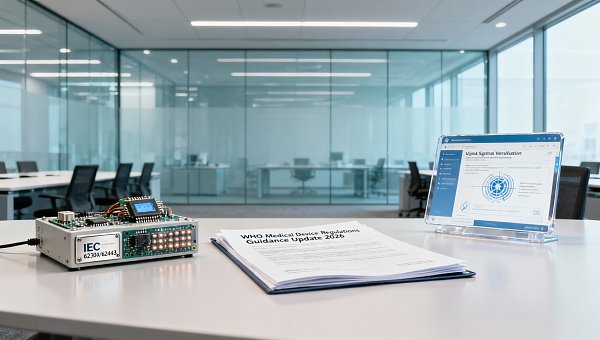
On April 29, 2026, the World Health Organization (WHO) publicly noted that the United States remains delinquent on its assessed contributions — a prerequisite for any formal withdrawal process. This development signals heightened scrutiny of member state compliance and may accelerate implementation of the WHO Medical Device Regulations Guidance Update 2026, with direct implications for manufacturers and exporters of medical devices, particularly those embedding active components or ESG monitoring modules.
Event Overview
On April 29, 2026, WHO Director-General Dr. Tedros Adhanom Ghebreyesus stated in Geneva that the United States has not yet settled its outstanding assessed contributions to the WHO. He clarified that completion of financial settlement is a mandatory condition before any procedural steps toward withdrawal can commence. Concurrently, WHO indicated it may expedite adoption of the WHO Medical Device Regulations Guidance Update 2026, which introduces strengthened requirements for software lifecycle documentation (SDLC), cybersecurity validation per IEC 62304 and IEC 62443, and traceability of embedded active components and ESG Monitor modules in imported medical devices.
Industries Affected
Medical Device Exporters (Direct Trade Enterprises)
These enterprises face potential delays in market access to the U.S., EU, and Latin American jurisdictions, as updated WHO guidance may inform national regulatory enforcement. The emphasis on SDLC documentation and cybersecurity validation implies longer pre-market review cycles and increased technical submission burdens — especially for devices integrating software-driven functionality or sustainability reporting features.
Manufacturers of Embedded Active Components
Suppliers of hardware-software integrated modules (e.g., microcontrollers with firmware, sensor-actuator units with onboard logic) are affected because the guidance explicitly references ‘embedded active components’ as subject to enhanced documentation and verification. Their downstream customers’ compliance now depends partly on their ability to provide auditable SDLC records and cybersecurity evidence aligned with IEC standards.
OEM/ODM Contract Manufacturers
Contract manufacturers producing devices under foreign brand names must now anticipate stricter contractual and audit requirements from clients seeking WHO-aligned regulatory readiness. The guidance’s focus on verifiable SDLC and cybersecurity validation means OEMs may require deeper supply chain transparency — including source code management practices, vulnerability disclosure processes, and third-party certification evidence — even at the component level.
Distributors & Regulatory Affairs Service Providers
Distributors acting as authorized representatives in regulated markets may face expanded due diligence obligations under evolving interpretations of the guidance. Regulatory service providers — especially those supporting CE marking, FDA 510(k), or ANVISA submissions — will need to update technical file templates and audit checklists to reflect new expectations around ESG Monitor module documentation and IEC 62443 alignment.
What Relevant Enterprises or Practitioners Should Focus On Now
Monitor official updates from WHO and national regulators
The WHO Medical Device Regulations Guidance Update 2026 is not yet legally binding; it functions as a harmonization reference. Enterprises should track whether the U.S. FDA, EU MDR Notified Bodies, or health authorities in Brazil, Mexico, or Colombia formally adopt or reference its provisions in upcoming guidance documents or inspection protocols.
Prioritize SDLC and cybersecurity documentation for high-risk device categories
Focus initial efforts on devices containing embedded software with clinical decision support, remote connectivity, or ESG-related data logging. Verify whether existing SDLC artifacts (e.g., requirements traceability matrices, version-controlled firmware builds, penetration test reports) meet IEC 62304 Class B/C and IEC 62443-4-2 expectations — not just internal quality standards.
Distinguish between policy signal and enforceable requirement
The WHO statement reflects a compliance oversight posture and a potential catalyst for national action — not an immediate global mandate. Enterprises should avoid overreacting by halting shipments or redesigning products prematurely; instead, treat this as a signal to strengthen documentation infrastructure and align internal processes with internationally recognized standards ahead of likely regulatory cascades.
Initiate cross-functional alignment on software and cybersecurity evidence
Ensure engineering, quality assurance, regulatory affairs, and procurement teams jointly review current capabilities to generate and retain SDLC records and cybersecurity validation evidence. Where gaps exist — such as lack of secure development training, insufficient vulnerability scanning tools, or undocumented change control for firmware patches — prioritize remediation tied to specific product lines facing imminent renewal or first-time submission.
Editorial Perspective / Industry Observation
Observably, this WHO statement is less about immediate enforcement and more about reinforcing institutional accountability — both for member states’ financial commitments and for industry’s technical rigor in software-integrated medical devices. Analysis shows the linkage between U.S. arrears and accelerated regulatory guidance is rhetorical and strategic: it underscores WHO’s role as a normative authority even amid political uncertainty. From an industry standpoint, the 2026 Guidance Update is best understood not as a new regulation, but as a consolidation of emerging global expectations — one that makes previously voluntary best practices increasingly material to market access. Continued attention is warranted, particularly as national regulators begin referencing its annexes in audit observations or technical guidance.
Conclusion
This development does not introduce new binding law, but it does sharpen the timeline and scope of compliance expectations for medical device exporters and suppliers of software-dependent components. It is more accurately interpreted as a reinforcement of existing international standards — notably IEC 62304 and IEC 62443 — rather than the creation of novel obligations. For industry stakeholders, the appropriate response is proactive alignment, not reactive overhaul: strengthening documentation discipline, verifying current SDLC maturity, and monitoring how national authorities operationalize the WHO’s updated guidance.
Source: World Health Organization (WHO), official statement by Director-General Dr. Tedros Adhanom Ghebreyesus, Geneva, April 29, 2026. Note: The status of U.S. assessed contributions and the formal adoption timeline of the WHO Medical Device Regulations Guidance Update 2026 remain subject to ongoing observation.
The Archive Newsletter
Critical industrial intelligence delivered every Tuesday. Peer-reviewed summaries of the week's most impactful logistics and market shifts.