Monday, May 22, 2024

What active components fail most in harsh environments
by
Published
Views:
In harsh environments, active components are often the first point of failure, affecting everything from powertrain systems and PCB fabrication to smart grid technology and automotive safety. For engineers, buyers, and decision-makers tracking future mobility, driver assistance, emissions reduction, and broader industry applications, understanding why these components fail is essential to reducing risk, improving reliability, and selecting the right electric motor manufacturer or system partner.
Across electronics, mobility, agri-tech, water treatment, and industrial infrastructure, active components carry the burden of switching, amplifying, sensing, computing, and power conversion. Unlike passive parts, they are more sensitive to temperature spikes, voltage transients, moisture ingress, contamination, vibration, and cumulative operating stress. When one transistor, controller, driver IC, sensor, or relay degrades, the failure can cascade into downtime, safety incidents, or expensive field replacements.
For procurement teams and technical evaluators, the issue is not only which component fails first, but why it fails under specific duty cycles, how failure modes differ by application, and what design or sourcing decisions can extend service life from 2 years to 8 years or more. A cross-sector benchmarking view is especially useful because the same environmental stressors often appear in EV systems, agricultural robotics, filtration plants, industrial controls, and high-density electronics assemblies.
Which active components fail most often in harsh environments
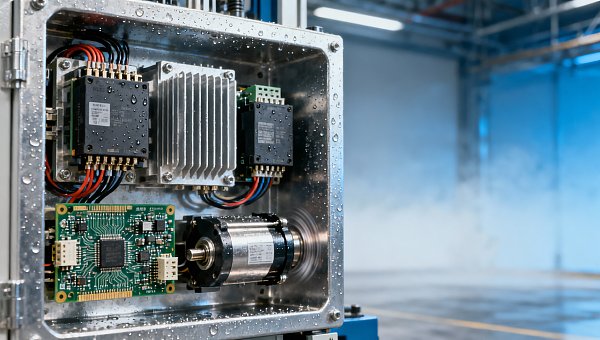
The most failure-prone active components are usually power semiconductors, electrolytic capacitors with active control dependency, relays, sensors, optoelectronic devices, microcontrollers, and gate driver circuits. In systems exposed to thermal cycling from -40°C to 125°C, or even 150°C near power stages, component aging accelerates sharply. The risk rises further when humidity exceeds 85% RH, dust levels are high, or vibration remains continuous over thousands of operating hours.
In EV powertrains and charging modules, MOSFETs, IGBTs, SiC devices, current sensors, and control ICs are common weak points because they operate under high switching frequency, heat concentration, and electrical stress. In PCB fabrication and industrial electronics, voltage regulators, interface transceivers, BGA-mounted processors, and optical couplers can fail due to solder fatigue, contamination, conductive residues, or unstable thermal management.
In smart agriculture and environmental infrastructure, failure often shifts toward exposed sensors, communication modules, motor drivers, and power conversion boards. Field equipment may face UV exposure, mud, fertilizer chemicals, washdown cycles, and rapid day-night temperature swings. A component rated for indoor industrial use may perform adequately for 12 to 18 months in a cabinet, yet fail in less than 6 months if enclosure sealing, conformal coating, and connector protection are poorly specified.
The table below highlights common active component categories, their typical stress triggers, and the operational consequence when they fail.
A key takeaway is that failure frequency is usually highest where heat, switching stress, and exposure intersect. That is why power devices, sensors, and control electronics dominate field returns in harsh-duty systems. Teams that classify failures only by part number often miss the deeper issue: the environmental mismatch between component rating, package design, and actual operating profile.
Why active components break down under combined environmental stress
Single-factor testing rarely explains real-world failures. Most harsh-environment breakdowns are caused by combined stress: temperature plus humidity, vibration plus weak solder joints, or electrical surge plus marginal insulation spacing. A controller that survives 1,000 hours at 85°C in lab conditions may still fail early if it also experiences repetitive shock, contamination films, and unstable supply voltage in the field.
Thermal stress is the most common driver because active components generate their own heat. Junction temperature is often 15°C to 40°C higher than nearby board temperature, especially in densely packed enclosures. Every 10°C increase in steady operating temperature can significantly shorten useful life for many semiconductor and capacitor-adjacent assemblies. In practice, poor airflow, undersized heat spreaders, and proximity to motors or braking systems amplify the problem.
Moisture and contamination create another failure layer. In agricultural systems, process plants, and outdoor charging infrastructure, condensation can trigger corrosion, leakage current, or sensor drift. Ionic residues on boards become more dangerous above 60% RH. If cleaning quality, coating thickness, or enclosure venting is inconsistent, a board that passes final electrical test may still develop leakage or shorting after several wet-dry cycles.
Common physical and electrical failure mechanisms
Mechanical fatigue is often underestimated. Repeated vibration in the range of 5 Hz to 500 Hz can crack solder joints, loosen bond wires, or stress connector interfaces. This matters in off-road mobility, pumps, compressors, tractors, and industrial tooling. Meanwhile, electrical overstress can arrive as surge pulses, reverse polarity, load dump, electrostatic discharge, or repeated transient spikes from inductive loads.
Typical stress combinations that accelerate failure
- High ambient heat plus limited airflow, leading to junction temperatures beyond design comfort zone.
- Humidity above 85% RH combined with contamination residue, increasing leakage and corrosion risk.
- Continuous vibration plus heavy components on PCB assemblies, causing solder fatigue and intermittent electrical paths.
- Fast switching loads plus poor grounding or shielding, creating EMI-related malfunction in sensors and communication circuits.
- Chemical exposure from oils, fertilizers, cleaning agents, or sulfides, which attack seals, contacts, and packaging materials.
For technical assessment teams, this means component reliability should never be judged only by nominal datasheet rating. The real benchmark is mission profile fit: operating hours per day, enclosure class, thermal path, expected surge count, washdown frequency, and maintenance interval. Those details often decide whether mean time to failure trends toward 3 years or 10 years.
How failure patterns differ by industry application
Although harsh environments share common stress factors, failure patterns differ by sector. In automotive and mobility systems, the priority risks are heat, vibration, voltage transients, and safety-critical signal integrity. In semiconductor and electronics manufacturing, contamination control, ESD discipline, and thermal management dominate. In smart agri-tech, exposure to water, mud, fertilizer residues, and long outdoor duty cycles becomes the leading concern.
Environmental infrastructure adds another dimension. Water treatment skids, filtration modules, pump stations, and remote monitoring cabinets often combine corrosive atmosphere, humidity, biofouling, and 24/7 operation. Components may not fail dramatically at first. Instead, they show rising drift, intermittent communication faults, or gradual loss of control stability over 3 to 9 months before a shutdown event occurs.
Precision tooling and factory automation introduce high cycle counts. If an actuator controller switches millions of times per month, relay wear, gate driver stress, or encoder electronics degradation can become the limiting factor rather than headline thermal rating. This is why application-specific benchmarking matters more than generic supplier claims.
The comparison below shows how active component risk shifts across major industrial environments.
This cross-industry view helps procurement and engineering teams avoid a common mistake: selecting a component family proven in one sector, then deploying it unchanged in another. A sensor package suitable for protected automotive cabin electronics may not survive an IP-rated outdoor agricultural machine. Likewise, a low-cost industrial controller may perform poorly in a high-EMI powertrain environment.
What this means for benchmarking and sourcing
The most reliable sourcing decisions compare at least 4 dimensions: environmental rating, thermal design margin, field replaceability, and standards alignment. ISO, IATF, IPC workmanship criteria, ingress protection strategy, and accelerated life validation should be reviewed as an integrated package rather than in isolation.
How to evaluate active components before procurement and deployment
For buyers and project leaders, the practical question is how to reduce failure risk before a purchase order is issued. A robust evaluation process should include environmental fit, electrical derating, packaging durability, manufacturability, and service support. Reviewing unit price alone is risky when a field replacement can cost 5 to 20 times the initial component value after labor, downtime, logistics, and compliance checks are included.
Start with the actual duty cycle. Determine ambient temperature range, daily operating hours, surge exposure, enclosure class, maintenance interval, and shock or vibration level. Then compare those conditions against the component’s package type, thermal resistance, sealing method, and qualification profile. A 20% to 30% derating margin is often a practical baseline for voltage, current, and temperature in harsh-duty applications.
Key procurement checkpoints
- Verify operating temperature and derating behavior, not just absolute maximum ratings.
- Check package robustness, including solder joint stress sensitivity and mechanical retention.
- Review moisture protection measures such as sealing, potting, venting, or conformal coating compatibility.
- Assess EMC and surge resilience for the intended cable length, switching load, and grounding scheme.
- Confirm supply continuity, second-source options, and change-notification discipline for lifecycle control.
The matrix below can be used by sourcing teams, quality managers, and financial approvers to align technical risk with purchase decisions.
The strongest procurement outcome comes when engineering, quality, and sourcing score these factors together. A component with a 2-week shorter lead time is not necessarily the lower-risk option if it lacks proven robustness for washdown, shock, or 24/7 high-load operation.
A frequent sourcing mistake
One common error is assuming that “industrial grade” automatically means harsh-environment ready. In reality, harsh-duty suitability depends on the full system context: enclosure, mounting, cooling, cable routing, contamination control, and maintenance practice. That is why benchmark-based evaluation is more dependable than label-based purchasing.
Design, maintenance, and risk-control strategies that extend component life
Reducing active component failure requires action across design, assembly, validation, and maintenance. Good results usually come from small improvements layered together: better heat spreading, cleaner PCB processing, stronger sealing, controlled derating, vibration support, and clearer inspection intervals. In many harsh-duty systems, a 10% design improvement in thermal path can produce a much larger gain in long-term reliability than switching to a more expensive part alone.
At design level, prioritize thermal mapping early. Identify hotspots, estimate junction-to-ambient rise, and separate heat-generating components from moisture-sensitive control circuits where possible. Use mounting reinforcement for heavy packages, optimize creepage and clearance, and validate coating compatibility with connectors, sensors, and rework needs. For power electronics, gate drive tuning and transient suppression are often as important as the device selection itself.
At manufacturing level, process discipline matters. Flux residues, uneven solder profiles, voiding, and coating defects can become latent failure triggers. IPC-aligned workmanship, cleanliness verification, and environmental stress screening provide better confidence than final functional test alone. For critical assets, a staged validation flow of prototype test, pilot run review, and early field monitoring over the first 90 to 180 days can reveal issues before full-scale deployment.
Practical life-extension actions
- Maintain thermal derating and avoid running power devices continuously near maximum current or junction limits.
- Use enclosure ventilation or heat extraction appropriate to dust and water protection targets, rather than relying on airflow assumptions.
- Schedule inspection of high-risk assemblies every 3 to 6 months in outdoor or corrosive settings.
- Track intermittent alarms, sensor drift, and communication retries as early indicators of active component degradation.
- Standardize root-cause feedback between field service, quality, and procurement to prevent repeat sourcing errors.
For organizations managing diverse equipment portfolios, a centralized benchmarking approach is especially valuable. Comparing failure modes across automotive subsystems, PCB assemblies, smart farm machines, and environmental control platforms helps identify repeated design weaknesses, supplier inconsistencies, or qualification gaps. That broader view supports better capital planning, better spare strategy, and more resilient supply decisions.
FAQ: questions decision-makers often ask
How do I know whether a component is truly suitable for harsh environments?
Look beyond marketing grade labels. Review operating temperature range, derating data, moisture exposure tolerance, vibration profile, surge handling, expected duty cycle, and assembly integration. If possible, request validation under combined stress rather than only static lab conditions.
Which matters more: component quality or system design?
Both matter, but system design often decides the outcome. A premium semiconductor can still fail early if cooling, sealing, grounding, or mounting support are weak. In many field returns, the root cause sits at the interface between the component and the system environment.
What service interval is reasonable for harsh-duty electronics?
For outdoor or contamination-prone equipment, a 3-month to 6-month inspection cycle is common for connectors, seals, cooling paths, and drift-sensitive sensors. In controlled indoor environments, 6-month to 12-month intervals may be adequate, depending on duty cycle and criticality.
Can lower-cost alternatives be acceptable?
Yes, if benchmarking confirms they meet the actual mission profile. The right comparison is total lifecycle cost, not piece price. If a lower-cost part introduces higher replacement frequency, longer downtime, or reduced safety margin, it is rarely the economical choice.
Active components fail most often in harsh environments when thermal, electrical, mechanical, and chemical stress exceed the practical limits of the part, the package, or the surrounding system design. Power semiconductors, sensors, controllers, relays, and driver circuits deserve the closest attention because they sit at the center of switching, control, and feedback. For industrial buyers and engineers, better outcomes come from application-specific benchmarking, realistic derating, stronger validation, and coordinated procurement review.
Global Industrial Matrix supports this process by connecting data across electronics, automotive, agri-tech, environmental infrastructure, and precision manufacturing so teams can compare risk factors with greater clarity and make decisions on a more defensible technical basis. If you need help evaluating harsh-environment component risk, benchmarking suppliers, or building a more resilient sourcing strategy, contact us to discuss your application, request a tailored assessment, or explore more cross-sector reliability solutions.
- electronics
- semiconductors
- industry applications
- PCB fabrication
- electronics manufacturing
- active components
- Mobility
- powertrain systems
- sensors
- driver assistance
- automotive safety
- future mobility
- Agri-Tech
- emissions reduction
- smart grid technology
- electric motor manufacturer
- EV powertrains
- Precision tooling
- Smart Agri-Tech
- Industrial infrastructure
- Environmental infrastructure
The Archive Newsletter
Critical industrial intelligence delivered every Tuesday. Peer-reviewed summaries of the week's most impactful logistics and market shifts.