Monday, May 22, 2024

What electronics price trends mean for component sourcing budgets
by
Published
Views:
Electronics price trends matter most when they change the cost of keeping a production plan alive, not merely the unit price shown on a supplier quotation. A lower price can be useful, but it does not automatically improve a sourcing budget if the part has an uncertain lead time, limited allocation, a fragile qualification status, or a high risk of redesign. The practical question is whether a price movement changes the total cost and reliability of supply for the planned build schedule.
This is particularly important for components with long approval cycles or high replacement costs: semiconductors, power modules, connectors, passive components with tight specifications, industrial controllers, HDI substrates, and electronics used in mobility or infrastructure systems. These categories do not all move together. A broad decline in certain component prices can coexist with continued pressure in a specialized device family, a particular package type, or a region-dependent material supply chain.
For budget planning, the useful response to market volatility is not to predict a single future price. It is to separate the cost exposure that can be managed through timing and contracts from the exposure that requires engineering, supplier, or inventory decisions.
Why a market-wide price direction is rarely enough
Electronics markets are often described as rising, falling, or stabilizing. Those labels may be directionally helpful, but they are too broad for a component budget. A buyer may see lower pricing for standard memory or mature semiconductor products while facing higher cost or weaker availability for automotive-grade devices, high-voltage power electronics, specialized sensors, or components with stringent traceability requirements.
Price behavior is shaped by several overlapping conditions:
- Demand concentration: Demand from one application area can tighten capacity for a shared component family. Electrification, automation, data infrastructure, and industrial equipment may compete for similar power, control, sensing, or interconnect technologies.
- Capacity flexibility: Some common products can be produced across multiple qualified factories or process nodes. Others depend on specific packaging, test capacity, materials, or manufacturing expertise, making supply less responsive.
- Component maturity: Mature parts can still become expensive when suppliers reduce output, discontinue lines, or prioritize higher-value production. An older design is not automatically a low-risk design.
- Specification constraints: Temperature range, functional safety documentation, moisture sensitivity, lifecycle commitments, approved-country requirements, and customer-specific validation can reduce the number of usable sources.
- Logistics and currency exposure: A stable factory-gate price may still produce a higher landed cost when freight routes, duties, exchange rates, or inventory carrying needs change.
The result is that a headline market trend should be treated as a starting signal for investigation, not as a budgeting assumption. The relevant market is the market for the exact approved part, or for technically credible alternatives that can be qualified within the project timeline.
Translate electronics price trends into a budget exposure map
A sourcing budget becomes more resilient when components are grouped by how their price movement affects the business. Grouping solely by commodity type is not enough. Two microcontrollers may sit in the same category but have completely different sourcing risk because one has multiple approved sources and the other is embedded in a validated control platform.
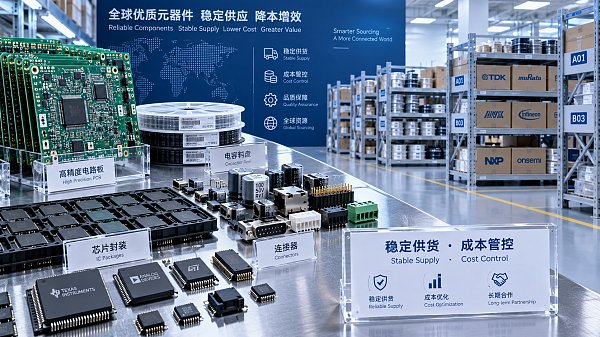
This classification changes budget conversations. A high-cost power device may justify a detailed should-cost review, while a low-cost capacitor with a constrained dielectric, case size, or qualification requirement may justify buffer inventory. Both decisions can be financially rational, but they solve different risks.
Do not confuse lower quotes with lower total cost
When electronics prices soften, a common reaction is to reopen every quotation and push for immediate reductions. That can be appropriate for readily available, comparable parts. It can also create hidden cost if the price discussion ignores lot traceability, date-code requirements, packaging, test coverage, payment terms, delivery windows, and the supplier’s ability to hold capacity.
The cost of a component should be viewed in the context of the build it supports. A slightly higher unit price may be preferable when it secures scheduled deliveries, maintains approved documentation, or avoids switching to a source that introduces incoming inspection and qualification work. Conversely, accepting a higher price simply because a supplier claims shortage conditions is weak practice when market availability has improved and the part is genuinely substitutable.
A useful internal measure is the cost of disruption: the financial effect of delayed production, expedited freight, emergency broker purchases, rework, idle labor, missed delivery commitments, and engineering changes. This does not require a perfect calculation. Even a disciplined qualitative review helps distinguish a part that deserves supply protection from one that should be rebid.
Budget assumptions should follow lead-time risk, not calendar quarters
Annual budgets often assume that component prices will move gradually and that a quarterly forecast is sufficient. That assumption is weakest when demand shifts quickly or when supply is concentrated in a narrow manufacturing step. By the time a quarterly review identifies a problem, open orders may already be exposed.
Instead of assigning one inflation or deflation assumption to an entire electronics bill of materials, use a rolling view with different review frequencies. Fast-moving or constrained categories may require monthly review. Stable, dual-sourced categories can be reviewed less often. The frequency should reflect the consequence of being wrong, not the amount of reporting effort available.
The forecast should also distinguish between three dates that are often merged incorrectly:
- The date a supplier quote is issued.
- The date the purchase order locks commercial terms.
- The date parts are required at the manufacturing site.
For long-lead components, today’s quote may influence a build many months away. For short-cycle items, spot-market changes may be more relevant. A budget that treats these situations identically can appear accurate on paper while missing the actual cash and availability exposure.
Contract strategy depends on the component’s replacement reality
Fixed-price agreements, indexed pricing, blanket orders, and spot purchases each have a role. The right choice depends less on the general direction of electronics price trends and more on how easily the organization can change course.
Fixed-price arrangements are useful when demand is reasonably visible, the part is critical, and the supplier can commit to defined delivery and allocation terms. They provide budget clarity, but can become costly when demand drops, designs change, or the market declines sharply. The agreement should make volume flexibility, cancellation exposure, and end-of-life handling visible rather than treating them as administrative details.
Indexed or periodically reviewed pricing can work for parts with transparent cost drivers or recurring competitive supply. It reduces the risk of locking in an outdated price, but only if the index or review mechanism reflects the actual product category. A broad commodity reference is a poor proxy for a specialized electronic assembly or a tightly controlled semiconductor.
Spot purchasing fits noncritical, broadly available items or short-term demand variation. It is not a substitute for a sourcing strategy on design-locked parts. Relying on the spot market for a component that requires controlled provenance or long qualification can turn an apparent saving into a quality and continuity problem.
Watch the links between electronics and adjacent industrial markets
Electronic components increasingly sit inside systems whose demand is driven by other sectors. Power devices and control electronics may be influenced by vehicle electrification, factory automation, energy infrastructure, agricultural machinery, or water-treatment equipment. HDI substrates can be affected by product complexity and packaging requirements well beyond a single end market.
This cross-sector view matters because the first sign of cost pressure may not appear in a direct electronics quote. It may appear as longer lead times for a powertrain subassembly, increased board fabrication constraints, a change in connector availability, or a supplier request to revise forecast commitments.
Global Industrial Matrix (GIM) approaches this issue through cross-sector technical benchmarking, linking electronics, automotive and mobility, industrial infrastructure, agri-tech, and precision tooling considerations. For sourcing decisions, that perspective is useful when a component is part of a larger system and its risk cannot be understood from semiconductor pricing alone. Comparing technical requirements against relevant ISO, IATF, and IPC expectations can also help identify whether a proposed lower-cost alternative is genuinely equivalent or merely similar in appearance.
Signals that deserve action before the budget is revised
Not every supplier message warrants a forecast change. The signals that matter are those that alter the ability to buy, build, qualify, or deliver. These commonly include a meaningful lead-time extension, an allocation notice, a minimum-order increase, a change in factory location, an end-of-life notice, a restriction on authorized distribution, or a request to place non-cancellable orders.
For each signal, ask four practical questions:
- Which released products and planned builds use the affected component?
- Is there an approved alternate, and can it be used without new validation?
- What quantity is already covered by on-hand stock and confirmed open orders?
- What is the commercial and operational cost if supply arrives late or at a higher price?
These questions prevent an unhelpful pattern: reacting to a market headline with blanket inventory buying. Excess inventory can reduce short-term procurement anxiety while creating obsolescence, storage, and cash-flow problems. Buffer stock is most defensible where consumption is predictable, lifecycle risk is controlled, and the financial cost of interruption is high.
Where cost-down programs often fail
The first failure is using percentage reduction targets across every part family. This encourages teams to pursue savings where prices are already competitive while overlooking constrained components where the real objective should be supply assurance. A category target can be useful for planning, but it should not override part-level risk.
The second is treating distributors as interchangeable. Authorized channels, franchised relationships, independent sources, and surplus inventory may each serve valid purposes, but they do not provide the same traceability, warranty path, continuity, or quality-control confidence. The more critical the part and end application, the more important these differences become.
The third is delaying alternate-source work until prices rise or supply tightens. At that point, engineering capacity and supplier attention are often limited. Alternate qualification has the greatest value when it is completed before it is urgently needed. It may not be worthwhile for every component, but it deserves early attention for single-sourced, long-lead, high-impact items.
A practical way to use market information
Market intelligence is most valuable when it changes a decision. Build a short watchlist of components that represent a large share of spend, can stop production, have limited sources, or sit in products with long delivery commitments. Review price, availability, lifecycle status, open-order coverage, and alternate-source readiness together. Looking at only one of these fields creates false confidence.
Then set a decision rule for each group. A competitive, multi-sourced part may trigger a rebid when quotations diverge. A constrained component may trigger an allocation discussion and a controlled inventory plan. A design-locked component may trigger an engineering review, even when the current price is stable. This converts electronics price trends from background news into an operating discipline.
The strongest sourcing budgets are not built around a promise that prices will remain stable. They are built around clear assumptions, visible exposure, and actions that match the technical reality of each component. When a price changes, the response should be proportionate: negotiate where the market supports it, protect supply where disruption is expensive, and qualify options before the market forces a rushed decision.
The Archive Newsletter
Critical industrial intelligence delivered every Tuesday. Peer-reviewed summaries of the week's most impactful logistics and market shifts.