Monday, May 22, 2024

Why electronic components fail early in high-heat devices
by
Published
Views:
Early failure in electronic components is rarely random. In high-heat devices, it usually points to a combination of thermal overload, material mismatch, poor layout, inadequate derating, or weak quality control somewhere in the design-to-procurement chain. For engineers, buyers, and quality teams, the practical takeaway is clear: most early-life failures can be predicted and reduced if heat is treated as a system-level reliability issue rather than a single-component problem.
That matters across industries where heat and uptime directly affect cost, safety, and compliance—from automotive electronics and power conversion to water treatment controls, smart agriculture equipment, industrial drives, and CNC machine systems. If a device runs hot, the question is not whether temperature will affect reliability, but which component will degrade first, how quickly, and whether that risk was visible before deployment.
Why do electronic components fail early in high-heat devices?
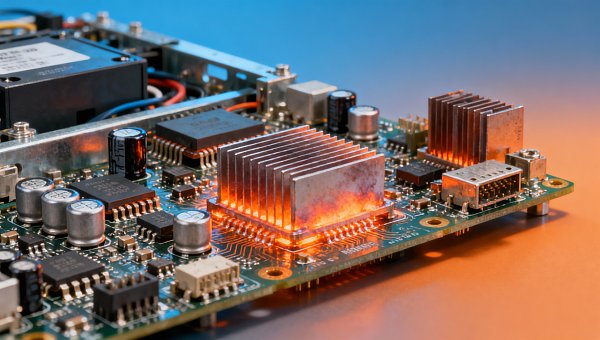
The short answer is that heat accelerates almost every major aging mechanism inside an electronic assembly. Elevated temperature increases chemical reaction rates, weakens insulation, dries out electrolytes, raises leakage current, shifts electrical parameters, and amplifies mechanical stress caused by expansion and contraction. When these effects combine with poor airflow, underspecified parts, or inconsistent manufacturing, components can fail far earlier than their nominal life suggests.
In real-world products, early failure often comes from one of five root causes:
- Insufficient thermal design: hotspots are created by poor enclosure ventilation, weak heat sinking, or dense board layouts.
- Incorrect component selection: parts are chosen by price or nominal rating, not by actual operating temperature, ripple current, surge load, or mission profile.
- Material incompatibility: solder, substrate, encapsulant, connector plastics, and coatings expand differently under heat, creating fatigue.
- Lack of derating: components are run too close to their electrical or thermal limit, leaving no margin for ambient variation.
- Manufacturing and quality variation: voids, poor solder joints, contamination, and process inconsistency become much more damaging in high-temperature service.
This is why two devices built with similar schematics can show very different field reliability. The difference is often not only the bill of materials, but thermal architecture, validation discipline, and supply chain quality.
Which components are most vulnerable to heat-driven early failure?
Not all parts age at the same rate under heat. Some are especially sensitive and tend to become the first point of failure in high-temperature environments.
Electrolytic capacitors are among the most common examples. Their internal electrolyte degrades faster at high temperature, reducing capacitance and increasing ESR. In power supplies, inverters, motor drives, and control boards, this can trigger ripple instability, startup issues, or complete failure.
Semiconductors such as MOSFETs, IGBTs, diodes, and voltage regulators also face strong thermal stress. Junction temperature directly affects switching losses, leakage current, and long-term reliability. If thermal paths are poor, repeated heat cycling can push a device into premature breakdown.
Solder joints may not be considered “components” in procurement terms, but they are a frequent failure location. Repeated thermal expansion mismatch between the PCB and mounted packages causes fatigue cracking, especially in power devices, BGAs, and heavy components.
Connectors and relays can suffer from increased contact resistance, oxidation, spring-force reduction, and plastic deformation. In hot, vibrating, or contaminated settings, these issues accelerate quickly.
Magnetics and insulation systems in transformers, inductors, and motors are also highly temperature-sensitive. When insulation classes are exceeded, dielectric strength drops and lifetime shortens sharply.
Polymers, seals, adhesives, and potting compounds are often underestimated. Yet in industrial electronics, EV subsystems, filtration controllers, and outdoor agri-tech systems, these materials can harden, crack, shrink, outgas, or lose adhesion well before expected service life.
What are the hidden causes beyond “too much heat”?
High temperature is often the visible condition, but not always the true root cause. Many early failures occur because heat interacts with other stress factors that were not fully considered.
- Thermal cycling: repeated heating and cooling create fatigue even when peak temperature seems acceptable.
- Localized hotspots: average board temperature may look safe while one regulator, driver, or trace region exceeds limits.
- Ripple and transient loading: electrical stress raises internal heating beyond what the datasheet’s simple rating implies.
- Contamination and humidity: heat accelerates corrosion, ionic migration, and insulation degradation.
- Altitude or sealed enclosure effects: reduced cooling efficiency can make a standard design fail in real deployment.
- Duty-cycle mismatch: the field use profile may be harsher than the qualification profile.
For technical evaluators and project managers, this is a critical point: a part may be “within spec” on paper and still be unreliable in the actual application. System context matters more than isolated datasheet numbers.
How can buyers and engineers tell whether a component is likely to fail early?
The most useful approach is to evaluate risk through a combination of thermal margin, supplier quality, and application fit.
Start with operating temperature versus rated temperature. A component that technically survives at a maximum temperature is not automatically a robust choice. Check how much margin remains under worst-case ambient conditions, startup surge, enclosure heating, dust loading, and seasonal variation.
Then review derating practice. Reputable designs rarely run critical components at the edge of their voltage, current, power dissipation, or temperature capability. For high-reliability applications, derating is not conservatism—it is lifecycle protection.
Next, assess supplier process consistency. Early failure rates are often tied to variation in materials, assembly quality, and traceability. Procurement teams should ask for reliability data, qualification standards, process certifications, and field-performance history rather than comparing unit price alone.
Also examine package and mounting suitability. The same silicon die in a different package can perform very differently thermally. Board copper area, via design, heat spreaders, and attachment quality all influence real operating temperature.
Finally, verify test relevance. Did validation include realistic ambient heat, thermal cycling, load variation, humidity, vibration, and enclosure conditions? If not, early failure risk remains largely unknown.
What design and quality practices reduce early failure in hot environments?
The best-performing organizations reduce heat-related failures by treating thermal reliability as a cross-functional discipline linking design, sourcing, validation, and field feedback.
High-impact practices include:
- Design for thermal margin: avoid layouts that trap heat; improve airflow, conduction paths, and component spacing.
- Use appropriate derating rules: especially for capacitors, semiconductors, magnetics, and connectors.
- Select materials for thermal compatibility: substrates, solders, encapsulants, and plastics should be matched to the operating profile.
- Model and measure hotspots: use thermal simulation, IR imaging, and embedded sensing during development.
- Apply accelerated life testing carefully: combine temperature, load, humidity, and cycling to reflect real-world stress mechanisms.
- Strengthen supplier qualification: review process control, lot consistency, change notification practices, and traceability.
- Feed field failures back into design rules: recurring thermal issues should update procurement and engineering standards.
In sectors aligned with ISO, IATF, or IPC expectations, these practices are not just technical improvements. They support compliance, warranty control, and more predictable lifecycle cost.
Why does this matter for procurement, quality, and business performance?
Early electronic component failure is not only an engineering issue. It affects inventory planning, warranty exposure, service cost, project schedules, safety risk, and brand trust.
For procurement professionals, the lowest initial part price can become the highest total cost if heat-related returns, replacements, downtime, and qualification delays are ignored. For enterprise decision-makers and financial approvers, the key metric is not simple purchase savings, but cost of reliability over the operating life.
For quality and safety managers, high-heat failure modes deserve close attention because they can evolve from performance drift into critical events: unstable power delivery, sensor error, motor drive interruption, control loss, or thermal runaway in severe cases.
For distributors and channel partners, understanding thermal reliability improves product positioning and reduces after-sales disputes. It also helps distinguish between products that merely meet baseline specifications and those built for demanding industrial environments.
What should you ask before approving components for high-heat devices?
If you need a practical screening framework, focus on questions that reveal whether the design is truly prepared for heat:
- What is the real worst-case ambient and internal enclosure temperature?
- What is the measured hotspot temperature at full load?
- What derating rules were applied to critical components?
- Which components have the shortest temperature-adjusted life?
- Was thermal cycling included in validation?
- Are materials and solder systems suitable for repeated expansion mismatch?
- What reliability data supports supplier claims?
- How are component changes controlled across production lots?
- What field-failure feedback exists from similar applications?
These questions help technical teams and non-technical stakeholders make better decisions together. They turn “high-heat risk” from a vague concern into a manageable qualification process.
Conclusion
Electronic components fail early in high-heat devices because heat accelerates wear while exposing weak points in design, materials, sourcing, and validation. The real issue is rarely temperature alone. It is the absence of enough thermal margin, realistic testing, and system-level reliability thinking.
For engineers, buyers, quality teams, and business leaders, the most effective response is to look beyond datasheet ratings and evaluate how components behave inside the actual operating environment. When thermal stress is addressed early—through better selection, stronger derating, relevant testing, and disciplined supplier control—failure rates drop, service life improves, and the total cost of ownership becomes far more predictable.

The Archive Newsletter
Critical industrial intelligence delivered every Tuesday. Peer-reviewed summaries of the week's most impactful logistics and market shifts.