Monday, May 22, 2024

Custom PCBA Manufacturer Quote: Hidden Costs to Review Early
by
Published
Views:
A custom PCBA manufacturer quote can appear attractive, yet important cost drivers are often hidden in engineering effort, testing scope, sourcing assumptions, compliance work, and revision exposure.
Early review of these items helps reduce budget overruns, shipment delays, scrap risk, and supplier disputes. It also supports more stable benchmarking across complex global manufacturing programs.
Why a custom PCBA manufacturer quote needs a structured review
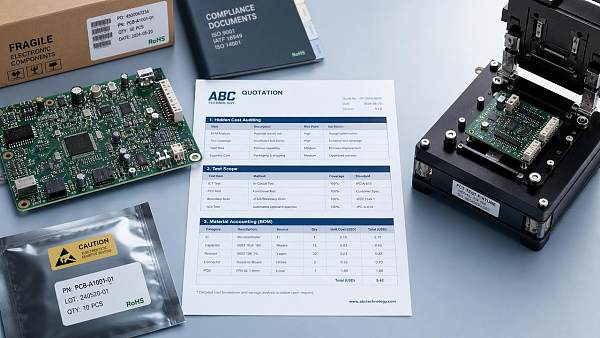
A custom PCBA manufacturer quote is rarely just a unit price. It reflects process capability, material strategy, quality controls, document maturity, and commercial assumptions.
In electronics, automotive subsystems, agri-tech controls, and environmental infrastructure, small quotation gaps can grow into major total-cost issues after release.
A structured review creates a common basis for comparing suppliers. It also reveals whether a low custom PCBA manufacturer quote depends on optimistic lead times or incomplete requirements.
Core points to verify before accepting any quote
Use the following points to evaluate each custom PCBA manufacturer quote consistently and identify hidden costs before production commitments are made.
- Confirm whether NRE includes CAM review, stencil creation, fixture design, programming, first-article setup, and process validation, or if these items will be invoiced separately later.
- Check component pricing assumptions, including approved alternates, MOQ exposure, attrition rates, broker sourcing risk, and validity periods tied to volatile semiconductor supply conditions.
- Verify PCB fabrication assumptions such as layer count, copper weight, surface finish, controlled impedance, via structure, panel utilization, and scrap rates affecting total assembly cost.
- Review testing scope carefully, including ICT, flying probe, AOI, X-ray, boundary scan, functional test coverage, fixture cost, debug time, and failure analysis responsibility.
- Examine engineering change terms to see how BOM revisions, firmware updates, drawing corrections, and documentation resubmissions may trigger re-quotation or line stoppage charges.
- Confirm compliance costs for IPC standards, RoHS, REACH, UL, CE-related files, IATF-linked traceability, and record retention requirements that may sit outside base pricing.
- Inspect yield assumptions and rework policy, especially for fine-pitch BGAs, HDI boards, conformal coating, press-fit parts, and mixed-technology assemblies with higher defect sensitivity.
- Ask how packaging, labeling, dry pack control, ESD protection, lot coding, and export documentation are priced, because logistics preparation often escapes headline unit rates.
- Validate lead-time definitions by separating material readiness, board fabrication, assembly queue time, testing, repair loop, and shipping transit rather than relying on one aggregate promise.
- Review payment terms, currency clauses, tariff exposure, expedite fees, and forecast commitments, since commercial conditions can materially change the real value of a quote.
How hidden costs appear across different industrial use cases
Industrial controls and automation boards
For PLC modules, motor controls, and sensor interfaces, a custom PCBA manufacturer quote often understates validation tied to vibration, temperature, and long operating cycles.
Connector durability, coating requirements, and traceability labeling can become extra charges after pilot builds. Review reliability test ownership before approving the quote.
Automotive and mobility electronics
In mobility applications, the lowest custom PCBA manufacturer quote may exclude PPAP support, stricter lot traceability, controlled process documentation, and enhanced defect containment procedures.
Even when unit pricing looks aligned, failure reporting formats, serial tracking, and environmental stress expectations can create substantial downstream administrative and technical costs.
Smart agriculture equipment
Agricultural electronics face dust, moisture, shock, and seasonal logistics constraints. A custom PCBA manufacturer quote may not fully include protection measures needed for field deployment.
Cable assemblies, potting interfaces, and firmware flashing steps are frequently separated from the main quote. Confirm those interfaces before supplier comparison.
Environmental infrastructure and monitoring systems
Water treatment controls, filtration modules, and remote monitoring nodes often require long service life and stable replacement support. Component lifecycle assumptions deserve close review.
If the custom PCBA manufacturer quote relies on short-market-life parts, future redesign costs may exceed initial savings. Request lifecycle visibility and alternate sourcing strategy.
Commonly overlooked items that raise total cost later
Stencil and fixture ownership
Some suppliers charge separately for replacement stencils, test fixtures, or storage. Clarify ownership, maintenance terms, and end-of-program return conditions in writing.
BOM cleanup and data preparation
A custom PCBA manufacturer quote may assume perfect input files. In reality, AVL mismatches, missing package data, and unclear polarity notes create engineering service charges.
Material attrition and overage buys
Fine-pitch, small-passive, and moisture-sensitive parts often require overage. If attrition policy is not defined, excess purchasing may appear only after order placement.
Failure handling during pilot runs
Pilot builds often reveal design or process issues. Decide whether debug, teardown, root-cause analysis, and re-spin coordination are included in the custom PCBA manufacturer quote.
Obsolescence and last-time-buy exposure
A low quote based on vulnerable components can become expensive quickly. Review lifecycle notices, NCNR terms, and substitution approval procedures before award.
A practical review method for side-by-side quote comparison
When comparing offers, convert each custom PCBA manufacturer quote into the same evaluation structure. This reduces confusion created by different formatting and commercial language.
- Separate recurring unit cost from one-time engineering, tooling, and qualification expenses.
- Map every quote assumption against BOM, Gerber, assembly drawing, and test requirement documents.
- Flag any item marked optional, estimated, customer-supplied, or subject to final review.
- Normalize incoterms, payment terms, currency dates, and shipping responsibility.
- Score traceability depth, quality system maturity, and change-response speed alongside price.
This approach fits cross-sector programs where electronics interact with mechanical systems, software, and compliance records. It reflects the broader benchmarking logic used in resilient manufacturing decisions.
Questions worth asking before final approval
Ask whether the custom PCBA manufacturer quote includes all documentation deliverables, including inspection records, test logs, traceability files, and certificate packages.
Ask what happens if a critical component becomes unavailable between quote acceptance and PO release. Response quality reveals sourcing resilience and commercial transparency.
Ask how yield loss is handled during early production. A clear answer helps distinguish mature process control from pricing built on optimistic assumptions.
Summary and next actions
A custom PCBA manufacturer quote should be evaluated as a technical and commercial package, not only as a board price. Hidden costs usually emerge from assumptions, not from headline numbers.
Review NRE, sourcing, compliance, testing, yield, logistics, and revision terms early. Then compare every custom PCBA manufacturer quote using the same checklist and document set.
For stronger decisions across electronics, mobility, agri-tech, and infrastructure programs, build a quote review sheet that captures both visible pricing and lifecycle risk.
That simple step improves budget accuracy, supplier alignment, and long-term manufacturing stability in complex global operations.
The Archive Newsletter
Critical industrial intelligence delivered every Tuesday. Peer-reviewed summaries of the week's most impactful logistics and market shifts.