Monday, May 22, 2024

Engineering Insights for Reducing PCB Assembly Errors
by
Published
Views:
Engineering insights are essential for reducing PCB assembly errors in today’s high-stakes manufacturing environment. For technical evaluators, the key question is not whether defects occur, but where risk accumulates across design, materials, process windows, and inspection logic.
A reliable assessment framework connects tolerance decisions, component behavior, line capability, and standards compliance. When these variables are benchmarked together, teams can identify root causes earlier, lower escape rates, and improve assembly consistency without relying on reactive troubleshooting alone.
What Technical Evaluators Need to Know First About PCB Assembly Error Reduction
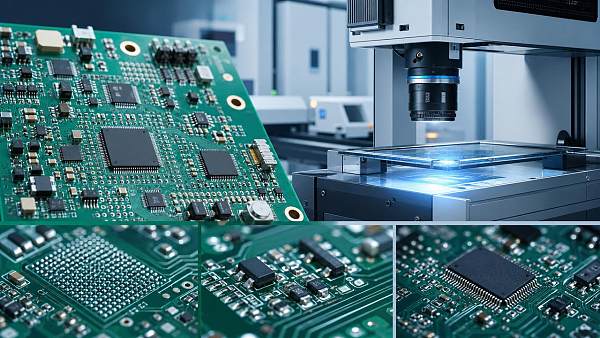
For technical evaluation personnel, the core search intent behind this topic is practical: how to identify the engineering factors that most strongly influence PCB assembly defects, and how to judge whether a supplier or production line can control them.
The most useful overall judgment is straightforward. PCB assembly errors are rarely caused by one isolated issue. They usually emerge from interaction effects between design-for-assembly choices, component packages, soldering profiles, board stack-up behavior, and inspection limits.
That is why engineering insights matter. They translate defect symptoms such as tombstoning, insufficient wetting, voiding, opens, bridges, and head-in-pillow into measurable process conditions that evaluators can benchmark across factories, product families, and qualification stages.
For GIM-style cross-sector benchmarking, this matters even more. Electronics manufacturing now supports automotive controls, smart agriculture modules, industrial sensors, filtration automation, and mobility platforms. Assembly reliability therefore affects not only yield, but also system safety, uptime, and lifecycle cost.
Which PCB Assembly Errors Create the Highest Risk in Real Production
Technical evaluators should focus first on high-impact errors rather than trying to review every possible defect mode equally. The most important issues are those that combine difficult detection, field reliability consequences, and strong sensitivity to upstream engineering decisions.
Solder bridging remains a major concern in fine-pitch assemblies, especially with high-density interconnect layouts and tight spacing around passive arrays or leadless packages. Bridging often signals a combined problem involving stencil design, paste rheology, placement accuracy, and reflow profile stability.
Insufficient solder and opens are equally critical because they can pass partial electrical testing yet fail under vibration, thermal cycling, or mechanical stress. In sectors such as automotive electronics, these defects can create latent reliability risk that appears only after deployment.
Voiding deserves close attention in power electronics and thermal management applications. Excessive voiding beneath thermal pads changes heat dissipation behavior, affects current handling, and can shorten component life. Evaluators should treat voiding as a system performance issue, not merely a cosmetic defect.
Misalignment, skew, and tombstoning typically point to imbalance conditions in placement or solder wetting dynamics. While these may seem like line-level issues, they are often rooted in pad geometry, copper balance, paste volume distribution, and component tolerance variation.
Head-in-pillow defects in ball grid array assemblies are especially dangerous because they may evade simple optical checks. They often arise when warpage, oxidation, flux activity limits, and reflow conditions combine in a narrow and unstable process window.
Why Design Decisions Often Create Assembly Errors Before Production Starts
Many PCB assembly problems are effectively designed in long before the first board reaches the SMT line. For technical evaluators, one of the strongest engineering insights is that manufacturability risk can often be predicted from layout and package decisions.
Pad design is a primary example. Land pattern deviations from IPC guidance may be intentional for performance or space reasons, but they alter solder fillet shape, paste transfer efficiency, and self-alignment behavior. The result can be unstable yields even on advanced lines.
Component spacing must also be judged in relation to the actual assembly process, not only electrical layout density. Tight spacing may appear acceptable in CAD, yet leave too little margin for stencil release, nozzle access, rework, or automated optical inspection visibility.
Board thickness, copper distribution, and local thermal mass directly affect reflow uniformity. Uneven heat absorption can produce wetting imbalance or incomplete joint formation. Assemblies mixing large thermal pads with small passives are especially vulnerable if profile development is not product-specific.
Warpage is another underestimated design-linked risk. Large BGAs, thin substrates, and certain laminate constructions can distort enough during reflow to compromise solder contact. Evaluators should ask whether warpage behavior has been modeled, measured, or only assumed acceptable.
Via-in-pad, solder mask definition strategy, and surface finish selection also shape assembly outcomes. These choices influence solder flow, coplanarity tolerance, and long-term joint integrity. Good evaluation practice treats them as assembly control variables, not isolated design preferences.
How Material Selection Changes Defect Rates and Reliability Outcomes
Material selection strongly influences assembly stability, but many reviews treat it as a procurement issue rather than an engineering control point. For technical evaluators, this is a mistake. Materials define the real operating window of the process.
Solder paste is a clear example. Alloy selection, powder size, flux chemistry, tack life, slump resistance, and print consistency all affect deposition quality and joint formation. Fine-feature assemblies often require tighter paste controls than standard commercial products.
Surface finishes such as ENIG, OSP, immersion silver, or HASL present different wetting behaviors, shelf-life profiles, and storage sensitivities. A finish that performs well in one supply chain may create variability in another if handling discipline and humidity control are inconsistent.
Laminate properties also matter. Coefficient of thermal expansion, glass transition temperature, moisture absorption, and mechanical rigidity influence dimensional stability during assembly and field use. These variables become more important in multilayer and high-reliability boards.
Component packaging quality cannot be overlooked. Lead coplanarity, ball uniformity, oxidation state, moisture sensitivity level, and tray or tape condition all affect placement and soldering results. Incoming quality variation often explains defect spikes that appear process-related at first glance.
From a benchmarking perspective, the most valuable engineering insights come from comparing defect data against actual material combinations, not generic product categories. This helps evaluators determine whether a supplier’s claimed process capability is robust or only optimized for narrow conditions.
What Process Controls Separate Stable Assembly Lines from Reactive Ones
Process control is where engineering intent becomes production reality. The best-performing PCB assembly operations are not simply equipped with advanced machines; they maintain disciplined control over the variables that most influence repeatability and defect escape.
Stencil printing is often the first and most sensitive control point. Paste deposition drives a large share of downstream outcomes, so aperture design, stencil thickness, cleaning interval, squeegee condition, print speed, separation settings, and environmental stability must be tightly managed.
Placement accuracy should be evaluated beyond machine specification sheets. Real performance depends on feeder condition, nozzle wear, component centering, vision calibration, and line changeover discipline. Frequent small deviations can accumulate into meaningful defect risk on dense boards.
Reflow profiling remains one of the most important process disciplines. A valid profile is not just one that reaches nominal temperatures. It must deliver controlled soak behavior, time above liquidus, peak temperature, and cooling rate consistent with both paste chemistry and component tolerance.
For mixed-technology boards, wave soldering or selective soldering introduces additional complexity. Hole fill, solder icicles, bridging, and thermal damage must be assessed against board geometry and pallet design. Generic settings rarely produce repeatable quality across diverse assemblies.
Control plans should also include humidity management, bake procedures for moisture-sensitive devices, traceability records, and lot-to-lot verification. These are not administrative details. They form the evidence base that allows technical evaluators to distinguish mature operations from fragile ones.
How Inspection and Standards Should Be Used to Find Root Causes, Not Just Defects
Inspection is valuable only when it supports diagnosis and continuous improvement. Many organizations collect large volumes of AOI, SPI, AXI, and functional test data without turning them into meaningful engineering insights for reducing PCB assembly errors.
Solder paste inspection is particularly powerful because it captures variation before placement and reflow mask it. Evaluators should review whether SPI data is used statistically to track deposit height, area, offset, and volume trends by package type and board location.
Automated optical inspection is useful for visible defects, but its effectiveness depends on programming discipline, lighting strategy, and escape analysis. Excessive false calls can undermine operator response and hide process drift behind routine alarm fatigue.
X-ray inspection is essential for hidden joints such as BGAs, QFNs with thermal pads, and through-hole barrels in selected cases. However, evaluators should verify whether x-ray criteria are linked to reliability requirements, rather than used only for pass-fail screening.
Standards such as IPC-A-610, J-STD-001, and related workmanship criteria provide a common language, but they should not be treated as complete process assurance by themselves. Passing visual criteria does not automatically guarantee long-term field reliability under thermal or mechanical stress.
In higher-risk applications, alignment with ISO quality systems and sector-specific frameworks such as IATF can strengthen accountability. Yet the real differentiator is whether standards are embedded in root-cause analysis, corrective action loops, and supplier benchmarking discipline.
What Technical Evaluators Should Ask When Benchmarking Suppliers or Internal Lines
When comparing suppliers or internal assembly sites, technical evaluators need questions that reveal actual control capability rather than presentation quality. The goal is to understand whether strong results are systemic, transferable, and sustainable across product complexity.
First, ask for defect Pareto data by package family, process step, and product type. Aggregated yield numbers are useful, but they often hide recurring weaknesses in fine-pitch, power, or high-density assemblies that matter most to long-term risk.
Second, request evidence of design-for-assembly feedback loops. A capable supplier should be able to show how stencil modifications, pad changes, component substitutions, or profile refinements were used to prevent recurrence rather than merely contain defects.
Third, examine process capability at critical points, especially print repeatability, placement accuracy, and thermal profile control. Capability should be demonstrated with trend data over time, not only during qualification builds or audit preparation windows.
Fourth, assess materials governance. This includes storage control, shelf-life management, MSL compliance, incoming inspection discipline, and approved vendor logic. Material discipline often determines whether a line performs consistently across global sourcing fluctuations.
Fifth, review failure analysis depth. Strong teams do not stop at symptom classification. They correlate microscopy, cross-sections, x-ray review, and process history to isolate the interaction between design, material, and equipment variables.
These questions create engineering insights that are decision-ready. They help technical evaluators compare suppliers on resilience, not just cost or nominal throughput, which is especially important in cross-sector manufacturing environments with evolving reliability demands.
Building a More Reliable PCB Assembly Evaluation Framework
Reducing PCB assembly errors requires a framework that connects product design, material behavior, process capability, inspection intelligence, and standards compliance into one evaluative model. Looking at these elements separately produces incomplete and often misleading conclusions.
For technical evaluators, the most practical takeaway is this: defects should be interpreted as signals of system interaction. A bridge, void, or open is not just a line event. It is evidence of how engineering assumptions performed under real manufacturing conditions.
The most valuable engineering insights therefore come from integrated benchmarking. Compare defect trends against board architecture, package mix, thermal demands, control plans, and supplier discipline. This reveals where risk is structural and where it can be corrected efficiently.
In modern electronics production, especially where assemblies support mobility, industrial automation, agri-tech, or infrastructure systems, better assembly accuracy translates directly into lower lifecycle cost, stronger quality assurance, and more reliable operational outcomes.
Organizations that reduce PCB assembly errors most effectively are those that treat manufacturing data as engineering evidence. They design for process reality, qualify materials rigorously, control variation early, and use inspection to drive root-cause learning rather than post-process sorting.
That is ultimately the role of engineering insights: to turn complex production variability into clear technical judgment. For evaluators responsible for benchmarking capability and risk, that judgment is the foundation of better sourcing, better reliability, and better industrial performance.
The Archive Newsletter
Critical industrial intelligence delivered every Tuesday. Peer-reviewed summaries of the week's most impactful logistics and market shifts.