Monday, May 22, 2024

HDI Substrates Costs Rise Fast When Stackups Get Tight
by
Published
Views:
As HDI substrates grow denser and stackups get tighter, costs can rise faster than many Tier-1 engineers and Industrial strategists expect. Through Cross-sector data and Industrial transparency, GIM helps users connect substrate design choices with broader Mechanical foundations, Infrastructure benchmarking, and even adjacent concerns like material fatigue in hardware, metal hardness testing (rockwell), and high-speed machining spindle speed.
Why do HDI substrate costs accelerate when stackups become tighter?
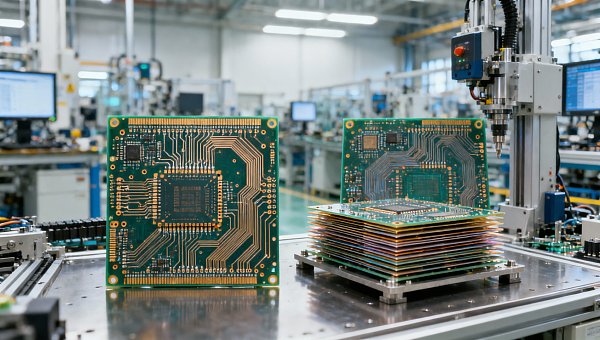
Many buyers expect HDI substrate pricing to rise in a roughly linear way as layer count increases. In practice, the cost curve often steepens once trace and space targets move into finer process windows, laser via density climbs, and registration tolerances tighten across multiple lamination cycles. A design shift from a moderate HDI stackup to a very tight build can trigger several cost multipliers at the same time, not just one.
For information researchers and operators, the core problem is that substrate cost is rarely driven by copper area alone. Yield loss, process complexity, cycle time, material selection, drilling strategy, inspection burden, and rework risk all affect the final quote. A stackup that looks only 10% more compact on paper may require 20%–40% more process discipline, especially when the design pushes sequential lamination, microvia reliability, and warpage control together.
This is where GIM’s cross-sector benchmarking matters. HDI substrate decisions do not exist in isolation. The same procurement logic used in EV electronics, industrial control boards, filtration controls, and precision tool interfaces often depends on understanding mechanical stress, thermal cycling, hardness behavior in metallic components, and machining constraints in upstream tooling. Tighter substrate stackups can therefore influence broader factory economics, from inspection throughput to assembly scrap exposure.
In many production programs, the biggest mistake is waiting until quotation to discover that a compact architecture has crossed into a higher manufacturing regime. Once the design enters a window requiring 2–4 lamination stages, finer laser via quality control, and more aggressive panel utilization management, lead time and NPI cost usually rise together. That is why early-stage stackup judgment is a procurement issue, not only a layout issue.
The main cost drivers behind a tight HDI stackup
- Higher layer interaction: when more signal, power, and ground functions are compressed into a limited thickness range, fabrication windows narrow and registration sensitivity increases.
- More sequential lamination: each added build-up step raises process time, handling risk, and cumulative yield exposure over 3–6 critical checkpoints.
- Microvia density and aspect management: tighter via structures require stricter laser drilling, plating consistency, and fill control, especially under thermal cycling.
- Inspection and validation burden: AOI, X-ray, cross-section checks, and reliability verification increase as geometry becomes less forgiving.
Operators also feel the effect after fabrication. Tighter HDI substrate constructions can complicate handling during SMT, raise sensitivity to board flatness, and narrow the process margin during rework. In real manufacturing environments, cost escalation often reflects downstream risk containment as much as the substrate process itself.
Which stackup choices tend to push cost from manageable to difficult?
Not every dense design is automatically expensive, and not every high-layer count build is equally risky. The practical question is where the cost threshold moves. In many industrial and automotive-adjacent applications, the tipping point appears when design teams combine fine lines, stacked or staggered microvias, thin dielectric layers, and strict flatness targets in the same stackup. Each element can be manageable alone; together they can compress yield windows sharply.
A useful way to think about HDI substrate cost is by manufacturing regime rather than layer count alone. A 6-layer or 8-layer substrate with controlled routing may remain commercially stable, while a nominally similar stackup becomes difficult once the build requires repeated lamination and tighter registration across buried and blind interconnect structures. Procurement teams should therefore request process-path visibility, not just price per panel.
The table below summarizes common design choices that can change the cost profile of an HDI substrate program. These are not universal limits, but they reflect widely used industrial evaluation logic for comparing moderate, advanced, and high-risk stackups before RFQ release.
For sourcing teams, this comparison highlights an important principle: the shift into a higher cost bracket usually results from interacting constraints, not a single specification. If two or three escalation signals appear together, buyers should expect longer qualification cycles, tighter supplier capability screening, and greater variation between quotes.
Where information researchers should investigate deeper
Before issuing an RFQ, ask whether the layout truly needs the current density or whether part placement, routing hierarchy, or package selection can reduce stackup pressure. In many programs, one packaging decision upstream can remove an entire lamination stage downstream. That can shorten NPI by 1–2 weeks and improve supplier options.
It is also worth checking whether the stackup target was inherited from another product family with different thermal, vibration, or service-life conditions. GIM frequently sees cross-sector programs where an electronics architecture optimized for compactness is copied into a harsher mechanical environment without fully evaluating fatigue exposure, assembly stress, or enclosure constraints.
A practical screening checklist
- Confirm whether the stackup requires 1, 2, or 3+ sequential build-up stages.
- Check if microvia design is staggered, stacked, or mixed across thermal hotspots.
- Review expected panel yield sensitivity for prototype, pilot, and volume lots.
- Align electrical density targets with mechanical reliability and assembly handling limits.
How should procurement teams compare cost, alternatives, and risk?
When HDI substrate costs rise quickly, the right response is not always to force a lower quote. In some cases, the better approach is to compare alternative architectures that preserve electrical intent while reducing fabrication stress. Procurement teams should evaluate at least 3 dimensions together: direct substrate price, reliability exposure, and supply chain flexibility. A cheaper quote can become expensive if requalification, scrap, or delayed ramp consumes the savings.
This comparison is especially important in cross-sector manufacturing, where one platform may support electronics, mobility systems, environmental monitoring equipment, or smart agri-tech modules. The same HDI substrate decision can affect field serviceability, enclosure integration, connector stress, and thermal management strategy. GIM’s benchmarking model helps translate these design choices into broader industrial consequences rather than treating the board only as an isolated cost item.
The table below outlines common cost-control paths used when a tight stackup begins to threaten budget or lead time. These options do not replace engineering review, but they provide a practical framework for comparing trade-offs before the sourcing window closes.
The key interpretation is simple: cost reduction should come from stackup intelligence, not only price pressure. A well-timed architecture adjustment can reduce technical risk across prototype, pilot, and volume phases. That is often more valuable than chasing a nominally cheaper supplier that may struggle with repeatability.
Common procurement mistakes when HDI substrate pricing looks high
- Comparing quotes without normalizing stackup assumptions, inspection scope, and expected panel yield.
- Treating prototype pricing as a reliable indicator for 6-month volume economics.
- Ignoring assembly risk, especially where flatness, thermal cycling, or rework sensitivity can raise downstream losses.
- Selecting a supplier based only on available capacity instead of demonstrated capability in similar HDI substrate regimes.
For operators, this means procurement should ask for process capability evidence tied to the actual stackup challenge, not generic manufacturing claims. The most useful supplier dialogue typically covers sample build conditions, expected lead time bands, inspection depth, and escalation triggers if yield falls below plan.
What standards, validation steps, and cross-sector checks matter most?
HDI substrate programs become more resilient when teams align cost review with standards and validation logic early. Depending on product destination, buyers may need to reference IPC guidance for interconnect structures, ISO-oriented quality systems in manufacturing environments, or IATF-linked expectations when the application sits near automotive supply chains. The goal is not to overload the project with paperwork, but to match the build complexity with the right verification depth.
A practical validation framework often includes 4 stages: design review, prototype process confirmation, pilot reliability assessment, and controlled volume release. Each stage should ask whether the chosen stackup still fits the required service environment. In industrial products exposed to vibration, heat, moisture, or repeated load cycles, a compact HDI substrate may interact with housing rigidity, fastener torque, connector insertion force, and component mass in ways that affect long-term performance.
This is where GIM’s “System of Systems” perspective provides value. A substrate is part of a broader mechanical and operational chain. If upstream tooling uses aggressive spindle speed ranges, if metal interfaces are verified by Rockwell hardness checks, or if the end product sees cyclic stress, then substrate decisions should be benchmarked with those conditions in mind. Cross-sector intelligence helps prevent narrow optimization that looks efficient in CAD but becomes fragile in the field.
Minimum validation points worth documenting
- Stackup definition control: lock the layer sequence, dielectric strategy, via architecture, and material assumptions before RFQ comparison.
- Fabrication review: confirm lamination count, registration risk, inspection method, and expected process checkpoints.
- Reliability review: assess thermal cycling, warpage tolerance, assembly stress, and any high-vibration or high-moisture exposure.
- Supply continuity review: verify alternate-source realism, not only nominal supplier availability.
Typical timeline expectations
For many custom HDI substrate projects, early design clarification may take 3–7 working days, prototype planning another 1–2 weeks, and pilot evaluation 2–4 weeks depending on reliability scope and documentation maturity. These are common industrial planning bands, not fixed promises. The important lesson is that tighter stackups consume time in verification, not only in fabrication.
Teams that compress the review cycle too aggressively often pay later through repeated builds, specification drift, or conflicting supplier assumptions. A disciplined validation path usually supports better cost control than a rushed RFQ with incomplete stackup governance.
FAQ: how do researchers and operators reduce uncertainty before sourcing?
How should I judge whether an HDI substrate quote is expensive or simply realistic?
Start by comparing the manufacturing regime, not only the price. Check lamination stages, via structure, line density, inspection scope, and flatness target. If one quote assumes 1–2 lamination cycles and another assumes 3+, they are not directly comparable. Also review whether the supplier priced prototype yield risk conservatively or assumed a smoother ramp than your product can support.
Are tighter stackups always better for compact industrial products?
No. A tighter stackup may improve density, but it can also narrow fabrication margin, raise assembly sensitivity, and reduce sourcing flexibility. For products used in mobility, agri-tech, environmental systems, or heavy-duty controls, a slightly larger layout with a more stable HDI substrate structure may deliver better lifecycle economics. The right answer depends on reliability, enclosure space, and expected service conditions.
What should operators ask for before approving pilot production?
At minimum, request a controlled stackup document, fabrication assumptions, expected inspection nodes, and a clear plan for prototype-to-pilot transition. It is helpful to confirm 4–6 review items: microvia strategy, warpage expectations, assembly handling notes, thermal stress considerations, qualification sample count, and lead time assumptions. That information reduces surprises when pilot builds move into real production conditions.
Can cross-sector benchmarking really improve HDI substrate decisions?
Yes, especially when your product sits at the intersection of electronics, mechanics, and infrastructure duty cycles. A substrate design that works in one sector may behave differently when exposed to different vibration loads, machining tolerances in mating parts, or environmental stress. Benchmarking across semiconductor, automotive, agri-tech, ESG infrastructure, and precision tooling helps teams see cost and reliability trade-offs earlier.
Why choose GIM when HDI substrate decisions affect more than electronics cost?
GIM supports procurement officers, Tier-1 engineers, researchers, and operators who need more than a single-industry opinion. Our technical benchmarking approach connects HDI substrate cost behavior with the broader realities of manufacturing: mechanical loading, material performance, tooling constraints, compliance pathways, and cross-sector supply chain risk. That wider lens is essential when compact design choices influence assembly yield, field reliability, and sourcing resilience at the same time.
Instead of treating substrate cost as an isolated RFQ event, we help teams evaluate 3 core decision layers: whether the current stackup is manufacturable at stable yield, whether it aligns with the application’s operating environment, and whether the sourcing strategy can support prototype, pilot, and scale-up phases. This is particularly useful for organizations managing multiple hardware categories across electronics, mobility, smart agriculture, industrial ESG, and precision tooling ecosystems.
What you can consult with GIM
- Stackup parameter review, including lamination logic, density pressure points, and likely cost escalation triggers.
- Supplier comparison support based on process capability, validation depth, and realistic lead time bands.
- Alternative architecture analysis when budget, reliability, or sourcing flexibility becomes constrained.
- Application-linked benchmarking that relates substrate choices to mechanical stress, infrastructure use cases, and adjacent hardware performance factors.
Contact us for the next decision step
If your team is evaluating a tight HDI substrate stackup, preparing an RFQ, or trying to explain sudden cost growth to internal stakeholders, contact GIM for a structured review. We can support parameter confirmation, product selection logic, delivery-cycle assessment, customization direction, standards alignment, sample planning, and quote communication checkpoints. A focused review early in the cycle can help prevent costly redesign loops later.
For teams working across multiple industrial domains, we can also map HDI substrate decisions against broader operational requirements so that compactness, reliability, and procurement practicality remain aligned. That makes it easier to move from uncertainty to an actionable sourcing plan with fewer surprises in validation and ramp.
- electronics
- Mobility
- Agri-Tech
- Industrial ESG
- material fatigue in hardware
- HDI substrates
- Precision tooling
- Technical benchmarking
- Smart Agri-Tech
- Infrastructure benchmarking
- Cross-sector data
- Mechanical foundations
- Industrial transparency
- Automotive supply chain
- Tier-1 engineers
- Industrial strategists
The Archive Newsletter
Critical industrial intelligence delivered every Tuesday. Peer-reviewed summaries of the week's most impactful logistics and market shifts.