Monday, May 22, 2024

Hezhou Geological Hazard Alert Impacts PCB/PCBA Manufacturing
by
Published
Views:
On May 7–8, 2026, a blue-level geological hazard warning was issued for Hezhou City in Guangxi Province, affecting multiple PCB and PCBA contract manufacturing facilities in the region. This event is of direct relevance to electronics manufacturing services (EMS), printed circuit board suppliers, automotive electronics OEMs, and global procurement teams managing supply chains across South China.
Event Overview
A blue-level geological hazard warning was officially issued by Chinese meteorological and emergency authorities for Hezhou City, Guangxi, effective from 20:00 on May 7 to 20:00 on May 8, 2026. The warning indicates elevated risk of localized landslides and ground instability due to heavy rainfall. Public notices confirm that several PCB and PCBA contract manufacturers operate within the affected area.
Industries Affected
PCB/PCBA Contract Manufacturers (OEM/ODM Factories)
These facilities face operational disruption risks including temporary power outages, facility access restrictions, and delays in inbound raw material deliveries — particularly for high-precision substrates such as HDI carrier boards and automotive-grade PCBA assemblies.
Automotive Electronics Suppliers
Suppliers fulfilling just-in-time (JIT) orders for Tier 1 automotive clients may experience delivery slippage, especially for products requiring tight tolerances and multi-stage testing — where even short-term production halts impact qualification timelines.
Global Procurement & Supply Chain Teams
Teams coordinating with South China-based EMS partners must reassess near-term delivery commitments, particularly for orders scheduled for shipment between May 9–15, 2026. Visibility into alternative capacity becomes operationally critical during this window.
Logistics & Freight Forwarding Providers
Local road transport in Hezhou and adjacent counties may be subject to temporary closures or speed restrictions. This affects both inbound logistics (e.g., copper foil, prepreg, IC substrates) and outbound shipments (finished PCBA panels, test-ready modules).
Key Considerations and Recommended Actions
Monitor official updates from Guangxi Emergency Management Department
Follow real-time alerts via the Guangxi Provincial Emergency Management Department’s official channels. Blue-level warnings may be upgraded or downgraded; any escalation to yellow or orange would signal broader infrastructure impact beyond current scope.
Verify capacity availability at secondary sites in Huizhou and Dongguan
Confirm pre-qualified production lines and lead-time readiness at designated backup facilities — especially for HDI and automotive PCBA workloads. Documented capability statements (not general assurances) should underpin client communications.
Update customer-facing delivery commitments with transparent rationale
Where applicable, proactively share revised delivery windows with North American and European customers using standardized language referencing the Hezhou geological hazard warning — not generic “supply chain challenges.” This supports auditability and contractual alignment.
Review inbound material receipts scheduled for May 7–10
Identify any raw material or component consignments expected to arrive at Hezhou-based factories during the warning period. Coordinate with freight carriers to assess rerouting feasibility or temporary warehouse hold options in nearby Guangdong hubs.
Editorial Perspective / Industry Observation
This alert is best understood as an early-stage operational risk signal — not yet a confirmed production stoppage. Analysis shows that blue-level geological warnings in South China typically result in localized, short-duration disruptions rather than systemic shutdowns. Observably, the timing coincides with peak rainy season onset in Guangxi, suggesting this may be one of several similar events through Q2 2026. From an industry perspective, the emphasis on HDI and automotive PCBA highlights growing sensitivity of high-mix, low-volume precision manufacturing to regional environmental volatility. Current relevance lies less in isolated impact and more in its function as a stress test for geographic diversification plans already underway among multinational EMS providers.
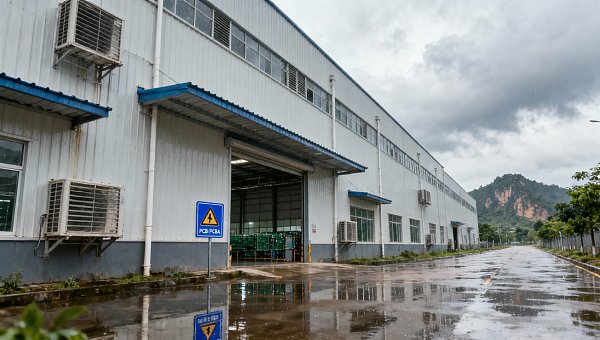
Hezhou’s role as a node in the broader South China PCB ecosystem means that even brief interruptions can ripple across tiered supplier networks — particularly where single-source dependencies exist for specialized processes like sequential lamination or AOI-certified automotive builds.
From a strategic standpoint, this event reinforces the operational value of documented, pre-vetted secondary capacity — not as contingency insurance, but as a baseline requirement for service-level agreements covering mission-critical electronics.
Current interpretation should prioritize responsiveness over reaction: treat the warning as a validated trigger for activation of existing risk-mitigation protocols, not as justification for ad hoc decisions.
Conclusion
The Hezhou geological hazard warning serves as a timely reminder that environmental risk in key electronics manufacturing regions is increasingly operationalized — not theoretical. Its significance lies not in scale, but in specificity: it directly implicates defined product categories (HDI, automotive PCBA), geography (Hezhou cluster), and time-bound windows (May 7–8). For stakeholders, the appropriate response is procedural clarity — verifying backup capacity, updating logistics assumptions, and aligning customer messaging — rather than broad-scale recalibration.
Source Attribution
Main source: Guangxi Zhuang Autonomous Region Emergency Management Department (official warning bulletin, May 7, 2026).
Additional context: Publicly listed industrial park directories confirming PCB/PCBA facility presence in Hezhou.
Note: Ongoing monitoring is recommended for potential warning extension beyond May 8, 2026 — no official indication of extension has been released as of publication.
The Archive Newsletter
Critical industrial intelligence delivered every Tuesday. Peer-reviewed summaries of the week's most impactful logistics and market shifts.