Monday, May 22, 2024

How industry applications shape PCB fabrication choices
by
Published
Views:
From powertrain systems and active components to smart grid technology and future mobility, industry applications directly influence PCB fabrication choices. For engineers, buyers, and decision-makers, understanding how performance, automotive safety, driver assistance, emissions reduction, and electric motor manufacturer requirements shape board design is essential to selecting reliable solutions across complex industrial environments.
In cross-sector manufacturing, a printed circuit board is never just a board. It is a mechanical, electrical, thermal, and compliance-driven platform that must perform differently in an EV inverter, an industrial sensor node, an agricultural control unit, or a water treatment automation cabinet. The fabrication route—materials, layer count, copper weight, via structure, surface finish, tolerances, and test regime—changes with the application, not just with the schematic.
This matters to more than design teams. Procurement officers need to compare cost against lifecycle risk. Quality teams must verify IPC, ISO, and sector-specific expectations. Project managers have to balance prototype speed, volume ramp-up, and field reliability. Financial approvers want to know when a premium stack-up reduces total cost over 3–5 years instead of simply increasing unit price.
For organizations operating across electronics, mobility, smart agriculture, environmental infrastructure, and industrial tooling, the key question is not whether PCB fabrication quality matters. The key question is how to align fabrication choices with actual application stress, certification pathways, supply chain resilience, and long-term serviceability. That is where structured benchmarking becomes valuable.
Application Demands Define the PCB Fabrication Baseline
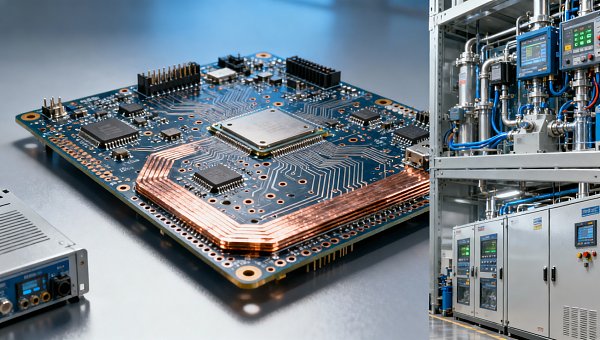
PCB fabrication starts with use-case mapping. A board used in a consumer-adjacent display module may tolerate narrower thermal margins than a board installed near a 400 V to 800 V power stage in electric mobility equipment. Likewise, a control board mounted in a sealed pump cabinet for industrial ESG infrastructure faces humidity, chemical exposure, and vibration profiles that require different laminate and coating decisions than a clean-room electronics assembly.
Across industries, the most common fabrication variables influenced by application are 6 core factors: substrate type, copper thickness, layer count, via architecture, surface finish, and test coverage. In practical sourcing terms, moving from a 4-layer FR-4 board with 1 oz copper to a 10-layer high-Tg design with 2 oz copper and controlled impedance can alter lead time from about 7–10 days for prototypes to 2–4 weeks depending on panel utilization, inspection depth, and material availability.
The wrong baseline creates avoidable failure modes. In automotive and mobility systems, underestimating thermal cycling may lead to barrel cracking or solder joint fatigue. In smart agri-tech, insufficient protection against dust, moisture, and fertilizer-related contamination can shorten field life well before the planned 24–60 month service window. In environmental systems, poor material compatibility may increase maintenance events and downtime costs.
A cross-industry benchmarking mindset is useful because many application demands now overlap. Autonomous tractors, EV charging modules, smart grid interfaces, and industrial filtration controls may all require high-current paths, data integrity, EMI management, and outdoor durability. Fabrication decisions should therefore be based on operating conditions and risk exposure, not outdated sector silos.
What changes first when application conditions change
- Thermal load often drives copper weight from 1 oz to 2 oz or more on power layers.
- Voltage isolation requirements may increase creepage and clearance distances, affecting board outline and layer planning.
- Signal integrity targets can require controlled impedance traces, tighter dielectric consistency, and stack-up validation.
- Harsh environment exposure may shift the specification toward high-Tg laminates, conformal coating compatibility, and stronger surface finishes.
- Reliability goals can expand the test plan from basic flying-probe checks to impedance verification, microsection analysis, and thermal stress sampling.
Typical application-to-fabrication relationships
The table below shows how common industrial application profiles influence core PCB fabrication choices. These are not fixed rules, but they are practical reference points for engineering review and supplier discussions.
The pattern is clear: application stress determines fabrication complexity. That is why a cost comparison based only on board dimensions or layer count usually misses the larger operational picture.
How Different Industries Drive Material, Stack-Up, and Reliability Choices
Material selection is one of the first areas where industry application leaves a visible mark on PCB fabrication. Standard FR-4 may work well for many control and interface products, but once thermal stress, high current, or extended outdoor exposure enters the equation, designers often shift toward high-Tg FR-4, low-loss materials, metal-core constructions, or stack-ups optimized for thermal spreading. A board expected to operate from -40°C to 105°C requires a different reliability margin than a board living mostly between 10°C and 40°C.
Automotive and mobility applications frequently push stack-up decisions harder than general industrial electronics. ADAS units, battery management systems, onboard chargers, and traction-related controls may require 6, 8, 10, or more layers to separate noisy power domains from sensitive signals. In these systems, impedance control and EMI mitigation are not optional upgrades. They are design conditions tied directly to safety, communication stability, and compliance.
By contrast, smart agriculture often combines moderate computing demands with severe environmental exposure. Controllers deployed in tractors, irrigation systems, or autonomous field equipment may need fewer layers than an advanced automotive radar module, yet they often need stronger coating strategies, contamination tolerance, and connector robustness. In practice, the board survives not because it is complex, but because the fabrication specification matches the field environment.
Industrial ESG and infrastructure systems add another dimension: uptime economics. A PCB in a smart filtration skid, metering platform, or energy monitoring cabinet may operate for thousands of hours annually. If a small material upgrade increases board cost by 8% but reduces service interventions across a 36-month period, the financial case can be positive for both operators and procurement leaders.
Material and stack-up selection by operating profile
The following comparison helps teams translate operating conditions into realistic fabrication decisions during technical assessment and RFQ preparation.
For technical evaluators, this means fabrication review should happen before final sourcing, not after field complaints. For business and finance teams, it shows why “same size, same board” comparisons can be misleading across sectors.
A practical 4-point screening method
- Define the operating envelope: temperature, humidity, vibration, voltage, and duty cycle.
- Translate that envelope into fabrication constraints such as copper weight, Tg range, and finish type.
- Confirm inspection and test depth against failure cost, not only production speed.
- Check material continuity and supply chain resilience for the next 12–24 months.
Procurement, Compliance, and Cost: Choosing the Right Fabrication Route
Buying a PCB for industrial use is rarely a lowest-quote exercise. Procurement teams must compare fabrication routes by total operational impact: board cost, yield risk, certification alignment, replacement frequency, and logistics flexibility. A lower-cost board with inconsistent solderability or weak thermal performance may create hidden expense through scrap, delayed validation, or warranty exposure. In many B2B environments, that hidden cost can exceed the initial price difference by the second or third production batch.
Compliance is another major filter. Electronics and semiconductor-adjacent products may focus on IPC workmanship and material consistency. Automotive and mobility programs often require closer quality discipline and documentation practices aligned with IATF-driven supplier expectations. Infrastructure-linked projects may emphasize traceability, environmental durability, and stable long-term availability. The fabrication choice therefore has to support both the board’s performance and the documentation pathway needed by auditors, customers, and internal quality teams.
Lead time should also be viewed in layers. A quick-turn prototype in 5–7 working days may be useful in early concept validation, but production-intent boards often need more time because controlled impedance, coupon testing, microsection checks, and lot-level inspection are added. For medium-complexity industrial boards, a realistic planning window is often 2–3 weeks. For high-complexity or specialized material builds, 3–5 weeks is not unusual.
This is where a technical benchmarking platform adds value. By comparing board requirements across multiple sectors, teams can identify which fabrication upgrades are truly necessary, which are precautionary, and which may be over-specified for the actual mission profile. That improves both sourcing discipline and internal approval speed.
Key procurement criteria for industrial PCB fabrication
- Manufacturing capability fit: layer range, copper capability, via options, panel utilization efficiency.
- Quality assurance depth: AOI, electrical test coverage, microsection review, impedance verification, lot traceability.
- Material security: approved laminate sources, finish availability, obsolescence planning, alternate stack-up options.
- Commercial practicality: MOQ, prototype-to-volume transition support, engineering response time, change control discipline.
- Application alignment: proven experience with high-voltage, harsh-environment, or high-reliability industrial scenarios.
Procurement decision matrix
The matrix below helps sourcing and technical teams align fabrication choices with risk exposure rather than unit price alone.
For business reviewers, the message is straightforward: upgraded fabrication should be approved when it lowers the probability or cost of failure over the real operating life. That is a stronger decision framework than comparing only the initial quotation.
Implementation Workflow, Common Mistakes, and Cross-Functional Review
Even well-specified PCB fabrication projects can lose time if the workflow is fragmented. In complex industrial organizations, electrical engineers, mechanical teams, sourcing, quality, and project management often review the same board from different angles. If those inputs are not synchronized early, the result is rework during DFM review, qualification delays, or unnecessary supplier changes midway through the project.
A practical implementation process usually includes 5 stages: application definition, stack-up and material review, supplier capability screening, prototype validation, and volume release control. For high-reliability applications, each stage benefits from documented acceptance criteria. Examples include impedance tolerance windows, allowable warp and twist limits, cleanliness checks, thermal test conditions, and outgoing inspection rules. These details do more to protect the project than broad quality statements.
One frequent mistake is treating prototype success as proof of production stability. A board that works in a lab sample of 10 units may still face yield drift when lot size scales to 1,000 or 10,000 units. Material substitution, drill wear, plating variation, and panel loading effects become more visible with volume. That is why procurement and engineering teams should request both capability evidence and process consistency indicators before committing to ramp-up.
Another common error is over-specifying every board in the portfolio. Not all applications need HDI, premium laminates, or the most expensive finish. The better approach is tiered specification: define which products require high-density performance, which need rugged environmental reliability, and which can use standard fabrication with disciplined process control. This improves spend allocation and shortens approval cycles.
Recommended implementation workflow
- Map the application envelope, including voltage class, thermal load, installation environment, and expected service life.
- Create a fabrication brief with layer count, copper needs, material preference, finish options, test requirements, and quality checkpoints.
- Review supplier capability against the brief, including prototype speed, production repeatability, and documentation practices.
- Validate prototypes under representative conditions such as vibration, temperature cycling, or high-duty electrical load.
- Lock production controls for volume release, including approved materials, inspection plans, and engineering change governance.
Common mistakes to avoid
Mistake 1: Selecting by unit price only
A 5%–12% lower board price can be attractive during sourcing, but it may disappear quickly if field returns, retesting, or assembly yield losses increase. Total cost should include reliability and service impact.
Mistake 2: Ignoring environmental reality
Boards installed in dusty, wet, or thermally stressed industrial settings need fabrication choices that reflect actual exposure. Indoor assumptions often fail in outdoor or semi-sealed equipment.
Mistake 3: Delaying quality involvement
When quality teams review only near launch, test expectations and traceability gaps surface too late. Early alignment on IPC criteria, inspection scope, and acceptance thresholds reduces launch risk significantly.
FAQ for Engineers, Buyers, and Industrial Decision-Makers
Because PCB fabrication choices sit at the intersection of engineering performance and commercial approval, several recurring questions appear across electronics, automotive, agri-tech, and infrastructure projects. The answers below are useful for technical evaluators, purchasers, quality teams, and business leaders comparing options.
How do I know whether a standard FR-4 PCB is enough?
Start with operating conditions. If the board sees low-to-moderate current, limited thermal cycling, indoor installation, and a short-to-medium product lifecycle, standard FR-4 may be sufficient. If the application includes high-current paths, repeated temperature swings, 24/7 duty, or outdoor exposure, a higher-Tg material or an upgraded stack-up should be reviewed. The decision should be made before RFQ, not after prototype failure.
What lead time should industrial buyers expect?
For basic prototypes, 5–10 working days is common. For industrial boards with controlled impedance, heavier copper, or expanded inspection, 2–3 weeks is a more realistic planning range. Highly specialized builds, including HDI or uncommon materials, may require 3–5 weeks depending on material supply and test depth. Buyers should separate “fast sample” timing from “qualified production” timing when planning launches.
Which fabrication indicators matter most during technical evaluation?
At minimum, review 4 areas: material suitability, process capability, test coverage, and traceability. If the application is safety-relevant or field-critical, also examine thermal design margin, lot consistency, and engineering change control. These indicators are more predictive of long-term board reliability than a generic quality statement.
When is HDI actually necessary?
HDI becomes justified when routing density, package pitch, signal integrity, or miniaturization goals cannot be achieved economically with conventional through-hole structures. It is common in advanced sensing, compact communication modules, and dense automotive electronics. However, for many industrial controllers, a well-planned conventional multilayer board can deliver better value and easier supply continuity.
How should procurement and finance evaluate a higher-cost fabrication option?
Use lifecycle logic. Compare the premium against expected reductions in downtime, field replacement, qualification delay, assembly yield loss, and service visits over 12–60 months. If the upgraded specification materially lowers operational risk in a high-consequence application, the higher initial price is often commercially justified.
Industry applications shape PCB fabrication choices because real operating demands shape reliability, compliance, lead time, and total cost. A board for EV power electronics, smart agriculture, environmental infrastructure, or precision industrial control cannot be specified effectively by dimensions and layer count alone. Material behavior, thermal load, signal integrity, environmental exposure, and documentation requirements all influence the correct fabrication route.
For organizations managing cross-sector manufacturing complexity, a benchmarking-led approach helps engineering, procurement, quality, and business teams make better decisions with fewer blind spots. Global Industrial Matrix supports that process by connecting application context with technical evaluation logic across electronics, mobility, agri-tech, ESG infrastructure, and precision tooling environments.
If you need to compare PCB fabrication options, assess specification risk, or build a more resilient sourcing strategy across industrial applications, contact us to discuss your requirements, request a tailored evaluation framework, or explore more solution pathways.
- electronics
- industry applications
- PCB fabrication
- active components
- Mobility
- powertrain systems
- ADAS
- driver assistance
- automotive safety
- future mobility
- Agri-Tech
- autonomous tractors
- Industrial ESG
- industrial filtration
- emissions reduction
- smart grid technology
- electric motor manufacturer
- Precision tooling
- Technical benchmarking
- Smart Agri-Tech
- Environmental infrastructure
The Archive Newsletter
Critical industrial intelligence delivered every Tuesday. Peer-reviewed summaries of the week's most impactful logistics and market shifts.