Monday, May 22, 2024

PCBA Manufacturing Cost Breakdown: What Drives Unit Pricing
by
Published
Views:
For financial approvers evaluating sourcing decisions, understanding PCBA manufacturing cost is essential to controlling budgets without compromising quality or delivery reliability.
Unit pricing is shaped by far more than component quotes alone. It reflects design complexity, material selection, process requirements, testing scope, and supply chain volatility.
This breakdown highlights the key cost drivers behind PCBA pricing so you can assess quotations with greater confidence and strategic clarity.
What Financial Approvers Are Really Trying to Validate in a PCBA Quote
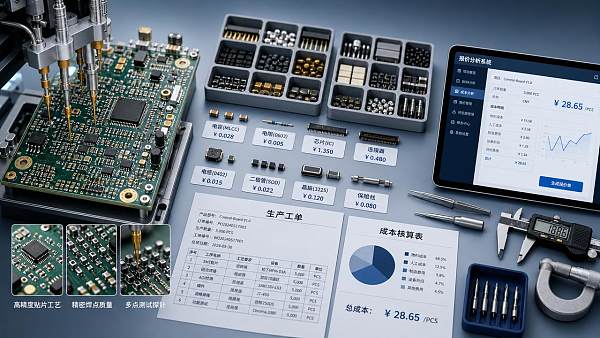
The core search intent behind PCBA manufacturing cost is not simply to learn how boards are made. It is to understand what actually drives unit pricing and whether a supplier quote is commercially reasonable.
For finance teams, the practical question is straightforward: which line items are unavoidable, which are negotiable, and which may signal hidden risk later through scrap, delays, warranty exposure, or rework.
That is why a useful cost breakdown must go beyond engineering language. It should connect technical choices directly to budget impact, margin protection, supplier comparison, and approval confidence.
In most sourcing reviews, the lowest quoted unit price does not always represent the lowest total cost. A cheaper build can become expensive if it creates unstable yields, delayed launches, or inconsistent field performance.
The Fastest Way to Understand PCBA Manufacturing Cost Structure
A practical PCBA manufacturing cost model usually includes six major categories: components, bare PCB fabrication, assembly labor and machine time, tooling and setup, testing and quality control, and logistics or overhead.
In many cases, components account for the largest share of total cost, often dominating the bill of materials. However, for low-volume or complex products, setup, yield loss, and testing can strongly influence unit pricing.
Financial approvers should separate recurring costs from non-recurring costs. Recurring costs affect every unit produced, while non-recurring engineering, stencils, fixtures, and programming costs matter most in pilot or low-volume builds.
Volume matters because fixed costs are spread differently across production runs. A quote for 500 units and one for 50,000 units may use the same design, but the effective unit economics will look very different.
Why Component Selection Usually Has the Largest Pricing Impact
When buyers ask about PCBA manufacturing cost, the first major driver is usually component sourcing. Semiconductor availability, brand preference, lifecycle status, and allocation pressure can change total cost quickly.
Two assemblies with identical functions may have very different pricing if one uses automotive-grade ICs, tight-tolerance passives, or hard-to-source connectors. Approved vendor lists also influence whether purchasing has room to optimize.
Lead times can be as important as purchase price. A lower component quote may rely on uncertain availability, while a slightly higher quote from franchised channels may reduce schedule risk and emergency brokerage premiums.
Package type also affects cost. Fine-pitch BGAs, bottom-terminated components, and very small passives can increase placement difficulty, inspection demands, and defect risk, creating indirect manufacturing expense beyond component price alone.
For financial approval, ask whether the quote assumes current market component pricing, buffered inventory, or spot-market sourcing. This distinction can explain sudden variance between suppliers quoting the same assembly.
How PCB Design Choices Change Unit Cost Before Assembly Even Starts
The second major driver is the bare printed circuit board itself. Layer count, board dimensions, material type, copper weight, surface finish, via structure, and impedance requirements all influence fabrication cost.
A simple two-layer FR-4 board is far less expensive than a high-density interconnect design with microvias, sequential lamination, controlled impedance, and low-loss materials. These choices may be necessary, but they must be priced consciously.
Board panel utilization also matters. If the design does not panelize efficiently, material waste rises and machine throughput declines. A board can be technically correct yet commercially inefficient in production.
Tighter tolerances usually raise cost because they reduce process flexibility. Requirements for flatness, drill accuracy, annular ring performance, or heavy copper handling may limit the number of capable suppliers and increase scrap risk.
For finance teams, this means PCB cost should not be reviewed as a commodity line. It is a technical cost bucket that often reflects reliability needs, electrical performance requirements, and manufacturability maturity.
Assembly Complexity: The Hidden Cost Driver Many Non-Engineers Miss
Assembly pricing is often misunderstood because the labor share is no longer just about manual work. Modern PCBA manufacturing cost is driven by machine programming, feeder setup, placement speed, soldering profile control, and rework risk.
A board with a high component count naturally costs more to assemble, but count alone is not enough. Mixed technologies, double-sided placement, odd-form parts, press-fit components, and selective soldering requirements can all raise cost.
If a product uses both surface-mount and through-hole processes, the assembly path becomes longer and more expensive. Each additional process step adds handling, inspection needs, and opportunities for yield loss.
Miniaturization also affects economics. Very small packages may demand slower line speeds, more precise printing, and stricter environmental control. That increases machine time and quality assurance effort per unit.
Design for manufacturability has direct cost value. Assemblies optimized for standard spacing, accessible test points, and stable solder joints usually achieve better yields, lower rework, and more predictable quoting.
Testing and Quality Requirements Can Change the Quote More Than Expected
Financial approvers often focus on visible material cost but underestimate the pricing effect of testing. Functional test, in-circuit test, flying probe inspection, X-ray inspection, burn-in, and environmental screening can add meaningful cost.
These requirements are not simply overhead. They are risk-control mechanisms that can prevent field failures, returns, and customer penalties. The right question is not whether testing costs money, but whether the chosen scope matches business risk.
High-reliability sectors such as automotive, industrial controls, medical electronics, and infrastructure systems typically justify broader verification. Consumer-oriented products may accept lighter coverage if failure consequences are less severe.
Test fixture development is another factor. For lower-volume products, fixture amortization can significantly increase early unit prices. At higher volumes, the same investment may become economical by reducing cycle time and improving defect detection.
When comparing suppliers, check whether quality assumptions are equivalent. One quote may include AOI, X-ray, traceability, and documented process control, while another appears cheaper mainly because those protections are lighter.
Volume, Yield, and Learning Curve Effects on Unit Pricing
Unit cost is heavily influenced by production scale. Small prototype runs, pilot lots, and bridge production carry higher per-unit cost because setup, programming, first-article validation, and line changeover are spread over fewer boards.
As production stabilizes, yields often improve and cycle times become more predictable. This learning curve can reduce effective PCBA manufacturing cost even when the bill of materials remains unchanged.
Yield is especially important for finance decision-making. A supplier with slightly higher quoted pricing but stronger process control may deliver lower true cost through less scrap, fewer line stoppages, and reduced downstream rework.
Conversely, aggressive pricing may indicate thin assumptions about acceptable yield. If actual defect rates are worse than planned, suppliers may later request changes, delay shipments, or silently reduce process margins.
Ask for volume break assumptions and expected first-pass yield ranges. These indicators reveal whether a quote is built on realistic manufacturing performance or optimistic commercial positioning.
Regional Sourcing, Overhead, and Supply Chain Risk Premiums
Factory location changes cost in several ways beyond direct labor. Energy rates, compliance burden, import duties, local ecosystem maturity, freight mode, and currency exposure all contribute to final unit pricing.
A lower offshore assembly quote may still produce higher total landed cost if it introduces longer replenishment cycles, inventory carrying requirements, customs friction, or expensive schedule recovery during demand swings.
Nearshoring or regionalized manufacturing can look more expensive on paper but financially stronger in volatile markets. Faster engineering communication, shorter lead times, and lower disruption exposure often create measurable value.
Supplier overhead also varies by capability. A manufacturer with stronger traceability systems, certification coverage, and engineering support may carry higher overhead, yet provide lower operational risk for complex or regulated products.
For financial reviewers, this is where sourcing should be assessed as a total-cost decision rather than a piece-price contest. Unit price matters, but resilience and execution reliability also have economic value.
How to Compare Quotes Without Being Misled by a Lower Number
The most useful quote comparison starts with normalization. Confirm that suppliers are pricing the same revision level, approved components, test scope, packaging standard, Incoterms, yield assumptions, and lead-time commitments.
If one quote is materially lower, identify whether the gap comes from component channel differences, lighter inspection, lower traceability, fewer process controls, or optimistic scrap assumptions. These are common sources of false savings.
Request a structured cost breakdown where possible. Even if suppliers will not disclose every margin detail, they can usually separate material, bare board, assembly, tooling, and test categories enough to support commercial evaluation.
It is also wise to review non-recurring charges separately from mass-production pricing. Some suppliers discount initial builds to win business, then recover margin later through engineering changes, expedite fees, or minimum order constraints.
A sound approval process asks one final question: if this supplier becomes the long-term source, are the quoted economics sustainable under realistic market conditions and service expectations?
Questions Financial Approvers Should Ask Before Signing Off
First, what percentage of total cost comes from volatile components, and how long is pricing valid? This helps determine whether the quote is stable enough for budgeting and customer commitment.
Second, which specifications are driving premium cost: board technology, component grade, assembly complexity, or test coverage? This reveals where trade-offs may exist without undermining product performance.
Third, what assumptions have been made about yield, scrap, and rework? Hidden manufacturing inefficiency can erase an apparent savings advantage very quickly.
Fourth, are tooling, fixture, and programming charges one-time only, or will they recur with design changes and new revisions? This affects lifecycle cost, not just launch budget.
Fifth, what risks are not visible in the unit price? Examples include single-source components, long lead-time semiconductors, weak traceability, limited capacity flexibility, or dependency on spot buys.
Conclusion: Approving PCBA Cost with More Confidence and Better Context
Understanding PCBA manufacturing cost means looking beyond the headline number. True unit pricing is shaped by component strategy, PCB technology, assembly complexity, quality controls, production scale, and supply chain risk.
For financial approvers, the goal is not to master every engineering detail. It is to recognize which cost drivers are value-creating, which are negotiable, and which may signal future budget or delivery problems.
The best sourcing decisions balance price, manufacturability, reliability, and resilience. When a PCBA quote is reviewed through that lens, approval becomes more than a cost check. It becomes a strategic decision grounded in total economic impact.
The Archive Newsletter
Critical industrial intelligence delivered every Tuesday. Peer-reviewed summaries of the week's most impactful logistics and market shifts.