Monday, May 22, 2024

PCB fabrication mistakes that delay product launch
by
Published
Views:
PCB fabrication mistakes can quietly derail timelines, inflate costs, and postpone product launch across industry applications from powertrain systems to smart grid technology. For buyers, engineers, and quality teams evaluating active components, automotive safety, driver assistance, and future mobility programs, understanding these risks is essential. This guide highlights the most common failure points and what every electric motor manufacturer and sourcing decision-maker should know to support emissions reduction and reliable execution.
In cross-sector manufacturing, a PCB is rarely an isolated part. It sits inside larger systems that may include motor controls, battery management, sensing networks, filtration automation, agricultural telemetry, or industrial infrastructure monitoring. When fabrication errors occur, the effect is not limited to scrap. They can trigger qualification delays, supplier disputes, redesign loops, and missed launch windows that extend by 2 to 8 weeks or more.
For organizations using technical benchmarking to compare suppliers across IPC, ISO, and automotive quality expectations, the best approach is early risk visibility. The most expensive PCB fabrication mistake is often the one discovered after pilot build, because by then tooling, procurement, compliance review, and downstream assembly have already been scheduled.
Why PCB fabrication errors create outsized launch risk
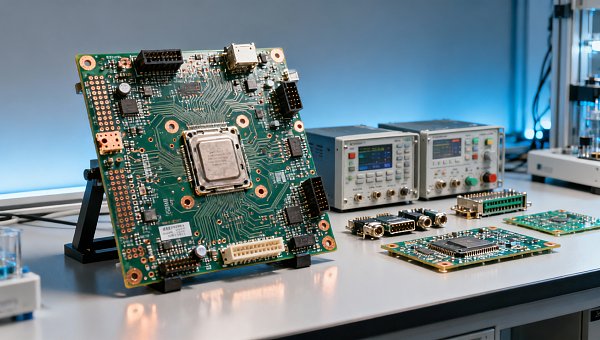
A product launch plan usually assumes that PCB fabrication, assembly, validation, and final integration move in sequence. In reality, one fabrication defect can disrupt 3 to 5 connected workstreams at once. A copper imbalance issue may affect warpage, assembly yield, and functional reliability. A poor stack-up decision may force signal integrity rework, EMC retesting, and enclosure modification.
These risks are amplified in sectors where the board must survive vibration, thermal cycling, humidity, chemical exposure, or continuous field duty. Automotive modules, smart agriculture controllers, inverter interfaces, and environmental monitoring systems all impose different stress profiles. A PCB that passes a basic electrical test may still fail the operational reality of 1,000 thermal cycles, 72-hour burn-in, or repeated field shocks.
From a procurement perspective, PCB fabrication mistakes also distort cost models. The quoted unit price may look competitive, but the total program cost changes when there are added expenses for expedited remakes, component rebooking, line downtime, and extra incoming inspection. In many programs, a 5% fabrication defect rate can create a much larger impact on schedule than on direct material cost.
For project leaders and financial approvers, the practical question is not whether a board house can produce a sample. It is whether the supplier can repeatedly meet fabrication tolerances, documentation discipline, and process control at pilot and production scale. That distinction matters more than low-price quoting when the launch window is fixed.
How delays typically spread across the program
The timeline damage from PCB fabrication mistakes usually follows a predictable chain. Teams that understand this chain can intervene earlier and avoid compounding losses.
- Fabrication issue appears during panel build, drilling, plating, solder mask, or surface finish.
- The issue is discovered at AOI, electrical test, incoming inspection, or first-article assembly.
- Engineering investigates whether the defect is cosmetic, process-related, or design-sensitive.
- Procurement and planning reschedule parts, line capacity, and logistics.
- Validation and customer approval move back by 1 to 3 review cycles.
In fast-moving industrial programs, every repeated cycle may add 5 to 10 business days. If the board is part of a safety-related or high-reliability product, the delay can be longer because requalification evidence must be regenerated.
The most common PCB fabrication mistakes behind launch delays
Many launch failures are traced not to one catastrophic defect but to a cluster of preventable fabrication errors. The most common include incorrect stack-up selection, annular ring violations, poor hole wall quality, copper thickness mismatch, solder mask misregistration, surface finish inconsistency, and inadequate panelization for assembly. Each one affects manufacturability in a different way.
Stack-up errors are especially costly because they influence impedance, layer registration, and thermal behavior at the same time. A board designed for HDI, high-current control, or mixed-signal communication may need strict dielectric control and copper distribution. If the chosen stack-up cannot consistently maintain impedance within ±10% or support via reliability under heat, pilot units may pass but production lots will become unstable.
Another frequent issue is drill and plating quality. Rough hole walls, insufficient copper in vias, or resin smear can weaken interconnect reliability. In harsh-use sectors such as mobility, industrial drives, and outdoor infrastructure, these defects may only reveal themselves after thermal stress, vibration, or humidity exposure. That means the launch gets delayed late in the cycle, when correction is most expensive.
Documentation mismatch is also underestimated. Fabrication notes, Gerber outputs, drill files, controlled impedance requirements, and finish specifications must align. A small discrepancy in finished copper, solder mask clearance, or surface finish can produce boards that are technically built but operationally wrong. These are the defects that waste 2 to 4 weeks because the supplier produced to one revision while engineering validated another.
High-frequency mistakes and their downstream effect
The table below outlines fabrication mistakes that regularly appear in electronics, automotive-adjacent, and industrial control programs, along with the practical impact on schedule and quality.
The key lesson is that fabrication mistakes rarely stay inside the PCB department. They spread into assembly, test, compliance, and customer acceptance. That is why mature sourcing teams evaluate process capability and revision control, not just sample appearance and quoted lead time.
Mistakes that buyers often overlook
- Assuming prototype success guarantees production repeatability across 500, 5,000, or 50,000 boards.
- Not checking whether the supplier’s standard capability matches required trace, space, aspect ratio, and finish.
- Treating panel design as secondary, even though poor panelization can reduce assembly efficiency by 10% to 20%.
- Skipping cross-review between design, quality, sourcing, and manufacturing engineering before release.
How to prevent fabrication issues before pilot and mass production
The most effective prevention strategy is to treat PCB fabrication as a manufacturability program, not a file-transfer activity. Before release, teams should confirm layer stack-up, fabrication tolerances, material system, copper weight, surface finish, drill strategy, and test requirements in a single controlled package. For complex products, one missing note can be as risky as one design error.
A practical checkpoint model includes 4 stages: design review, supplier capability review, pilot build verification, and production release audit. Each stage should have named owners from engineering, quality, and procurement. This reduces the chance that a specification gap sits unresolved until boards arrive on site. In many organizations, this staged review shortens correction loops from 2 weeks to 3 or 4 days.
For high-mix sectors, the review should also consider field environment. Boards intended for EV subsystems, motor drives, irrigation controllers, outdoor sensors, or filtration control cabinets may need thicker copper, higher Tg materials, conformal coating compatibility, or stronger ionic cleanliness control. Standard commercial assumptions can create avoidable reliability gaps.
Another prevention measure is tighter first-article discipline. Instead of approving first samples based only on electrical continuity, teams should include dimensional checks, solderability review, microsection evidence when required, warpage review, and documentation traceability. That expands confidence before larger volume commitments are made.
Recommended pre-release checklist
The following checklist helps technical evaluators, sourcing teams, and project managers screen for launch-critical fabrication risks before they become schedule problems.
Used consistently, these checkpoints improve both supplier comparison and internal launch predictability. They are also useful when multiple business units share common PCB suppliers across electronics, mobility, agri-tech, and environmental equipment programs.
Implementation steps for cross-functional teams
- Define board criticality by application, duty cycle, and compliance exposure.
- Map each critical feature to supplier capability and inspection evidence.
- Run a pilot lot with measurable acceptance thresholds, such as yield, flatness, and solderability.
- Release production only after engineering, quality, and sourcing approve the same revision baseline.
What procurement and quality teams should evaluate in a PCB supplier
A strong PCB supplier evaluation model goes beyond pricing and nominal lead time. Buyers should assess whether the fabricator can support the actual product profile: layer count, board size, copper weight, controlled impedance, HDI needs, environmental exposure, and expected production volume. A supplier that is excellent for 2-layer industrial interface boards may struggle with 8-layer mixed-signal control boards or thick-copper power designs.
Quality teams should focus on process consistency and evidence. Ask how the supplier manages drill wear, plating thickness control, coupon testing, final electrical test coverage, and lot traceability. For many applications, especially in automotive-adjacent and infrastructure products, the question is not just whether the board passes once, but whether it can repeatedly pass across multiple lots over 6 to 12 months.
Commercial reviewers should also examine responsiveness. If a supplier detects a buildability concern, how quickly do they issue engineering questions? A proactive query before fabrication may save 3 weeks of rework later. Fast communication, controlled deviation approval, and transparent nonconformance handling are often stronger indicators of long-term reliability than a low initial quote.
For organizations using benchmarking platforms such as GIM, the advantage lies in comparing supplier fit across multiple industrial sectors instead of evaluating them in isolation. The same discipline used to qualify HDI substrates, EV-related electronics, precision tooling interfaces, and environmental control electronics can improve sourcing decisions for broader manufacturing portfolios.
Supplier evaluation criteria that affect launch security
- Capability fit: minimum line and space, finished hole size, layer count, copper range, and finish availability.
- Process control: plating consistency, registration accuracy, cleanliness control, and documented inspection steps.
- Program support: engineering query speed, pilot feedback quality, and issue containment within 24 to 72 hours.
- Scalability: ability to move from prototype to recurring production without changing core process assumptions.
- Traceability: lot identification, revision discipline, and clear linkage between build records and shipped panels.
FAQ for sourcing and technical review
These questions reflect common search intent among procurement teams, quality managers, and engineering reviewers evaluating PCB fabrication partners.
How long should a realistic PCB fabrication lead time review take?
For a standard board, technical review may take 1 to 3 business days if documentation is complete. For controlled impedance, HDI, thick copper, or reliability-sensitive boards, allow 3 to 7 business days for stack-up confirmation, manufacturability review, and clarification. Rushing this step often causes far longer delays later.
Which metrics matter most at pilot stage?
The most useful pilot metrics are assembly yield, electrical test pass rate, dimensional conformance, warpage, solderability, and defect recurrence by lot. Even a small pilot should reveal whether process variation is controlled or merely hidden by low sample size.
When should a team request extra reliability validation?
Additional validation is recommended when boards face high current, high heat, vibration, outdoor exposure, or safety-linked functions. Examples include motor drives, battery-related electronics, machine control, and remote infrastructure nodes. In those cases, thermal cycling, humidity stress, or microsection review may be justified before production release.
Building a launch-safe PCB strategy across modern manufacturing sectors
The reason PCB fabrication mistakes matter so much today is that manufacturing ecosystems are increasingly interconnected. A board used in a mobility controller may share sourcing logic with an agricultural automation platform or an industrial water treatment interface. Cross-sector teams need a consistent framework for balancing quality, schedule, and total cost without oversimplifying technical risk.
A launch-safe strategy starts with application segmentation. Boards for low-risk monitoring tasks do not require the same fabrication controls as boards handling power conversion, safety signals, or continuous outdoor operation. Segmenting by duty cycle, compliance impact, and failure consequence allows procurement and engineering to prioritize the right level of review rather than applying one rule to every program.
It also helps to align commercial and technical thresholds early. If the target program allows only a 2-week pilot window, then supplier capability, documentation accuracy, and first-pass yield become non-negotiable criteria. If the product must launch across several regions, revision control and traceability should be defined before the first order, not after the first discrepancy.
For industrial organizations seeking stronger decision support, benchmarking platforms like Global Industrial Matrix provide value by connecting fabrication risks to broader system performance. Comparing PCB requirements alongside EV electronics, industrial controls, precision tooling, and infrastructure-grade hardware helps teams make more resilient sourcing decisions with fewer blind spots.
Final priorities for decision-makers
- Treat PCB fabrication as a launch-critical process, not a commodity purchase.
- Verify stack-up, process capability, and revision control before pilot release.
- Use measurable acceptance criteria and cross-functional review gates.
- Benchmark suppliers on repeatability, responsiveness, and fit for application risk.
Avoiding PCB fabrication mistakes is one of the fastest ways to protect launch timing, preserve budget, and improve confidence across engineering, procurement, quality, and executive review. If your team is comparing suppliers, reviewing a delayed program, or planning a new product introduction, now is the right time to get a clearer technical benchmark. Contact us to discuss your requirements, request a tailored evaluation framework, or explore more cross-sector manufacturing solutions.
- electronics
- industry applications
- PCB fabrication
- active components
- Mobility
- powertrain systems
- sensors
- driver assistance
- automotive safety
- future mobility
- Agri-Tech
- emissions reduction
- smart grid technology
- electric motor manufacturer
- HDI substrates
- Precision tooling
- Technical benchmarking
- Modern manufacturing
- Industrial infrastructure

The Archive Newsletter
Critical industrial intelligence delivered every Tuesday. Peer-reviewed summaries of the week's most impactful logistics and market shifts.