Monday, May 22, 2024

SMT Assembly Services: What Impacts Unit Cost Most
by
Published
Views:
For finance approvers evaluating smt assembly services, unit cost rarely comes from bare board pricing alone.
The real number is shaped by sourcing risk, line setup, process yield, inspection depth, and supplier control systems.
Across modern industry, these cost drivers matter because electronics now sit inside vehicles, tools, pumps, controls, sensors, and infrastructure assets.
A sound cost review of smt assembly services improves budget accuracy, supports technical reliability, and reduces downstream service exposure.
Understanding unit cost in SMT assembly services
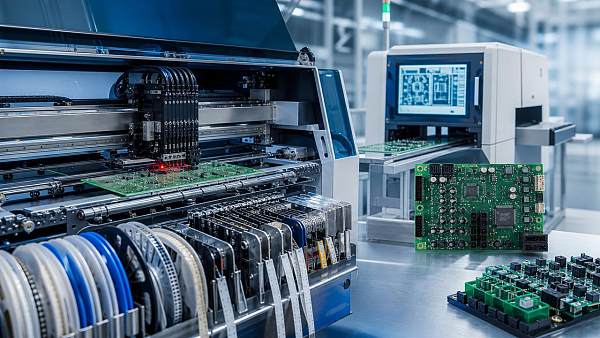
Surface mount production converts components, bare boards, engineering data, machine time, and quality controls into finished electronic assemblies.
In smt assembly services, unit cost means the total manufacturing expense divided by accepted units, not merely quoted placement labor.
This distinction is important when comparing suppliers across industrial electronics, mobility systems, agri-tech controls, and environmental monitoring equipment.
A low headline quote can hide expensive material substitutions, weak first-pass yield, excess rework, or incomplete testing coverage.
At GIM, cross-sector benchmarking shows that true cost performance depends on process capability matching the product’s risk profile.
Core cost layers
- Material cost, including components, PCB, stencils, and consumables.
- Setup cost, including programming, feeder loading, first article, and changeover.
- Process cost, including printing, placement, reflow, hand insertion, and touch-up.
- Quality cost, including AOI, X-ray, ICT, functional test, and traceability.
- Risk cost, including delays, scrap, field failures, warranty, and obsolescence exposure.
The biggest factors that move cost per unit
Not every cost driver has equal weight.
For most smt assembly services, five variables create the largest financial impact across the product lifecycle.
1. Component sourcing volatility
Components usually represent the largest share of total cost.
Pricing can swing sharply with allocation, lead-time compression, package changes, and broker dependence.
Common passive parts may look stable, yet MCUs, PMICs, sensors, connectors, and memory devices often drive budget variance.
When BOMs lack approved alternates, smt assembly services become more expensive and less predictable.
2. Setup complexity and batch size
NPI runs and low-volume builds carry heavier setup cost per unit than repeat production.
High feeder counts, mixed package types, double-sided assemblies, and frequent revisions increase preparation time.
Even efficient smt assembly services must recover programming, stencil alignment, profile tuning, and validation work.
3. Yield and rework performance
A small yield drop can reshape unit economics.
Printing defects, tombstoning, voiding, misalignment, insufficient wetting, or moisture-sensitive handling mistakes create hidden cost.
Rework uses skilled labor, slows throughput, and may reduce long-term reliability for dense assemblies.
4. Test scope and compliance level
Inspection depth affects price directly, but also lowers escape risk.
AOI alone is cheaper than AOI plus X-ray, ICT, boundary scan, and functional test.
Applications linked to automotive, industrial controls, or infrastructure often justify more robust validation.
5. Supplier quality systems
Documented process control reduces cost over time, even when the initial quote appears higher.
Traceability, ESD discipline, MSL handling, calibration, SPC, and controlled change management support repeatability.
In smt assembly services, quality maturity often separates stable unit cost from recurring disruption.
Current industry signals influencing SMT assembly services
Cross-industry electronics demand has made cost analysis more interconnected than before.
Automotive electrification, industrial automation, smart agriculture, and environmental sensing all compete for similar component ecosystems.
These signals explain why comparing smt assembly services by unit price alone often produces weak decisions.
Business value of understanding cost drivers
Clear cost visibility supports better planning across product development, sourcing, quality, and after-sales support.
It also helps align electronics cost structure with the wider industrial system the board supports.
- Improves forecast accuracy for low-volume and ramp-up programs.
- Reduces exposure to emergency buys and schedule slippage.
- Supports reliability targets in harsh operating environments.
- Clarifies trade-offs between test depth and field failure risk.
- Strengthens total cost analysis beyond quoted assembly labor.
For GIM’s cross-sector view, this matters because the same PCB may sit inside an EV subsystem, irrigation controller, filtration monitor, or tooling interface.
Typical cost patterns by application scenario
Different products stress smt assembly services in different ways.
The most expensive driver changes with volume, environment, and failure consequence.
Practical steps to control unit cost without weakening quality
Cost reduction works best when addressed early, before procurement pressure meets locked design constraints.
Strengthen BOM resilience
Use approved alternates for vulnerable semiconductors and specialized passives.
Standardized package families can simplify smt assembly services and lower sourcing volatility.
Design for manufacturability
Review pad design, panelization, fiducials, polarity clarity, and component spacing before release.
Good DFM reduces defects, shortens setup, and protects line throughput.
Match test depth to failure consequence
Not every board needs the same test architecture.
However, under-testing mission-critical assemblies can make apparently cheap smt assembly services very expensive later.
Evaluate suppliers beyond the quote
Check process documentation, CAPA discipline, equipment capability, traceability depth, and change notification control.
A capable partner usually delivers lower total cost through better yield and fewer disruptions.
Use benchmark data
Cross-sector benchmarks reveal whether pricing is driven by actual complexity or weak process alignment.
This is especially useful when comparing global and regional smt assembly services.
A structured next step for cost review
A disciplined review should separate material, setup, process, test, and risk cost into visible layers.
That approach helps identify which element truly moves unit cost most for a specific assembly.
For organizations managing electronics inside wider industrial systems, this creates stronger alignment between technical performance and financial control.
When assessing smt assembly services, compare not only the quote, but also sourcing resilience, yield history, inspection architecture, and quality governance.
That is where the most meaningful unit cost differences usually appear.

The Archive Newsletter
Critical industrial intelligence delivered every Tuesday. Peer-reviewed summaries of the week's most impactful logistics and market shifts.