Monday, May 22, 2024

Signal Integrity in HDI Design: Key Layout Pitfalls
by
Published
Views:
Signal integrity in HDI design is no longer a narrow layout concern. It directly affects high-speed reliability, EMC behavior, fabrication yield, and cross-platform benchmarking in modern industrial electronics.
As HDI stackups become denser, the margin for routing error shrinks. Small discontinuities can turn into measurable loss, timing skew, mode conversion, or compliance failures.
This guide explains the most common layout pitfalls, then turns them into a practical checklist. It is written for teams evaluating boards used in compute, mobility, controls, sensing, and rugged embedded systems.
Why a Checklist Matters for Signal Integrity in HDI Design
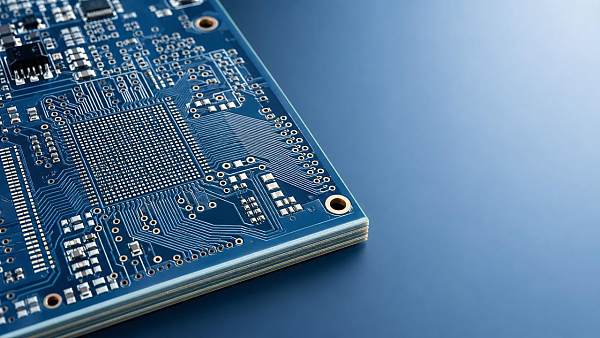
HDI layouts fail less often from one dramatic mistake than from many small ones. A checklist helps catch cumulative defects before they spread into prototypes, qualification cycles, and field returns.
It also improves technical comparison. When signal integrity in HDI design is reviewed against the same criteria, stackups and suppliers can be benchmarked more consistently across sectors.
For multi-domain products, that consistency matters. A board carrying radar data, motor control, power conversion, and environmental sensing cannot tolerate informal routing decisions.
Core Checklist: Key Layout Pitfalls to Review
- Define the stackup first, then route. Controlled impedance targets fail when trace geometry is chosen before dielectric thickness, copper weight, and reference planes are frozen.
- Match return paths to every critical trace. Signal integrity in HDI design degrades fast when high-speed routes cross plane splits, voids, anti-pads, or reference changes.
- Minimize via transitions on fast nets. Each microvia, buried via, or back-drilled through-hole adds parasitic inductance, capacitance, and possible resonance points.
- Control differential pair symmetry through bends and layer changes. Uneven coupling creates skew, common-mode noise, and eye closure at surprisingly modest data rates.
- Preserve reference continuity near connector breakouts. Dense escape routing often removes copper exactly where return current needs the shortest and lowest-inductance path.
- Avoid aggressive neck-downs unless modeled. Sudden width changes alter impedance and can create reflection hot spots near BGA fan-outs and fine-pitch component entries.
- Use stitching vias near layer transitions and board edges. They help contain fields, stabilize return current, and reduce EMI leakage from high-speed interface zones.
- Check fiber-weave sensitivity on long matched pairs. Glass pattern effects can introduce delay mismatch, especially in low-loss laminates used for fast serial links.
- Separate noisy power stages from sensitive channels. Coupling between switching nodes and high-speed traces can corrupt margins even when impedance values look correct.
- Validate with field solver and post-layout review. Rule-based routing alone does not guarantee signal integrity in HDI design under real stackup and package conditions.
What to Examine at the Via Level
In HDI boards, vias are not neutral interconnects. They are electrical structures with stubs, capture pads, anti-pad interactions, and current crowding behavior.
Pay close attention to via fields under BGAs. Escape density can force reference disruption, unequal pair paths, and localized impedance shifts that are hard to diagnose later.
- Review anti-pad size against plane clearance, not fabrication convenience alone.
- Compare stacked versus staggered microvia impact on reliability and insertion loss.
- Back-drill long through-hole vias when serial channels leave meaningful stubs.
What to Examine at the Trace Level
Trace quality is more than width and spacing. The full path includes bend style, copper roughness assumptions, local plane integrity, and coupling to adjacent structures.
Signal integrity in HDI design often suffers where routing looks visually clean but electrically changes environment several times within a short distance.
- Scan for repeated reference changes within one timing-critical path.
- Audit meanders to ensure tuning sections do not over-couple to themselves.
- Keep spacing to aggressor nets stable near package escapes and connectors.
Application Notes Across Industrial Scenarios
Automotive and Mobility Electronics
ADAS modules, zonal controllers, and EV subsystems combine fast interfaces with strong switching noise. Here, signal integrity in HDI design intersects with thermal density and EMC constraints.
Layer transitions near serializers, camera links, and motor drive sections deserve extra review. The routing may pass DRC while still failing margin under temperature and vibration stress.
Industrial Control and Embedded Compute
Controllers used in factories or energy systems often mix Ethernet, memory buses, sensor I/O, and power regulation on compact boards. The challenge is maintaining clean return paths across functional partitions.
Do not isolate sections so aggressively that high-speed channels must cross gaps. Segmentation can help noise control, but broken reference planes can hurt more than they help.
Smart Agri-Tech and Environmental Systems
Autonomous field equipment and monitoring nodes often operate with long duty cycles, variable temperatures, and mixed radio plus sensor interfaces. Stable layout behavior matters as much as raw speed.
In these systems, connector transitions, grounding strategy, and cable launch quality can dominate signal integrity in HDI design more than short internal routes do.
Commonly Missed Risks
Assuming Impedance Alone Predicts Performance
A trace can hit nominal impedance and still perform poorly. Loss, skew, discontinuity density, and return-path quality often determine whether the channel actually passes.
Ignoring Launch Geometry at Components
Package breakout zones are frequent failure points. Pad shapes, anti-pads, neck-downs, and local plane removal can overwhelm the quality of the longer route.
Treating Differential Pairs as Self-Sufficient
Differential routing still depends on a stable reference environment. Pairs crossing discontinuities can radiate more and convert noise into common-mode current.
Overlooking Manufacturing Variation
Etch tolerance, laminate variation, plating effects, and registration shifts can move a marginal layout out of spec. Robust signal integrity in HDI design needs process-aware margins.
Practical Execution Recommendations
- Freeze stackup, materials, and impedance tables before critical routing begins.
- Map every high-speed net to its reference plane and transition count.
- Run targeted simulation on the worst channels, not only on ideal examples.
- Review connector launches, BGA escapes, and tuning segments as separate risk zones.
- Compare fabrication capability with the actual HDI via strategy before release.
- Document acceptable limits for skew, stub length, discontinuity count, and insertion loss.
Where cross-sector benchmarking is required, align the review against IPC guidance, interface-specific limits, and real supplier process windows. That creates more useful comparisons than generic pass-fail checks.
A structured review also fits broader technical benchmarking goals. Platforms such as Global Industrial Matrix connect PCB layout quality to manufacturing resilience, qualification confidence, and multi-industry performance visibility.
Conclusion and Next Step
Signal integrity in HDI design depends on details that are easy to miss during dense routing. Return-path breaks, poor via transitions, and inconsistent launch geometry remain the most common layout traps.
Use the checklist above to audit stackup decisions, high-speed paths, and fabrication assumptions before prototype release. Then verify the highest-risk channels with simulation and supplier-specific design rules.
That workflow reduces rework, improves comparability across board platforms, and supports more reliable technical decisions in advanced industrial and electronics applications.

The Archive Newsletter
Critical industrial intelligence delivered every Tuesday. Peer-reviewed summaries of the week's most impactful logistics and market shifts.