Monday, May 22, 2024

Busan Truce Eases Tariffs, Not Supply Dependence
by
Published
Views:
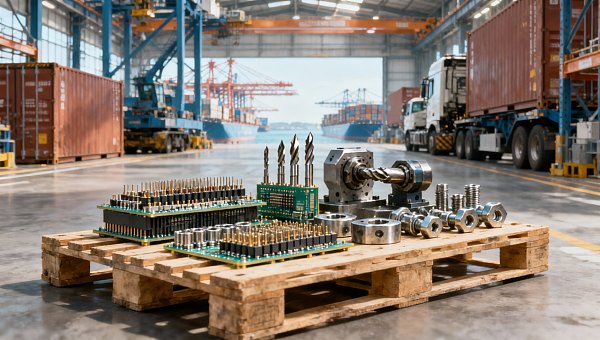
The timing of the underlying event is not explicitly stated in the provided information, but a June 4, 2026 industry report says China and the United States have reached a time-limited “Busan truce” that pauses additional tariffs without resolving differences over core technology controls and market access. For manufacturers, distributors, importers, and sourcing teams, the more relevant issue is that assembly activity routed through India and Southeast Asia still relies heavily on Chinese intermediate goods such as SMT precision components, CNC Machining Tools, and Hardware Components, making this development worth watching beyond the headline tariff pause.
What the Report Confirms
According to the provided summary, the agreement has a limited validity period and mainly delivers a temporary halt to new tariffs. The same summary also makes clear that key disputes have not been settled, especially in technology restrictions and market access. At the same time, products assembled in India and ASEAN markets continue to depend strongly on intermediate inputs supplied from China, including SMT precision components, CNC Machining Tools, and Hardware Components.
The report further indicates that China is accelerating a shift from being understood primarily as the “world’s factory” toward acting more as a “factory for factories.” For overseas distributors and importers, the reported implication is the need to reassess how rigid local assembly plants’ dependence remains on upstream Chinese parts and what level of inventory buffer is still prudent.
Why the Supply Chain Signal Matters More Than the Truce Headline
For traders and import-side buyers, tariff relief does not remove sourcing concentration
From an industry perspective, companies engaged in direct trade may see the temporary tariff pause as a short-term easing factor, but their operational exposure does not disappear if upstream parts still come predominantly from China. The main impact is likely to show up in supplier mapping, landed-cost assumptions, and contract planning tied to intermediate goods rather than only finished products.
For offshore assembly operations, upstream dependency remains visible
Observably, manufacturers using India or ASEAN assembly bases may continue to present themselves as geographically diversified at the final-assembly level, yet their production continuity can still depend on Chinese inputs. The business issue here is less about where the last assembly step happens and more about whether key components, tooling, and hardware can be substituted, delayed, or replenished without disruption.
For distributors and channel operators, inventory risk shifts upstream
Distributors and importers may need to look beyond local plant output capacity and examine the resilience of the parts pipeline feeding those plants. Analysis shows that if critical intermediate goods remain concentrated in one upstream source base, then safety stock decisions, reorder timing, and customer delivery commitments may be more sensitive than the truce headline suggests.
For supply chain service providers, documentation and lead-time visibility gain importance
Service providers involved in procurement coordination, fulfillment, and cross-border movement may be affected through higher requirements for origin clarity, delivery scheduling, and supplier communication. What deserves closer attention is whether customers are treating a temporary policy pause as a structural easing when actual execution still depends on stable access to Chinese intermediate goods.
What Companies Should Recheck Now
Separate policy language from operating reality
Analysis shows that a pause in new tariffs should not be read automatically as a broader resolution of trade friction. Companies should distinguish between the diplomatic signal of a temporary arrangement and the practical reality that technology controls and market-access disagreements remain unresolved in the provided summary.
Review exposure in key intermediate categories
Businesses with sourcing exposure to SMT precision components, CNC Machining Tools, and Hardware Components should reassess which categories are truly replaceable and which remain rigidly tied to Chinese upstream supply. This is especially relevant where final assembly is located outside China but bill-of-material continuity still depends on Chinese inputs.
Recalculate safety stock and fulfillment margins
Overseas distributors and importers should revisit inventory assumptions around local assembly partners and evaluate whether current buffer levels still match the strength of upstream dependency. The practical focus is on replenishment timing, order commitments, and the margin for error if supply conditions change before the temporary agreement’s effect becomes clearer.
Strengthen supplier and customer communication
What deserves closer attention is the quality of communication around lead times, supplier qualification, and fulfillment expectations. Where customers assume that geopolitical pressure has materially eased, companies may need to clarify that the provided information points to temporary tariff restraint, not a confirmed reduction in structural supply-chain dependence.
How to Read This Development at This Stage
In editorial observation, this development is better understood as a mixed signal rather than a clear turning point. On one side, the reported truce suggests a short-term effort to prevent escalation in tariffs. On the other, the unchanged disputes over technology controls and market access, together with continuing dependence on Chinese intermediate exports, suggest that the deeper structure of regional manufacturing networks has not been fundamentally reset by this agreement alone.
Observably, the more important message is not simply that some production has moved outward at the terminal stage, but that upstream industrial capability still matters decisively. In that sense, the report points less to a clean decoupling story and more to a reorganization in which Chinese supply remains embedded in offshore assembly ecosystems.
What This Means for the Industry Narrative
This update is more appropriate to understand as a short-term policy easing combined with a longer-term industrial signal. The immediate tariff environment may appear less tense under a limited truce, but the reported reliance on Chinese intermediate goods indicates that supply-chain restructuring remains incomplete. For industry participants, the practical takeaway is to watch dependency patterns in parts, tooling, and hardware just as closely as developments in finished-goods assembly geography.
A neutral reading is that the agreement may reduce some near-term pressure, yet it does not by itself confirm a lasting shift in trade relations or a weakened role for Chinese upstream manufacturing. Continued observation is warranted.
Basis of This Article
This article is generated from the user-provided news title, event timing note, and summary information. The specific official source link was not provided in the input, so further verification remains necessary. For this type of development, commonly relevant source categories may include official statements, company disclosures, industry association updates, authoritative media reporting, and standard-setting or regulatory documents.
Because the provided information indicates a temporary agreement and unresolved structural disputes, follow-up attention should remain on any later official wording, rule changes, and supply-chain evidence related to intermediate goods dependence in India and ASEAN assembly networks.

The Archive Newsletter
Critical industrial intelligence delivered every Tuesday. Peer-reviewed summaries of the week's most impactful logistics and market shifts.