Monday, May 22, 2024

HKMA Announces Stablecoin Issuer Licensing Timeline
by
Published
Views:
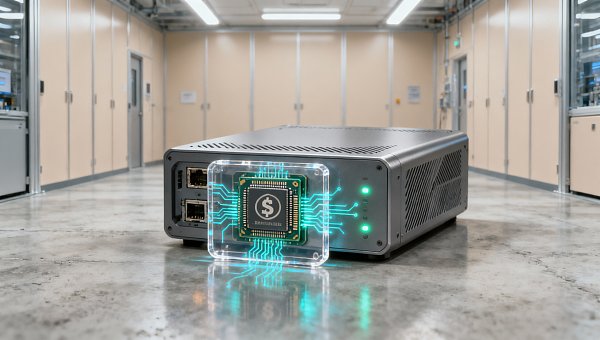
On April 30, 2026, the Hong Kong Monetary Authority (HKMA) published the licensing timeline and regulatory framework for the first cohort of stablecoin issuers — a development with direct implications for manufacturers and exporters of AI hardware featuring embedded financial capabilities, including edge AI devices using OpenClaw-like agents, SMT Precision Metrics inspection terminals, and ADAS sensor modules. This marks the emergence of Asia-Pacific’s first digital asset regulatory regime designed with international mutual recognition in mind.
Event Overview
On April 30, 2026, the HKMA held a press briefing to formally announce the application timeline and supervisory requirements for stablecoin issuer licenses. The authority confirmed that the licensing process will follow a phased approach, with eligibility criteria, capital thresholds, custody arrangements, and governance standards publicly disclosed. No approvals have been granted as of the announcement date; the timeline outlines submission windows, preliminary reviews, and anticipated decision periods for the initial applicants.
Industries Affected
Hardware Exporters Integrating Embedded Financial Functions
Manufacturers exporting AI edge devices, precision metrology terminals, or automotive ADAS modules with built-in wallet, payment routing, or on-device stablecoin settlement logic are directly affected. These products may now fall under cross-border financial infrastructure scrutiny when deployed in jurisdictions recognizing HKMA-licensed stablecoin ecosystems.
Overseas Importers and Distributors of Regulated Hardware
Importers in markets aligned with or evaluating HKMA’s framework — particularly those handling devices with firmware-level financial interfaces — face new pre-market compliance assessments. Their obligations may extend beyond traditional CE/FCC certification to include verification of data residency controls, cryptographic key management architecture, and auditability of on-device transaction logs.
Embedded Systems Firmware Developers
Firmware teams supporting hardware platforms with real-time financial logic must now treat regulatory interface design as a core functional requirement. This includes modular separation of financial modules, configurable data export protocols, and deterministic firmware update signing — all subject to potential third-party attestation under future HKMA-aligned import rules.
What Relevant Enterprises or Practitioners Should Focus On Now
Monitor HKMA’s upcoming technical guidance documents
The April 30 announcement references forthcoming implementation notes on interoperability standards, attestations for firmware integrity, and acceptable data flow architectures. These documents — expected in Q3 2026 — will define minimum technical baselines for hardware integration.
Evaluate current product firmware against HKMA’s stated principles
Review whether existing devices implement clear separation between financial and non-financial functions, support auditable transaction logging, and allow configuration of data transmission endpoints (e.g., disabling outbound telemetry to non-HKMA-approved endpoints). Such features may become prerequisites for market access.
Distinguish between policy signal and enforceable requirement
As of April 30, 2026, no foreign hardware is mandated to comply with HKMA stablecoin rules. However, importers in jurisdictions adopting HKMA-aligned frameworks may voluntarily require evidence of alignment — making early technical documentation and architecture mapping a low-risk preparatory step.
Initiate internal cross-functional alignment between compliance, firmware, and export teams
Establish baseline inventories of products containing embedded financial logic, map associated firmware versions and data interfaces, and draft internal checklists for future third-party attestation readiness — without waiting for formal enforcement timelines.
Editorial Perspective / Industry Observation
Observably, this move signals HKMA’s intent to anchor digital asset regulation at the infrastructure layer — not just at the token or exchange level, but where finance meets physical hardware. Analysis shows it is less an immediate compliance mandate and more a structural calibration: a signal that embedded financial functionality, once treated as a software feature, is increasingly viewed as part of regulated financial infrastructure. From an industry perspective, the timing suggests regulators are proactively addressing convergence points between AI hardware deployment and monetary policy boundaries — especially where devices operate autonomously across borders. Current relevance lies not in enforcement, but in the precedent it sets for how jurisdictional authorities may classify and govern dual-use hardware.
Conclusion
This announcement does not introduce new export bans or mandatory certifications. Rather, it establishes a reference framework that may shape future import requirements in multiple markets — particularly where regulators seek interoperability with Hong Kong’s digital asset regime. It is best understood not as a rule change, but as an early indicator of how embedded financial logic in hardware is being reclassified within global regulatory thinking.
Information Source
Primary source: Hong Kong Monetary Authority official press briefing, April 30, 2026. No supplementary policy documents or implementation guidelines were released at the time of announcement; their publication remains pending and subject to ongoing observation.

The Archive Newsletter
Critical industrial intelligence delivered every Tuesday. Peer-reviewed summaries of the week's most impactful logistics and market shifts.